


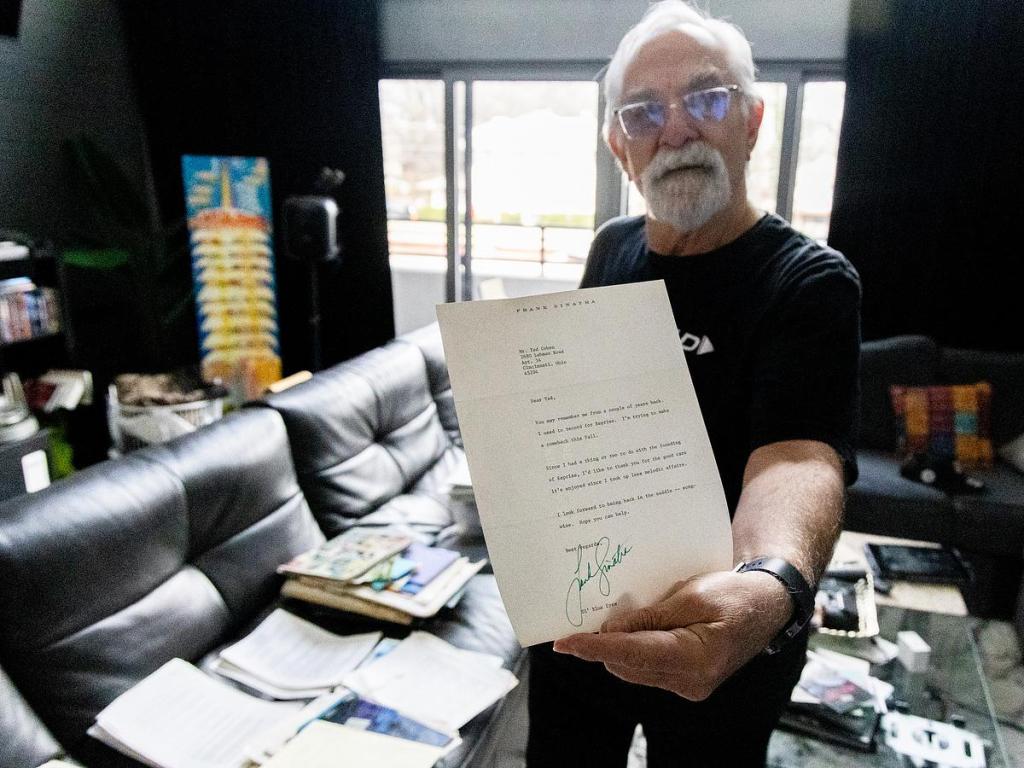
Covering the cushions of Ted Cohen’s black sectional are piles of old documents. There are stacks of cut-out yellowed-newspaper articles spanning the continent, old press images of bands and personal black-and-white photos on planes with musicians like Alice Cooper.
There’s a letter from “Ol’ Blue Eyes” about his comeback and articles printed about the possibility of digital music. There are instructions for talking to the media and what to tell the record company when you miss an interview. There are stolen coasters and informational signage from an assortment of businesses.
They are mementos of Cohen’s past lives as a record company A&R guy, followed by his forays into tech years before iPods and Spotify. He’s in the process of archiving his collection that goes beyond the sectional and covers shelves, tables, desks and all the walls of his three-story midtown condo.
His unique career endeavors have done great things for the music industry. Now, as The University of Tulsa’s Distinguished Entertainment Executive in residency, Cohen is seeking to pass on what he’s learned to the future of the industry.
Cohen works with arts, culture and entertainment management students, offering his expertise and mentorship. One of his jobs is to assist in the ACE Associates program, “providing some insight for a few local music venues, helping them to improve their reach and market impact,” he said.
He also hosts “Tuesdays with Ted,” a weekly meeting where students can engage in conversations and pick Cohen’s brain.
After touring the Woody Guthrie Center in 2018, he returned for the 2022 Bob Dylan Center grand opening. That was followed by another trip to spend some time on the TU campus.
Cohen says those visits made him feel a pull to the strong community of Tulsa, so he moved from Los Angeles. After relocating, he co-taught a few entertainment industry courses, which led to his current residency.

Cohen brings six decades of experience in multiple industries to draw from. His career started when he was younger than the students he now instructs on the TU campus.
It was 1965. Cohen was 14 when he was invited to see a new young, hip rock band perform on a television show. It was The Rolling Stones. Standing feet away from the four British rockers as they performed live and in full color as opposed to the black-and-white scene he would have seen at home gave him his first taste of the music industry.
He had found his calling. Through high school, Cohen managed a few music acts. He then transformed his college radio station into a rock station.
Through managing the radio station, Cohen was acquainted with some professionals in the industry. When a position at Columbia Records opened, Cohen was encouraged to apply and got it.
“I had just popped into Cincinnati and taken the best job in town,” Cohen said. “My whole thing has been serendipity.”
He did promotional work for a while before he ran off with bands like Chicago and Boz Scaggs. He joined Warner Brothers’ Records as director of East Coast artist development and soon found a seat on the Sex Pistols tour bus as they toured across America in 1978.
In San Antonio, Pistols bassist Sid Vicious was hit in the face with a beer can. In frustration, he swung his bass — and took out Cohen.
The record company executive would visit Tulsa’s Cain’s Ballroom with the band four days later, on Jan. 11. He had no clue he’d live a few miles away from the historic venue decades into the future. That was his lone trip to T-Town for the next 40 years.
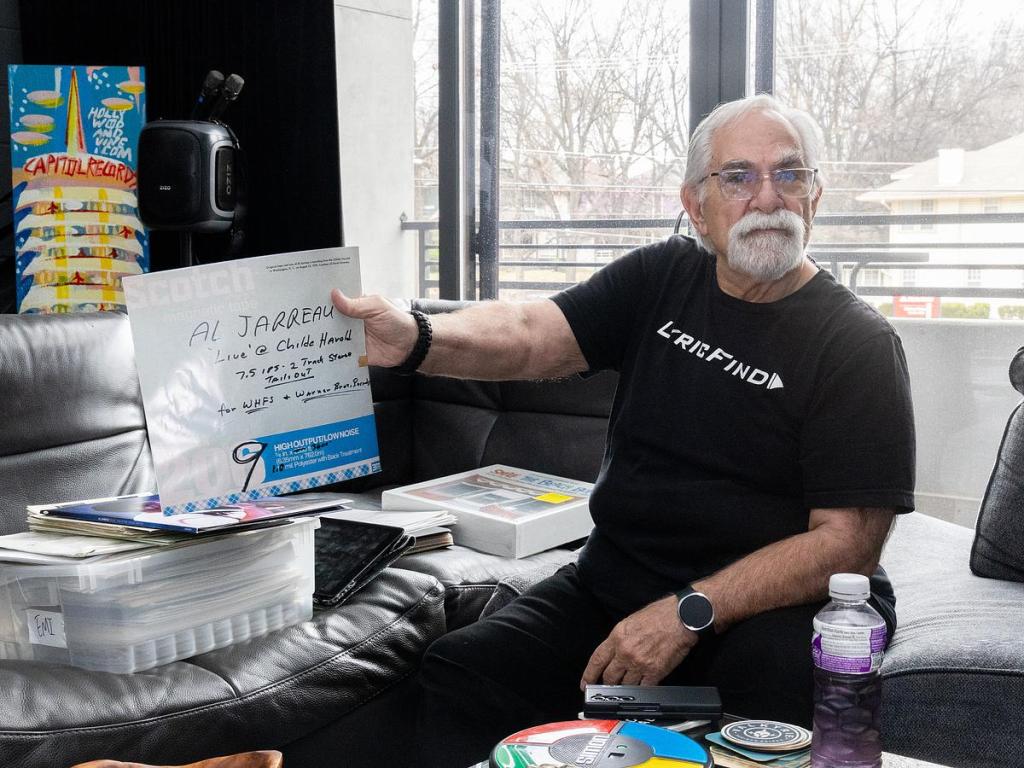
He worked with numerous legendary artists, including Talking Heads, Fleetwood Mac, Van Halen (during the David Lee Roth years), Prince (during the “Purple Rain” years) and Al Jarreau — a personal favorite of his. Part of Cohen’s job was to give feedback on the night’s performance on stage.
“I was telling you the show was good, but you might want to move the fourth song to later in the set,” Cohen recalled. When it came to talking to the audience, “in the case of David Lee Roth, please talk less. In the case of David Byrne, please say something.”
Cohen had been working closely with artists for some time and was beginning to burn out. After watching the rock mockumentary “Spinal Tap” with Robert Fripp and Tony Levin of King Crimson, Cohen quit his job.
He moved into the digital world and, around 1996, he began consulting for some of the first wave digital startups like Liquid Audio, RioPort, Napster and big companies like Universal Studios, Microsoft and EMI. If you remember enhanced music CDs that included music videos, you have Cohen to thank.
In the time since, he has found all his work blending together as the music industry has embraced technology and continues to evolve. He continues making calls and connecting people, whether it’s trying to get Tulsa artists on record labels like Rhino or serving as an adviser for local startup music app Bootleg.Live.
“I’m really loving living in Tulsa. It’s been one year this month,” Cohen said. “Anything I can do to make things better for the music and tech communities, I’m here to help.”
News decisions at the Tulsa Flyer are made independently of our board members and financial supporters. Read more about our editorial independence policy here.