


It’s no coincidence that so many Tulsa institutions — from hot dogs to junior highs — are celebrating their 100th anniversary this year. Lost in the civic mania to celebrate Route 66’s centennial is this: 1926 was the year when Tulsa began to become the Tulsa we know today.
Oil discovered around the city doubled the city’s population from 72,075 to 141,258 during the 1920s. Money and people flowed in and they both needed places to go.
“The beauty of Tulsa was that the people who built it were not a bunch of hayseeds,” said architect Ted Reeds, a founder of the Tulsa Foundation for Architecture. “These were people from New York, Chicago, Kansas City and Pittsburgh, which was the first oil industry. They grew up in cities with tall buildings that were dense and diverse. They were supported by those of wealth.
“They had that in their minds when they arrived in Tulsa. That was the model they wanted to build. So Tulsa, unlike many oil patches at that same time, was built proudly in a typical American fashion. That is, recognizing that a city that is together, that is dense, is going to turn out better citizens than if all spread out. We were lucky to have architects who knew what they were doing.”
That year brought the formation of the Greenwood Chamber of Commerce — just five years after many of Black Wall Street’s occupants were massacred and the neighborhood itself destroyed. A Catholic corridor emerged near 21st Street with a hospital and two schools. The spire of an Episcopal cathedral rose into the skyline.

Newspapers published reports of growing businesses and tug-of-wars over infrastructure, including water and construction projects. By the end of 1926, the city had issued building permits that totaled $7 million, or $127 million in today’s dollars, according to the Tulsa Tribune.
Tulsa’s backbone may have been in oil, but many early leaders came from backgrounds in medicine, banking and agriculture. It was common for someone to have their hand in varied interests.
Cyrus Avery, known as the Father of Route 66, worked in real estate, ranching and oil before getting involved in Tulsa County government and public infrastructure. Before the Mother Road got its official federal highway number, Tulsa already had a couple of boasts. It was the “Oil Capital of the World” and home to the state’s tallest building with the grandiose Mayo Hotel, which opened in 1925.
“That didn’t mean that everything was already fully developed,” said Oklahoma Route 66 Association President Rhys Martin. ”In fact, the reason that the original alignment of Route 66 went north on Mingo Road and headed into town on Admiral (then called Federal Drive) was because 11th Street wasn’t fully paved yet.”
We rounded up the institutions and buildings celebrating 100 years in Tulsa this year.

Greenwood Chamber of Commerce, 131 N. Greenwood Ave.
Five years after a massacre that killed up to hundreds of residents and destroyed 35 city blocks, the businesses and homes in the Greenwood District were largely rebuilt, said Freeman Culver, president and CEO of the Greenwood Chamber of Commerce.
“The survivors came together with the intention to truly rebuild Greenwood’s north Tulsa chamber,” Culver said. The Greenwood Chamber of Commerce was founded to represent the Black business interests of the resurgent district.
Sophian Plaza, 1500 S. Frisco Ave.
The nine-story, 54-unit apartment building was designed with Italian Renaissance features by Kansas City architects Charles E. Shepard and Albert C. Wiser. The luxury apartments were at the end of the downtown trolley line with a view of the Arkansas River. It cost $1.5 million to build, had “high-speed elevators” and servants’ quarters in the basement. According to local lore, the building was where the oil barons stashed their mistresses.
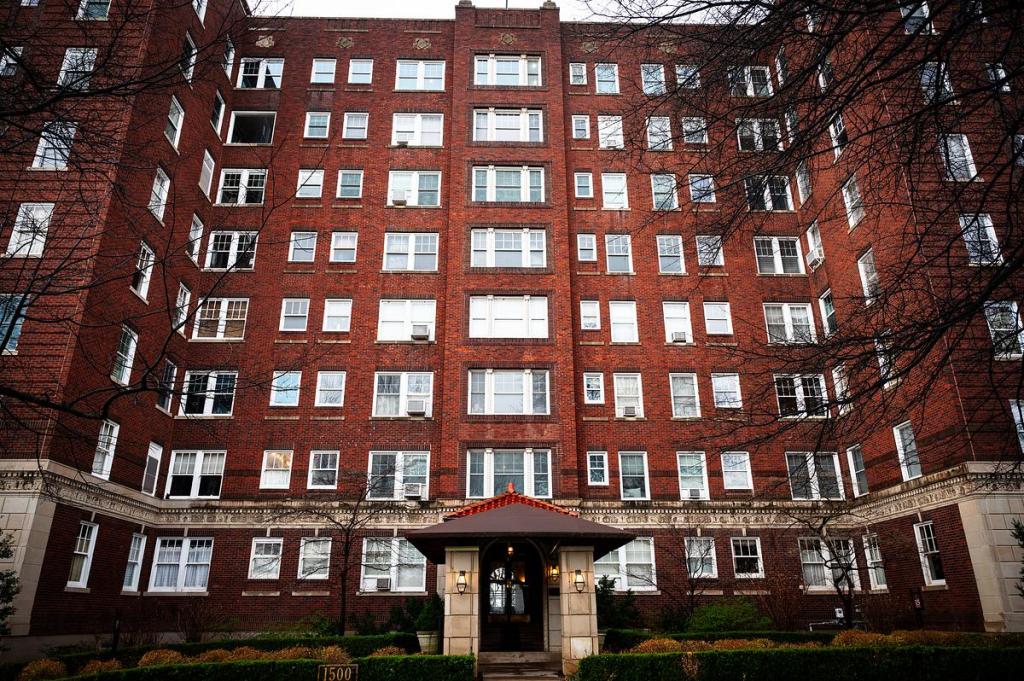
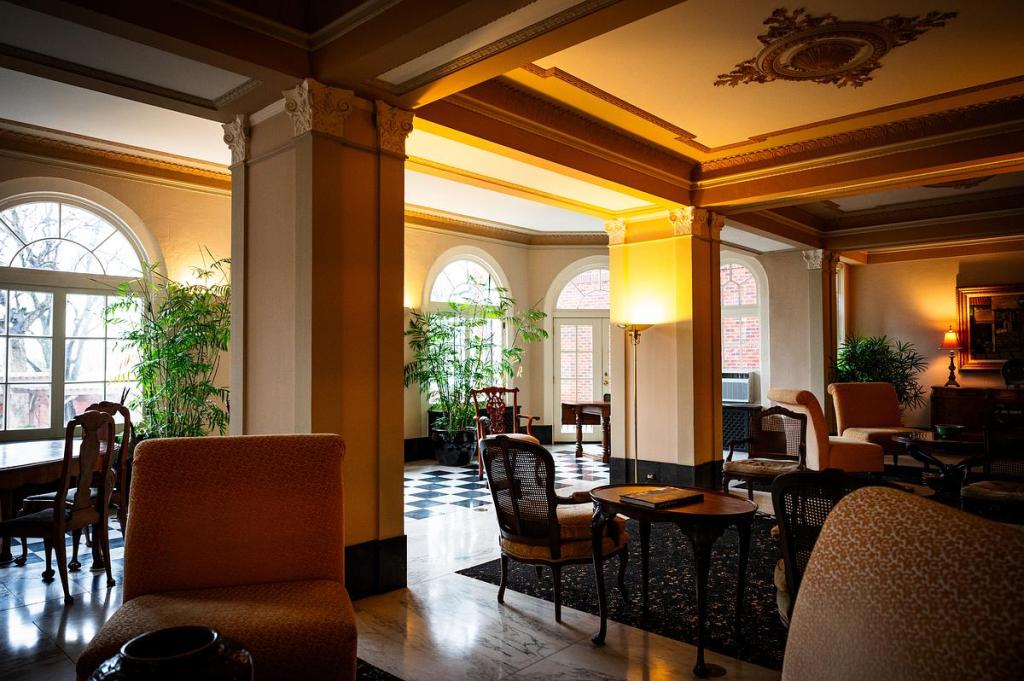
“Like so many things built so long ago, this was built for the ages,” said resident Laura Bennison. “The building is pretty much like it was back then, and built to last.”
Cascia Hall, 2520 S. Yorktown Ave.
The Order of St. Augustine opened a day and boarding school for boys in 7th to 12th grades on 40 acres just south of the new Catholic hospital. The school expanded to sixth grade and became co-educational in 1986. Hundreds of priests have served at the school including Pope Leo XIV, who served on the school’s board for three years.
Ascension St. John Medical Center, 1923 S. Utica Ave.
The Benedictine Sisters of the Sorrowful Mother purchased a strawberry field in 1917 at 21st Street and Utica Avenue to build a hospital. A groundbreaking took place in 1920, when World War I hero Gen. John J. Pershing turned the soil with a gold-plated shovel. Then, money ran out and work stalled until the order sold property elsewhere to finish the hospital.
“Celebrating 100 years of service to our community is an incredible achievement,” said CEO Bo Beaudry. “Health care has evolved tremendously in the last century, and St. John has adapted and changed with the times, innovating and investing in the best technology and care for our patients. We have served generations of families across the region, and we plan to continue our care for the community for the next 100 years.
Trinity Episcopal Church, 501 S. Cincinnati Ave.
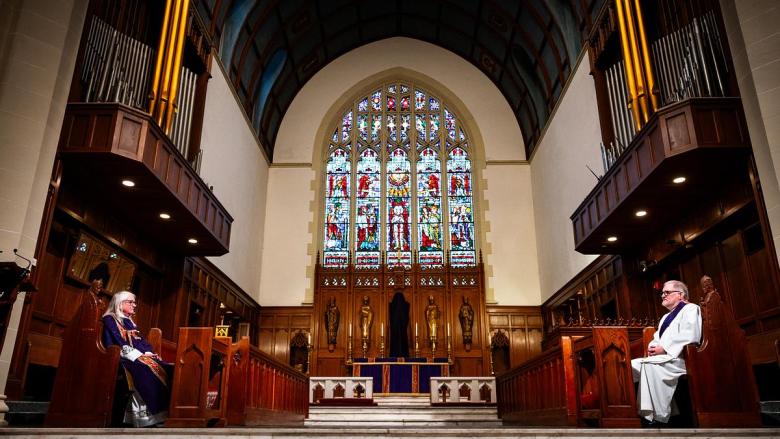
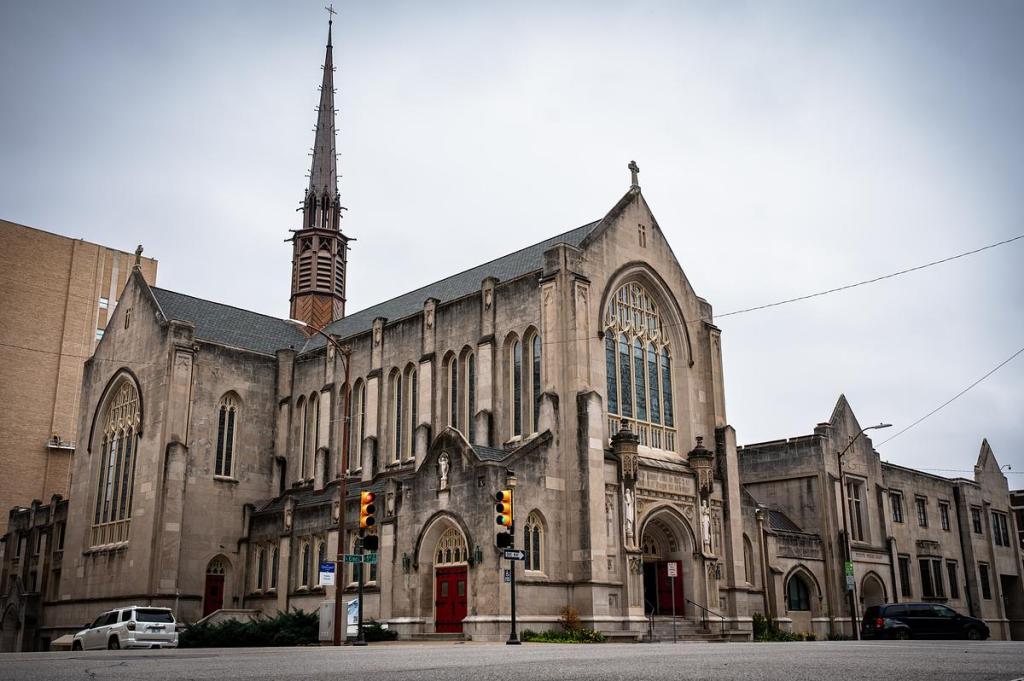
Heralded for its classic English Gothic architecture, the church features a tall central spire, intricate carvings and limestone exterior. Among the detailed stained glass are odes to the Apostles Creed and other faith references. One unusual pane — not from 1926 — features images of 20th century genocidal leaders, including Adolf Hitler, descending into hell.

St. Monica Catholic Church, 633 E. Marshall Place
Many Black Catholics, particularly from Louisiana, arrived in Tulsa for work but did not have a place to worship due to segregation laws. A mission was formed in February 1926 to go door-to-door in north neighborhoods to evangelize.
A pair of two priests from Holy Family Cathedral — the Revs. James McNamee and James Rooney — were tasked by Oklahoma Catholic Bishop Francis Clement Kelley to start an outreach to Black Tulsans for a church on the north side of the city. The diocese established a church, school and convent that year in buildings on East Haskell Street.
Monte Cassino, 2206 S. Lewis Ave.
The Benedictine Sisters of St. Joseph Monastery opened the school as a selected day and boarding school for girls. It’s now focused on a curriculum for 3-year-olds through 8th grade, co-educational and governed by a board of directors.
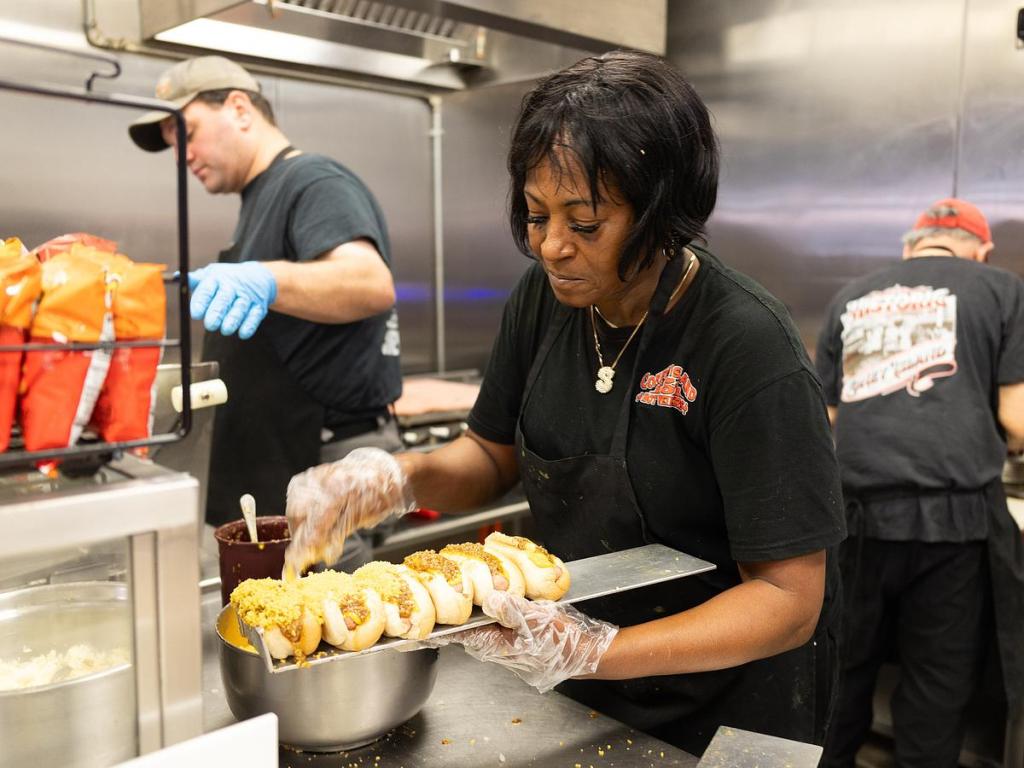
Coney Island Hot Weiners, 107 N. Boulder Ave.
Greek immigrant Christ (pronounced “krist”) Economou opened his “hot wieners” restaurant in the bottom of the Tulsa World building, 311 S. Boulder Ave., in 1926. The 5-cent hotdogs and unique chili recipe hit the spot. It is considered Tulsa’s oldest operating restaurant and remains in the Economou family. The family has kept its downtown presence, now at 107 N. Boulder Ave., and expanded into six other area locations.
Tulsa Public Schools
In 1926, the district opened Lanier Elementary, Roosevelt Junior High (now Tulsa School of Arts and Sciences) and Wilson Junior High, designed by architect Leland Shumway.
News decisions at the Tulsa Flyer are made independently of our board members and financial supporters. Read more about our editorial independence policy here.