


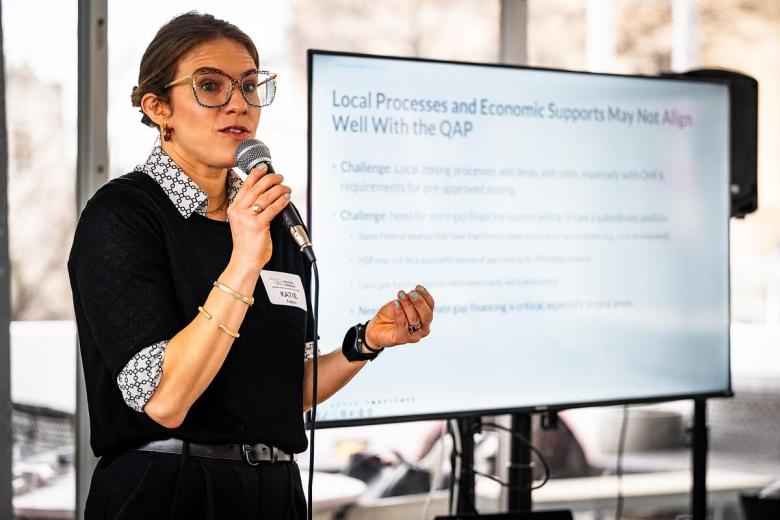
Oklahoma’s policies are holding back affordable housing development by leaving millions of federal tax credits unused and restricting who can build, according to researchers who uncovered the gaps and say fixes are within reach.
A Thursday meeting of representatives from construction, architecture, banking, nonprofits and government gathered to hear details about an Urban Institute report on the Oklahoma Housing Finance Agency’s use of the federal Low-Income Housing Tax Credit program. The analysis is funded by Housing Forward, a nonprofit backed by the Anne & Henry Zarrow Foundation.
Tulsa’s housing needs have been well-established, starting with the 2023 Housing Strategy report stating the city needs 13,000 units across all price points within a decade. About 6,000 units are necessary by 2028 to fill a shortage.
Builders and financiers at the event said incentives are the only way to make affordable housing — typically considered 30% of a household’s income — work for them economically. The Urban Institute focused on the housing authority’s financing because it is the most frequently used approach in the state for new affordable housing projects. The federal low-income tax credit is the largest federal source for creating affordable housing and is administered through state and local housing finance agencies.
“Housing Forward believes there is a lot of opportunity to build on the momentum and utilization of (the tax credit) to increase opportunities across the state and get the most bang for our buck in key areas,” said Tyler Parette, the organization’s executive director. “Research products like this could help us make data-based decisions to move housing projects forward.”
Key findings of the report:
- Compared to other states, Oklahoma’s housing finance authority uses the federal program disproportionately in rural areas.
- Oklahoma under-utilizes a private equity bond program that lost out on at least $500 million in recent years.
- Oklahoma places an unequal share of housing in high-poverty areas. Rents of those federally subsidized units in low-income areas are sometimes higher than market rate, meaning the program isn’t meeting its goal of providing affordable housing.
Housing stakeholders said tension exists with single-home property owners fighting multi-family or federally subsidized projects. Researchers say more education is needed for the public to understand what the actual population of residents looks like.
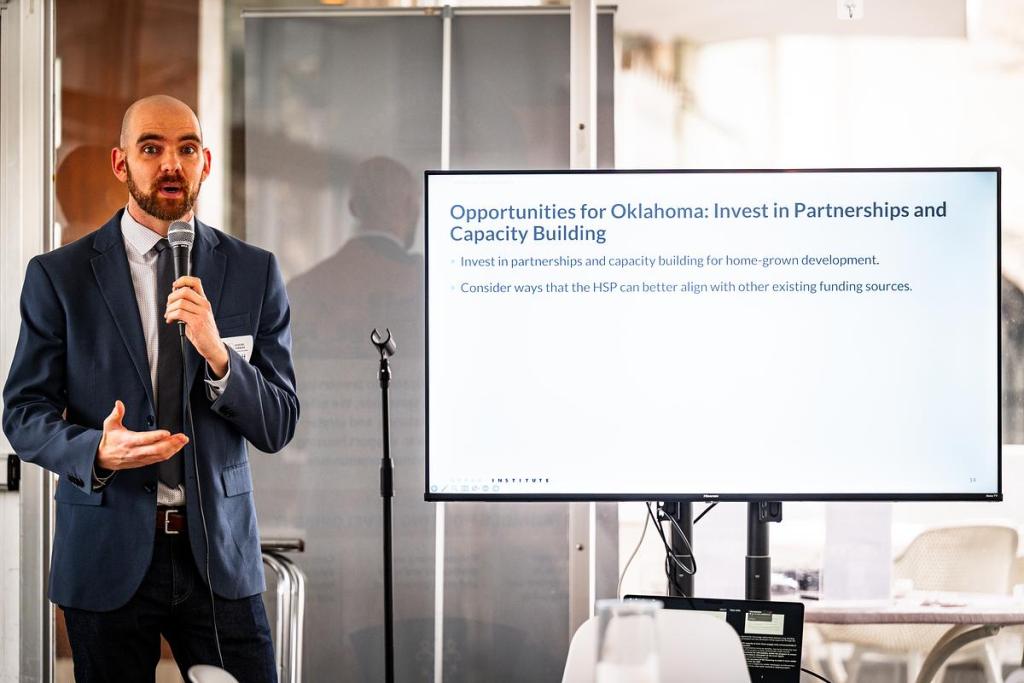
“People tend to misunderstand who actually lives in the buildings are typically people in normal jobs in the workforce such as firefighters, school teachers or restaurant workers,” said lead Urban Institute researcher Yonah Freemark.
The state housing finance authority has a policy requiring in-state developers on projects — a requirement that has faced criticism for keeping out competition. Freemark said that is unnecessarily restrictive because the bigger beneficiaries such as construction workers and tenants are local.
The finance authority can shift its approach in the bond program to get more private bond funding, Freemark said. State practices also make it harder for nonprofits to provide housing.
“Nonprofits in other states are a much bigger player in affordable housing,” Freemark said.
News decisions at the Tulsa Flyer are made independently of our board members and financial supporters. Read more about our editorial independence policy here.