


Nestled at the corner of Tulsa’s oldest park — just 30 yards from the city’s oldest house — is an 8-foot, almost century-old statue paying tribute to the area’s earliest settlers.
It features the names of some of Tulsa’s most prominent families from the city’s past and present. It also includes the names of two known members of the Ku Klux Klan — W. Tate Brady and Willard McCullough.
Now, the Kitty Gang Family Foundation is offering to raise money to remove the monument from Owen Park after a recent Reddit thread reignited discussion about its location.
“I don’t think you need that. It’s not inviting. It’s just disrespectful, really,” said James Taylor, the foundation’s treasurer. “If you want the park to be embarrassing, leave it there.”

The statue commemorates a September 1921 barbecue that launched the Tulsa Association of Pioneers in honor of families who settled in the area shortly after the 1889 land rush. The association’s formation, though, came only a few months after the Tulsa Race Massacre.
The statue was erected 14 years later in Osage County on a farm owned by Dr. Sam Kennedy — one of Indian Territory’s first physicians and the association’s first president. It was moved to Tulsa in 1952 before eventually finding a home at the park in 1969.
Taylor has been asking the city to remove the statue, which he calls a “Klan trophy,” since 2020.
The overlapping networks of Tulsa’s social — and hate — groups
Long considered one of Tulsa’s founding fathers, Brady’s name was stamped on everything, from buildings to his former neighborhood. That all changed when the city began confronting his ties to white supremacy.
“(Brady’s) affiliation with the Klan is very well known,” said Fraser Kastner, a Tulsa-based researcher and freelance journalist. “Lee Roy Chapman did that excellent work establishing that connection.”
According to Chapman’s reporting, Brady and other members of the Knights of Liberty — an organization associated with the KKK — tarred and feathered 17 members of a labor union with the help of law enforcement in November 1917.
More than a century after that incident, the Tulsa City Council voted to change the name of Brady Street to Reconciliation Way in 2018. A year later, Brady Theater became The Tulsa Theater, and in 2021 residents of Brady Heights neighborhood dropped “Brady” from its name.
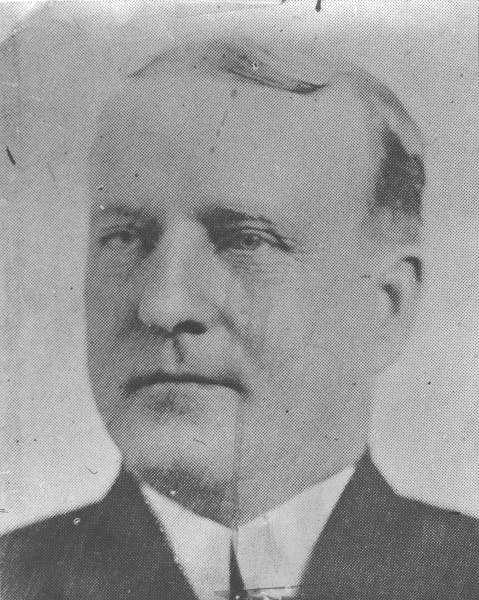
McCullough served as the Tulsa County sheriff during the 1921 massacre. In December of that year, he helped organize the Tulsa Law Enforcement Club — another group associated with the Klan. The club conducted vigilante raids to seize alcohol during Prohibition, particularly focusing on the Greenwood neighborhood.
Brian Hosmer recently retired as head of Oklahoma State University’s Department of History. He says several private organizations sprung up in the 1920s that did not use the Klan name explicitly in their titles but overlapped in membership and white supremacist ideals.
“The way that some of this stuff worked is that you didn’t have people on a Klan list,” he said.
Through an “old boys club” code of silence, many affluent, powerful members of the Tulsa community were able to take part in these hate groups without issue — like attorney Washington E. Hudson, who once represented Tulsa County as a state representative and senator.
Hudson co-founded the Tulsa Benevolent Association, which was incorporated as the holding company for the Oklahoma chapter of the Ku Klux Klan in January 1922. He also defended Dick Rowland, the young Black man whose arrest for assault was the impetus of the massacre.
“There are multiple names, multiple groups, and they are legitimate groups, I guess, in the sense that they’re separate,” Hosmer said. “But I think they are united, at least indirectly, in that they are white supremacist groups in a general sense.”
To keep or relocate — a monumental decision
Hosmer says it’s not hard to imagine why some might associate the Owen Park statue with the Tulsa Race Massacre.
“One can see that and understand it, because this is a moment of heightened white supremacy in Tulsa,” Hosmer said.
Kastner says the Tulsa Association of Pioneers was not a racist group, though some members had controversial ties.

“The people who helped build this city had their own point of view and things that we would condemn today, but we’re also telling the story from our own point of view,” he said. “I think that’s part of getting the whole picture of history.”
To that end, Kastner says, he would prefer to leave the statue in its place.
“It’s better to keep that reminder of the lesson there, even if the meaning of the monument has shifted or if it picks up additional meanings as we learn more or change the way we think,” he said.
Ultimately, Taylor and the Kitty Gang Family Foundation believe the statue should be in a museum, not a public park.
“I think the best overall idea for where it should be, if it’s going to be anywhere, is a museum to explain what it is,” Taylor said. “It’s not really what you want representing Tulsa’s oldest park. A park is supposed to be uplifting for everybody.”
Taylor says it could cost up to $10,000 to relocate the statue. That’s if the city signs off on its removal — and a museum agrees to take it.
News decisions at the Tulsa Flyer are made independently of our board members and financial supporters. Read more about our editorial independence policy here.
