


Noemi Rangel recalls when her dad was deported from the U.S. to Mexico 14 years ago. A self-proclaimed daddy’s girl, Rangel remembers the trauma she experienced as a result.
“I always say that while it still hurts and it absolutely plucked my world upside down, I was an adult when my dad got deported,” she said. “I had the luxury of understanding what was happening.”
Now her father is getting older, and she’s preparing in case he cannot return to the U.S. To make the process of inquiring about his belongings easier, she applied for dual citizenship in Mexico — and made that status official in October.
“If something ends up happening, if I don’t have dual citizenship, then whatever they may have acquired in Mexico would be really hard to try and fight for,” Rangel said. “My dad’s not young anymore and if he can’t come back, then I need to take advantage of the fact that I can go.”
While there has been a rise in Mexican nationals seeking dual citizenship for their U.S.-born children, more adults are also seeking the same status for themselves. Tulsans say they have different reasons for doing so, including taking care of their parents’ property in Mexico and protecting themselves amid the Trump administration’s deportation campaign.


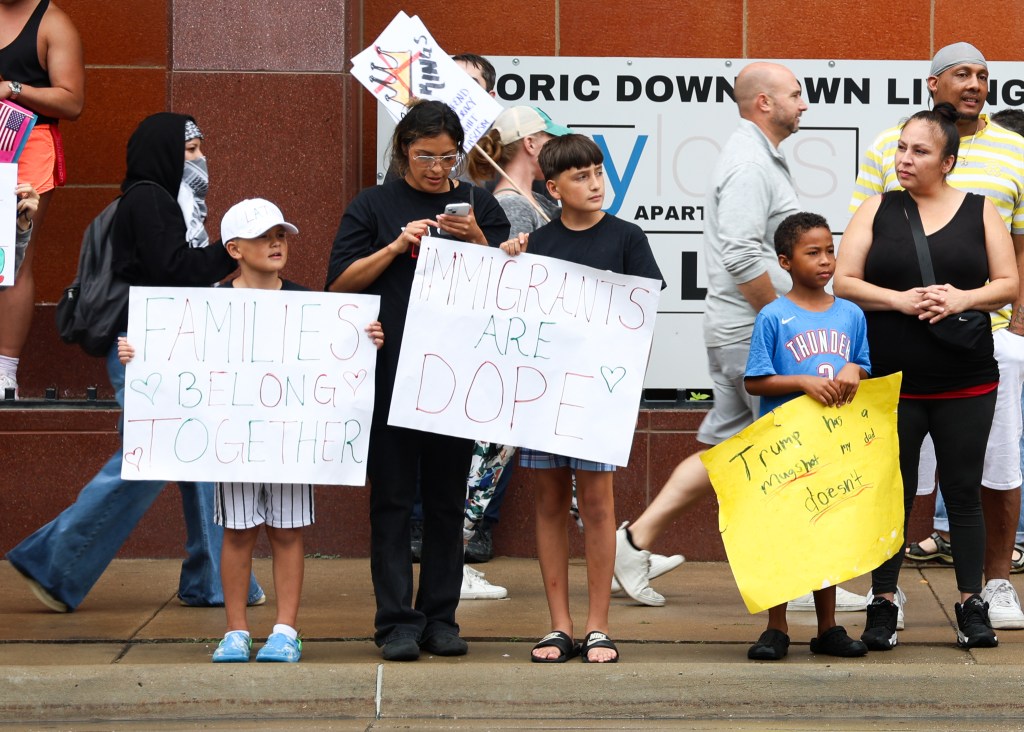
Dual citizenship applications across the country have soared in the last year. The process allows people to have their U.S. citizenship alongside another country’s citizenship. Rules vary by country. In Mexico, U.S. citizens can apply if their parents were born in the country.
Carlos Moreno is seeking dual citizenship for protection because he’s afraid the administration may stop abiding by the 14th Amendment, which grants citizenship to anyone born in the U.S. regardless of their parent’s citizenship.
“I feel like if I got my citizenship in Mexico that I would have something, otherwise I would have nothing,” Moreno said. “When you don’t have any citizenship, you don’t have a right to a lawyer … you might as well just be like not a human being, right, cause you don’t have any rights.”
He believes the Trump administration is targeting more individuals who look like him regardless of whether they are in the country legally or not.
“It used to be that, like, they would specifically target people who are undocumented,” Moreno said. “Now they don’t care. They literally don’t care. It’s like, ‘I don’t care if you have documents or not. We’re still going to attack you and take you away.’”

Similarly, Samuel Gonzalez is seeking dual citizenship to reclaim their heritage. Gonzalez identifies as Black and Indigenous with Mexican ancestry. Their father was born in Mexico, but the relationship wasn’t always easy.
“I am always trying to reclaim, you know, ancestry, tradition, culture and that’s a clear connection,” they said. “Not all my connections are clear.”
In addition to connecting with Mexican culture, Gonzalez is also thinking about safety — and whether a passport and dual citizenship could help them leave the U.S. as immigration enforcement grows more intense.
“It’s right on the brink of being a real necessity for a lot of us,” they said. “Even though I have my birth certificate and I have my passport and I have my ID and all of that …The way things are going, you know, maybe they will come for me and maybe that’s how I’ll get to Mexico.”

For Rangel, the idea of moving to Mexico isn’t new. But the urgency and her desire to have more options is. Her father suffered a fall last year, causing her to think more deeply about what the future may hold.
“It’s kind of bittersweet because even though I’ve grown up here, like, for a really long time I wanted to eventually explore the option of a long-term stay in Mexico, if not move to Mexico,” she said. “It opens that pathway as well. Now if I really did want to move abroad and work virtually or things like that, I have the ability to do so.”
This article was produced as part of a partnership between the Tulsa Flyer and La Semana, a Tulsa-based bilingual Spanish-English newspaper serving Latino communities in Oklahoma.
News decisions at the Tulsa Flyer are made independently of our board members and financial supporters. Read more about our editorial independence policy here.