

Danay Jones struggled with alcohol addiction for almost a decade.
Before a visit to jail gave Jones a wake-up call, one common thought process kept her reaching for a drink: the fear of missing out.
“One of the things I really struggled with was getting sober and staying sober,” Jones said. “I constantly fought with feeling left out, with going out and being social and being the only one not drinking.”
Jones’ solution was to foster a community of women facing the same struggle. She founded Sober Girls Houston, and later Sober Girls Tulsa, to create a safe space for women seeking sobriety.
Her nonprofit’s events allow women to connect and rediscover life through alcohol-free experiences. Sober Girls Tulsa has grown its community through the rise of Dry January — a social media-fueled challenge encouraging people to cut out alcohol for the month.

But the health trend has forced businesses to change how they operate to cover the losses that come from having fewer alcohol drinkers, whose purchases pad restaurant margins.
“You see an uptick of people drinking the N/A options in the month of January, for sure,” said Erica Healey, co-founder of Tulsa taproom and brewery American Solera. “We’re trying to adjust and have options for everybody and find extra ways to try to draw people in, because it’s sort of like, ‘brace yourself’ every year.”
January is historically a slow time for American Solera, Healey said, but the business’ non-alcohol sales that average around 1% over the entire year are often about 4% in January.
As a new generation is old enough to drink, Healey said she has noticed a shift in the urge to lead a sober life from younger crowds. Other than its signature beers, the brewery offers mocktails, non-alcoholic beers from other breweries and non-alcoholic frosé throughout the year.
“I think Dry January has kind of always been a thing, but it is interesting now that I think a lot more people are choosing sobriety as a lifestyle,” Healey said.
Healey is not the only business owner taking notice. Tulsa-based Nothing’s Left Brewing Co. is behind the non-alcoholic, plant-based mocktail brand Mood Brü. The WEL Bar, the sprawling bar located in Mother Road Market, offers similar options throughout the year. Both host events in January to draw in the “dry” crowd, including the WEL Bar’s “Sober Sips” mocktail night each Tuesday in January.
WEL Bar has hosted the event since 2022, said Katy Hall, chief communications officer for Lobeck Taylor Family Foundation, which owns Mother Road Market. Although businesses market toward Dry January during the slower month, Hall said the bar’s non-alcoholic options remain all year-round.
Jones, the sobriety group’s founder, has hosted several events with refreshments ranging from Mood Brü to wine alternative TÖST. Her’goal is to reach those looking for a new path focused on sobriety while still providing exciting experiences with fun non-alcoholic drinks.
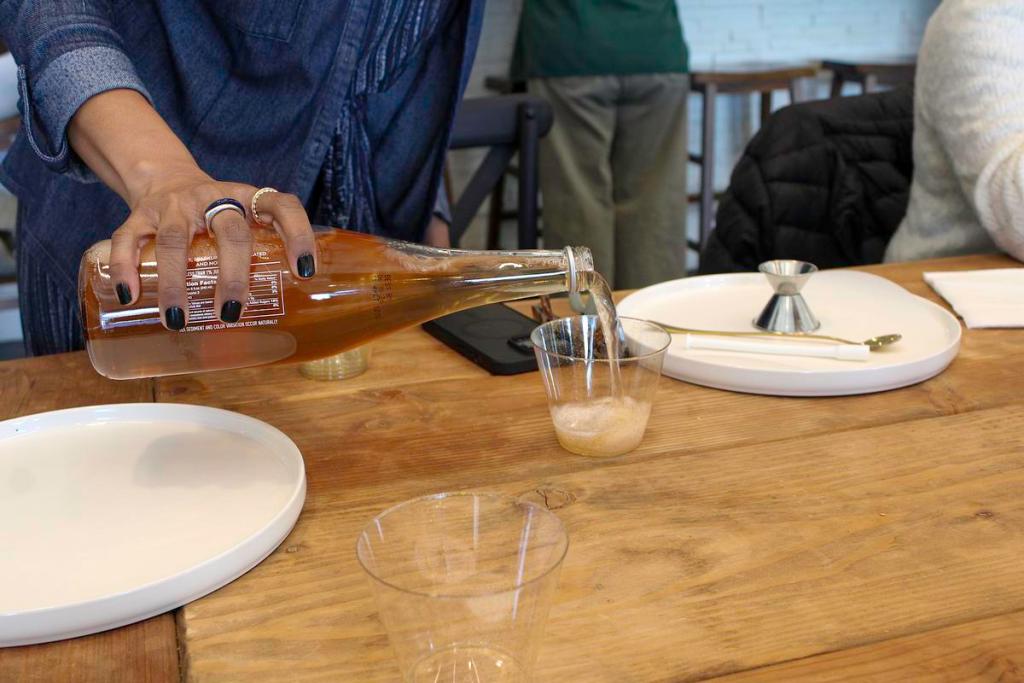
“There are so many people who are trying it out for 30 days, and then the majority of them sometimes will go ahead and continue that sobriety journey,” Jones said. “It’s always a nice time to meet people who are sober-curious, and to invite them to events so they can see what it’s like to have fun and not be completely intoxicated.”
Jones has noticed the shift toward sobriety among young people. In Tulsa, that lifestyle is made easier by the number of options available, she said. Over her two years living in the city, every establishment she’s visited has offered a non-alcoholic choice — and Jones says that’s rare.
“I’ve never experienced a city that has so many non-alcoholic options at bars and restaurants,” Jones said. “It’s really the prime place for anyone sober, sober-curious, because you will be welcomed as a patron no matter where you go.”
Raynee Howell is a freelance contributor to the Tulsa Flyer.
News decisions at the Tulsa Flyer are made independently of our board members and financial supporters. Read more about our editorial independence policy here.