


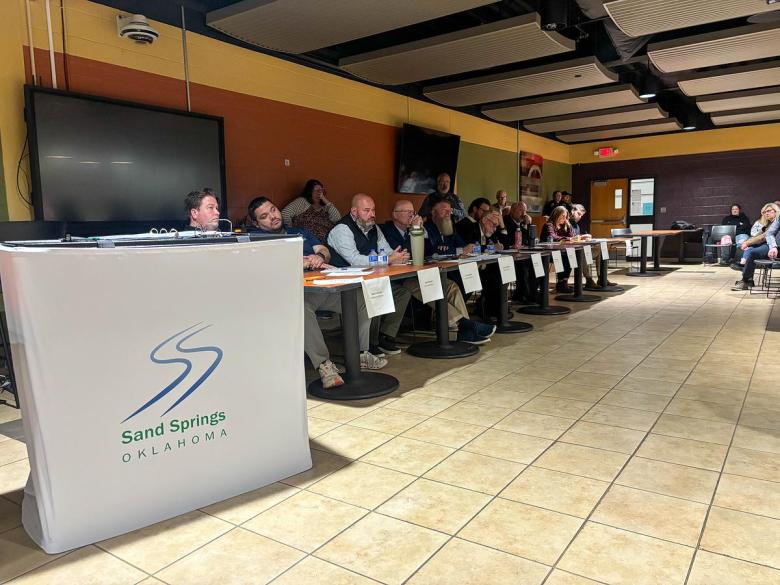
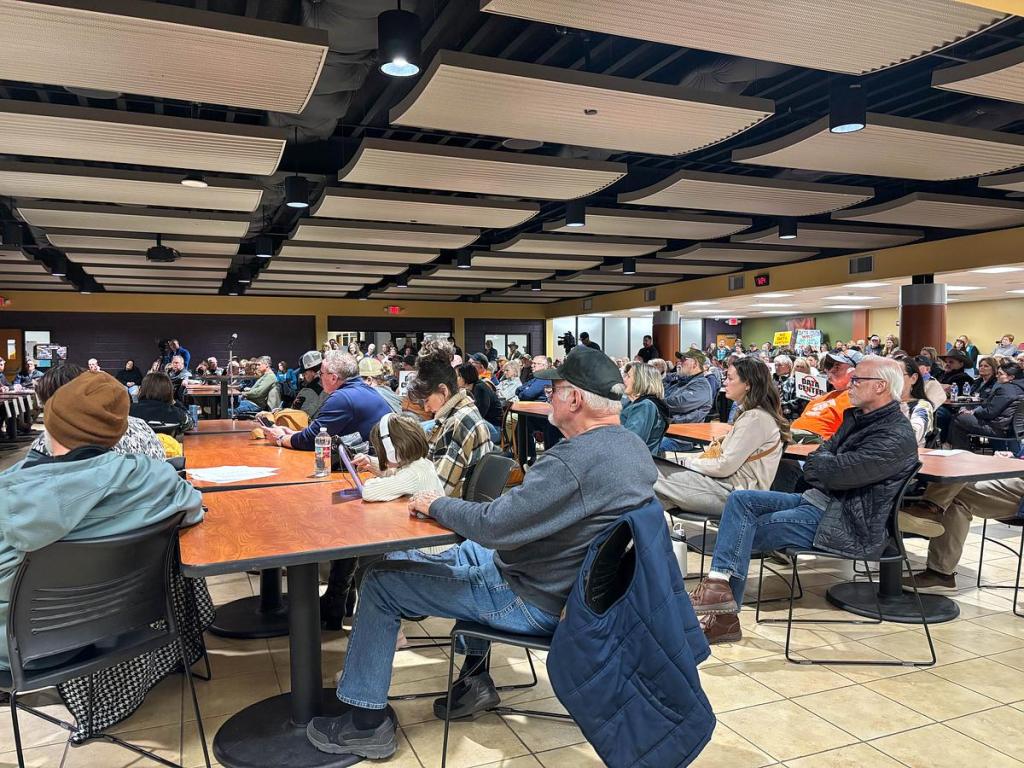
More than 300 people attended a town hall discussion led by Sand Springs officials Tuesday night on a proposed data center called Project Spring.
White Rose Partners, the developer behind the project and similar data center proposals in east Tulsa and Coweta, has been the subject of criticism from residents.
Those residents did not hold back in front of city officials and representatives for Google, which is bidding to become the end user of the data center.
Here is what we learned from the meeting last night.
Sand Spring officials see investment opportunity
Google was announced last week as the possible end user for the proposed 827-acre center along State Highway 97. It is slated to be used for cloud storage and machine learning, according to the Project Spring website.
Kato Franko, a senior public affairs manager for Google, said the tech giant sees the city as a place for them to grow.
“There is a strong workforce here. We have had a great experience so far in Oklahoma, and we would love for you to be a part of our story,” Franko told the crowd.
The Sand Springs property currently brings in less than $3,000 a year in property tax revenue, Franko stated during the meeting, but could bring in “millions” if the developer’s proposal is approved and Google moves in.
Franko added the data center will not disrupt traffic flow or cause any noise or air pollution in the community. Designs for the data center have not been finalized and still remain in the early stages.
Google will also pay for the power it uses, Franko said, and White Rose will fund system upgrades needed over time.
“By having a data center (developer) pay for those upgrades, it is saving the costs from hitting the consumer,” Franko said.
The center also plans to use air for cooling instead of water. Water will be used for “domestic purposes,” including bathrooms, water fountains and sinks, but plans can evolve over time, Franko said.
If the company builds something that uses water on a larger scale, Franko said they will have to comply with city regulations on how much can be used.
The project also plans to employ local residents to work on the center, though it’s not clear how many employees will work there when it is operational.
Residents are still skeptical
Residents took turns at the podium to directly address Sand Spring officials and Google representatives. Most comments were not in favor of the center.
Charley Pearson, fire chief for the Rock Volunteer Fire Department, said he is concerned the data center would cause noise disruptions and pollution to nearby farmland and ranches. Agricultural business has been suffering, Pearson said, and he believes an incoming data center would only exacerbate that issue.
“We are losing our agricultural land at an alarming rate. It is going out of production,” he said.
Pearson told the city he believes they are chasing the new data center proposal strictly for financial gain and not with the community in mind.
“We feel like you all have thrown us underneath the bus,” he said, drawing cheers from the crowd. “And here we are. Now we have to live with what you are going to do.”
Sand Springs City Manager Mike Carter assured attendees the meeting was planned for the community.
“This is not a required meeting,” Carter said. “We dedicated two and a half hours. We prioritized the people who live next to the center. We made a decision today to put the people who live next to the center a priority.”
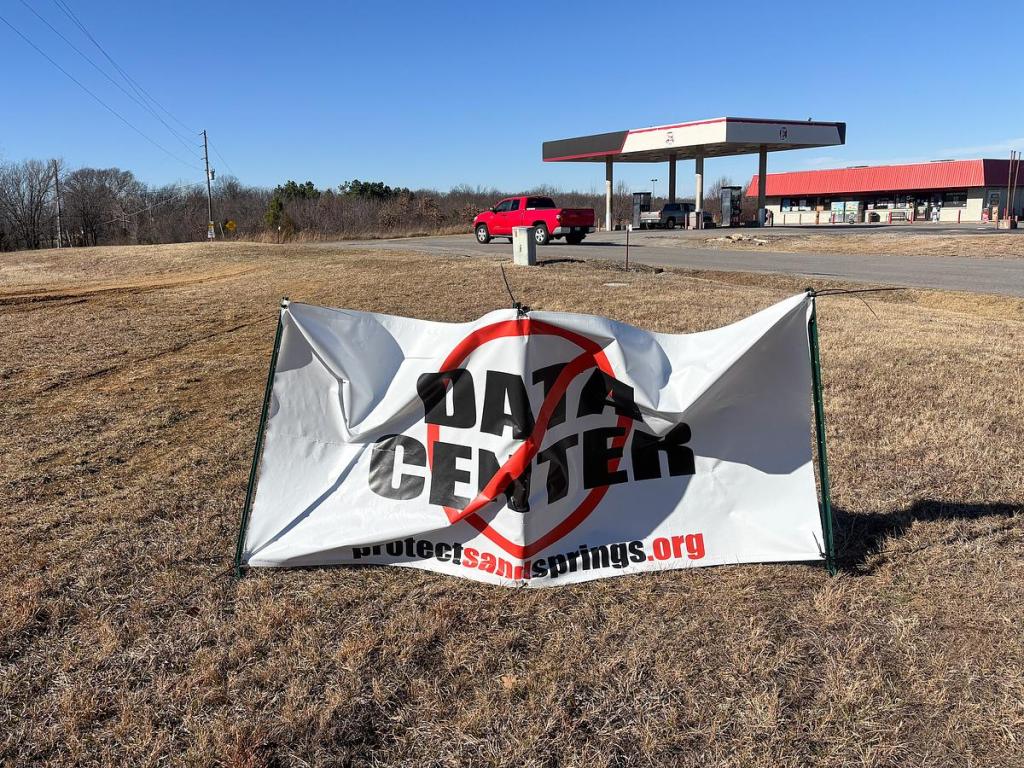
Sand Springs Mayor Jim Spoon tried to do the same, but not much helped as residents continued to speak and hold signs in protest of the project.
“Can you not listen?” Spoon said to residents. “You asked him a question, let him answer.”
What comes next?
The Sand Springs Planning Commission will consider a rezoning request for Project Spring Jan. 27. That vote will take place at Charles Page High School.
The high school will also host a Feb. 3 city council meeting, where officials are expected to discuss data center applications beginning at 6 p.m.
News decisions at the Tulsa Flyer are made independently of our board members and financial supporters. Read more about our editorial independence policy here.
