


Tulsa’s landscape has changed drastically over the century-plus since its incorporation. The discovery of oil, expansion of railroads, destruction and revitalization of Greenwood, growth of the aviation industry and explosion of the Tulsa Sound are just a few of the major events that defined the city’s geography.
To explore just how much Tulsa has changed, we collected archival photos from the Museum of Tulsa History, visited each location and captured its appearance today.
Tulsa’s Main Street, 1897
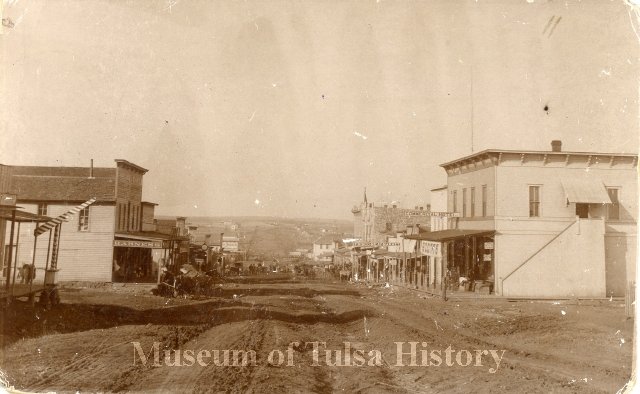
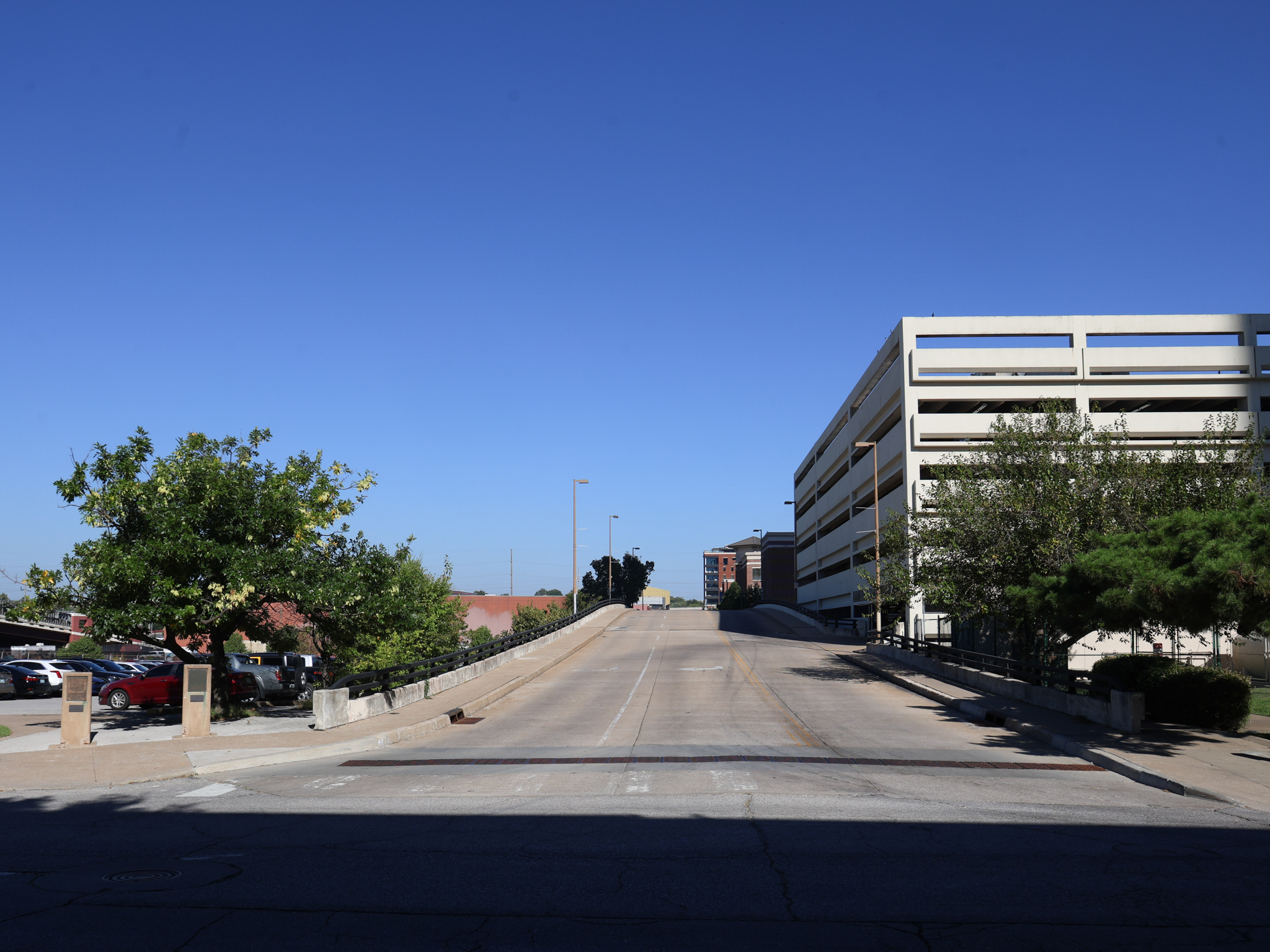
1st Street and South Main Street, looking north
In this north-facing view of Tulsa’s Main Street, taken a year before the city’s incorporation in 1898, several of the city’s pre-oil businesses can be seen along the unpaved street central to today’s downtown landscape, including The Indian Republican newspaper on the left. Today, parking lots and a concrete overpass have replaced businesses and dirt roads.
The bridge that saved Tulsa, 1904
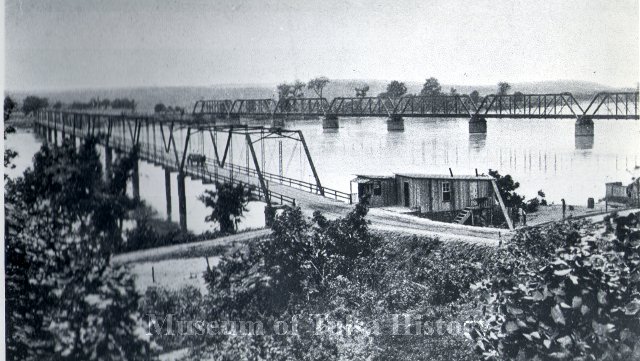
Looking down onto West 71st Street South
In the foreground of this image, you’ll see “the bridge that saved Tulsa” — that is, the first wagon bridge to cross the Arkansas River. The roadway opened a new path for the city, connecting Tulsans to oil fields that would define the city’s future growth. The toll gates read, “You said we couldn’t do it but we did,” a defiant message from bridge funders M.L. Baird, J.D. Hagler and Geo. T. Williamson. Eventually, the passage was replaced by the 11th Street Arkansas River Bridge on historic Route 66.

Hotel Tulsa Construction, 1911
119 E. 3rd St.
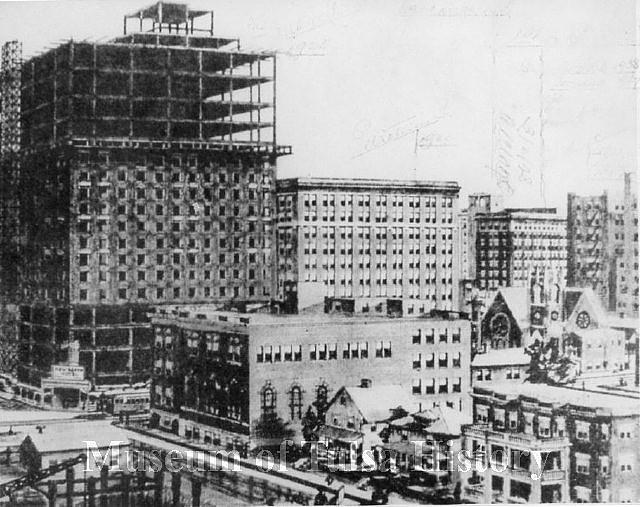
Constructed in 1911 and opening the following year, Hotel Tulsa hosted international, wealthy and affluent guests for 50 years. According to the MOTH, Tulsa oilmen often brokered deals inside the hotel’s lounge and restaurant. After sitting empty for more than a decade, the hotel was eventually demolished and replaced by the Tulsa Performing Arts Center.


Greenwood Avenue as seen before the Tulsa Race Massacre, 1918
Greenwood Avenue and Archer Street looking north
With hundreds of Black-owned businesses, churches and schools, Greenwood was one of the country’s most vibrant and prosperous Black neighborhoods in 1918, when this image was taken. The photograph captures the district prior to the white supremacist destruction of Greenwood during what is now known as the 1921 Tulsa Race Massacre. Now this intersection marks the district’s history, with institutions like the Greenwood Rising Black Wall Street History Center.


Council Oak Tree, 1920
1750 S. Cheyenne Ave.
Photographed in 1920, the Council Oak Tree is the center of Tulsa’s history. In 1836, Muscogee (Creek) Nation’s Locvpoka Tribal Town established Tulsa’s first settlement at the tree — placing coals and ash from the original fires of their homelands in Alabama at its base. Today the tree still stands tall and is listed in the National Register of Historic Places.


Mayo Hotel Construction, 1925
115 W. 5th St.
After nearly three years of construction and more than $3 million of investment, the equivalent of more than $56 million today, the Mayo Hotel became a defining feature of Tulsa’s skyline when it opened in 1925. With its own power, ice manufacturing and refrigeration plants, the Mayo’s 600 hotel rooms were a modern marvel. The hotel sat dormant for two decades in the late 20th century before being purchased in 2001 and reopening in 2009 after a major renovation.


Tulsa skyline from Reservoir Hill, 1930s
Reservoir Hill, north Tulsa
Reservoir Hill’s development north of downtown didn’t begin until the early 1920s, according to a neighborhood history. A newspaper ad for the neighborhood described it as “removed from the dust and odor of the water bank and other inconveniences of city life.” At the time of this photo, in the 1930s, the Great Depression had slowed development and home purchases in the area. The post-World War II housing boom brought back development, and the area has continued to attract residents drawn to its historic buildings and city views.


Central High School, 1935
212 E. 6th St.
Central High School opened in 1917, building upon the legacy of Tulsa High School — established in 1905 as the first Tulsa public school funded by public bonds. Central’s southern half was added in 1922, followed by the Manual Arts Building in 1925. That portion is now part of Tulsa Community College’s Metro campus.


Kendall-Whittier Library, 1935
21 S. Lewis Ave.
The largest of the four original library branches in Tulsa, the East Second Library “was an integral part of the neighborhood” for the first 60 years of its life, according to the Tulsa City-County Library. Since then, the original structure has been torn down and reestablished in 2000, now with a focus on bilingual services and celebrations for the neighborhood’s Latino community.


Greenwood Avenue, rebuilt, 1938
Greenwood Avenue and Archer Street, looking north
A new Greenwood, rebuilt in the 17 years following the Race Massacre, remained a hub for Black-owned businesses. Among these was the Dreamland Theatre, seen at the far end of the right side of the street. The iconic home for entertainment and culture in Greenwood was rebuilt by the Williams family following the massacre, among the more than 80 businesses similarly reconstructed. The Greenwood Chamber of Commerce and Black Wall Street Corner Store now inhabit the Dreamland’s former address.
Morningside Hospital, 1939
1653 E. 12th St.
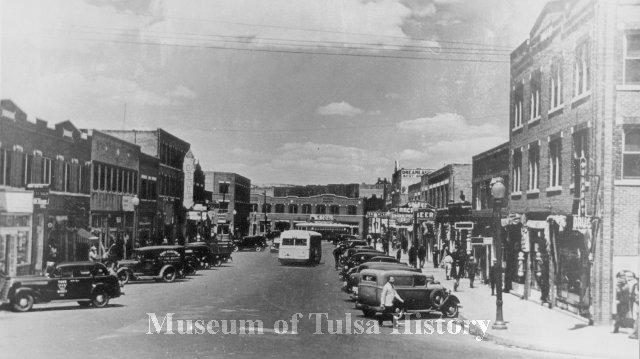
Morningside Hospital was first established in 1918 in response to a nationwide influenza epidemic, according to Hillcrest Medical Center, the hospital’s current identity. Captured here is the hospital’s second location, opened in 1928 off Route 66.


Bethlehem Supply Company, 1947
118 N. Lansing Ave.
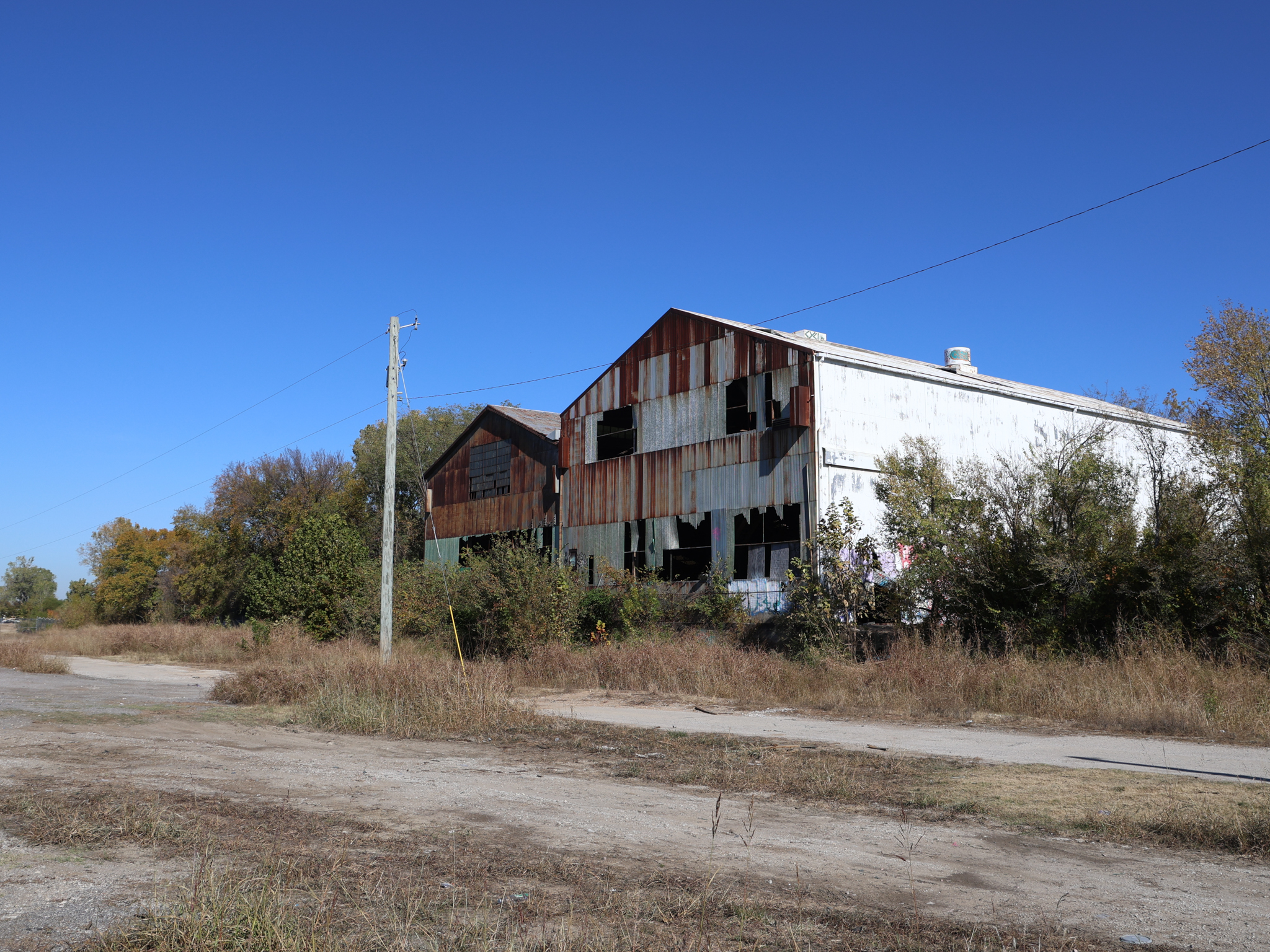
The Oklahoma Iron Works/Bethlehem Supply Co. building was once a hub for oil field equipment and manufactured massive amounts of iron and petroleum industry products. The structure is listed on the National Register of Historic Places.

Utica Square Shopping Center, 1955
East 21st Street and South Utica Avenue
Tulsa’s first “suburban shopping center” in Utica Square opened in 1952, featuring Humpty-Dumpty and Safeway grocery stores, Oklahoma Tire and Supply Co. and a bowling alley. The shopping center remains today, with beloved seasonal events, high-end shopping and dining — just no bowling alley.


Home Federal Savings Bank & Loan Bank, 1958
3045 S. Harvard Ave.
A long line of customers waited to enter the Home Federal Savings Bank & Loan Bank at its 1958 grand opening. The Art Deco-style building still stands today, including its iconic “time to save” clock, as a Bank of Oklahoma location.


Apache Drive-In, 1963
3700 E. Apache St.
The Apache Drive-In Theater opened in 1948 as an “exclusively colored theater,” according to an ad in the Tulsa World published that July. The theater operated with 250 to 300 parking spaces through 1979, when it was demolished. Its former location remains empty today.


Latimer’s Famous BBQ on Apache Street, circa 1970
1529 E. Apache St.
Latimer’s Famous BBQ was a longtime staple of Apache Street. Originally opened in 1929 by Major S. Latimer on Pine Street and Greenwood Avenue, the Apache location opened in the 1970s, closed in the ‘80s and opened again in the ‘90s. “Famous old barbecue places never die,” the Tulsa World wrote when announcing the return of Latimer’s $2 sandwich. “They just take time out and start anew.” The restaurant closed in 2008.


Tulsa Spotlight Theater, 1988
1381 Riverside Drive
Bruce Goff, a towering figure in the Art Deco period, designed Riverside Studio as one of his first commissions. It opened as a piano hall, music school and residence before it was bought by actor Richard Mansfield Dickinson in 1941. Dickinson made it the home of the Tulsa Spotlighters and his adaptation of the play, “The Drunkard,” a condensed version of “Ten Nights in a Bar Room.” It was an “instant success” and has continued to play every Saturday night at the Tulsa Spotlight Theater since 1953.


Old Drillers Stadium, 2007
4802 E. 15th St.
Three years after this photo was taken, the Tulsa Drillers would head to downtown’s ONEOK Field, abandoning the historic 15th Street location. The USA BMX’s national headquarters were slated to take the place of the minor league baseball team, but plans fell through. Today it remains an empty field, adjacent to the Tulsa State Fairgrounds.


News decisions at the Tulsa Flyer are made independently of our board members and financial supporters. Read more about our editorial independence policy here.
