



Lea este artículo en español aquí.
Luz Maria Chávez has lived in east Tulsa for 25 years. She’s always felt scared to be pulled over by a police officer, especially in recent years, as she doesn’t speak any English.
When the Tulsa Police Department announced Spanish-language classes, Chávez jumped at the chance to learn more about how police officers work.
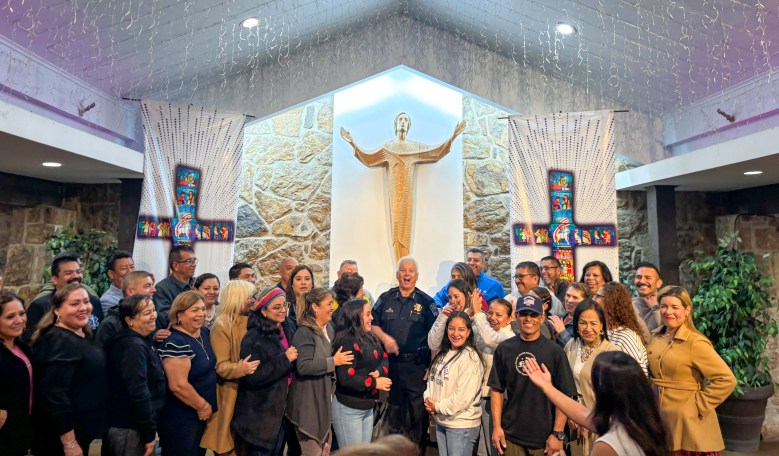
Chávez is one of 36 Tulsans part of the department’s first Spanish Citizens Police Academy, designed to connect with the Latino community.
In recent months, east Tulsa has seen an increased presence of Immigration and Customs Enforcement, sparking fear and slowing business in Tulsa’s Latino community. TPD is also receiving fewer 911 calls from the Latino community.
The department has faced challenges in hiring more Spanish-speaking officers. They currently have 75 bilingual officers, which makes up less than 10% of the department.
Department leadership said they felt a widening gap with the community and developed the Spanish-language classes to turn things around. The classes covered many aspects of the police department, including how officers investigate crimes like homicides and domestic violence.
At one point, attendees switched places with officers during simulated traffic stops. Acting as an officer, Chávez tried to get a “citizen” to listen to her – and they wouldn’t.
“I couldn’t do their job,” Chávez said in Spanish. “… The fear has now turned into respect.”
Similarly to Chávez, Olga Solorzano heard about the classes during mass at St. Thomas More. She’s always wanted to know about how police work with the youth.
Solorzano has lived in Broken Arrow for 30 years and has never had any issues with police officers, but they scared her nonetheless.
“I would see a police officer and my feet would even tremble,” Solorzano said in Spanish.
Since taking the classes, she sees officers on the road and considers rolling down the windows to greet them. She now understands the layers behind why they pull people over.
“Before, I was scared, and now I’m not,” Solorzano said. “And now, if they pulled me over, I would still cry, but they’re just doing their jobs.”
A chance for face time with Tulsa Police
The classes allowed for the group to have open access to police officers and ask them about the department and public safety.
Herbin lives in east Tulsa. He is in the country illegally and is concerned about how closely Tulsa police work with ICE. He asked the group of officers how they approach immigration in the city.
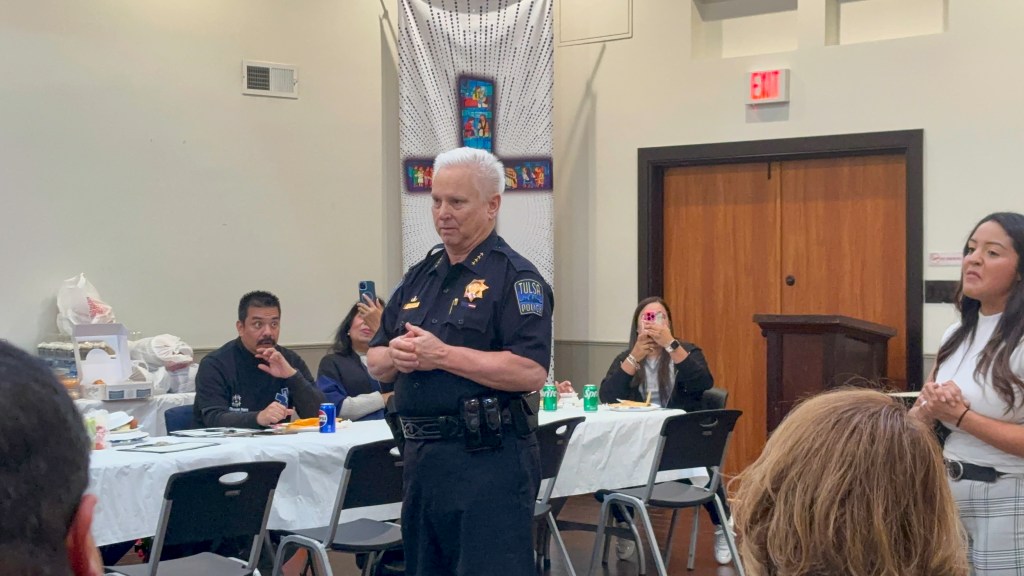
“Our position on enforcing immigration has not changed since 2011, the last time we voted on the policy,” said Tulsa Police Chief Dennis Larsen. “…The short answer is that we do not do immigration enforcement. If you commit a violent crime in my city, yes, you will be subjected to immigration authorities reviewing the arrest.”
Herbin said he appreciated how direct Larsen was about it. He’s always respected police officers but hasn’t ever felt the need to approach.
“They put their lives on the line all for the good of the community, so now I feel more respect for them,” he said.
New technology, more classes to come
Larsen told the group the department is working on adding new technology to body cameras to help with translations in near-real time. The technology would translate the majority of languages in the world, including Spanish, which is among the most common on Tulsa’s eastside.
“I have never felt so welcomed as I have when I’m on the side of town that is our Hispanic community,” Larsen said.
The police chief said this was the first of many Spanish-language classes to come, but there are no details on future classes yet.
This article was produced as part of a partnership between the Tulsa Flyer and La Semana, a Tulsa-based bilingual Spanish-English newspaper serving Latino communities in Oklahoma.
News decisions at the Tulsa Flyer are made independently of our board members and financial supporters. Read more about our editorial independence policy here.