

Mary Jo Webb was a woman who did her homework. It was 1999 when she lived in Fairfax and was working for the Osage Nation. She took on the task of studying maps, treaties and court cases to build an airtight case against the state.
She and her husband Melvin were ready to tell the State of Oklahoma’s tax commission they weren’t going to pay $945 in taxes she accrued while working for and living within the Osage Nation’s boundaries. Her confidence rested on the belief that the Osage Reservation had never been disestablished.
“Mom was a fighter for justice, she really was,” her son Anthony Webb said. “She was a fighter for the betterment of our Osage people.”
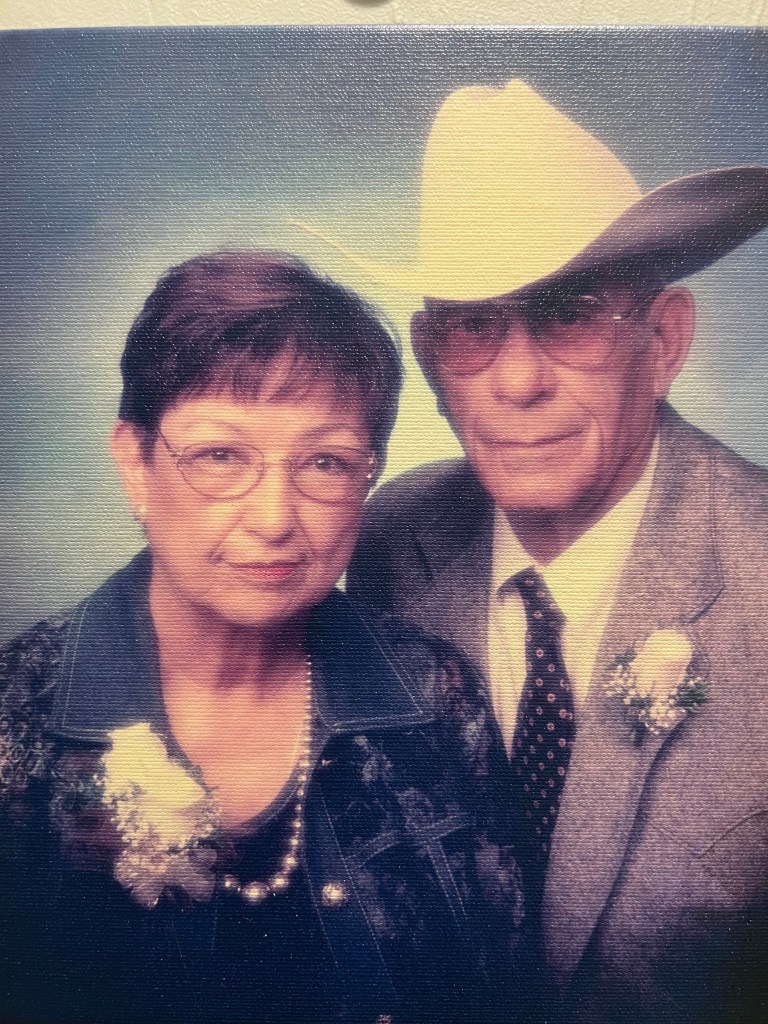
The Osage Nation helped her pursue the case in 2000. She lost and appealed it. In 2010, the 10th U.S. Circuit Court of Appeals ruled against her when they agreed with Oklahoma’s arguments that all Indian reservations had been disestablished in the state.
More than a decade after that ruling, the Osage Nation feels emboldened to take up the case again. A landmark 2020 Supreme Court decision has opened up a new path. If the Osage Nation’s case progresses to the U.S. Supreme Court, it, along with another case from the Muscogee (Creek) Nation, could change the tax status of tribal citizens who live and work within reservation boundaries.
The Osage Nation’s case is more than just about the restoration of the reservation boundaries. In the eyes of Osage citizens, the case could redefine how land in the state’s largest county is considered — and touch the state’s politics, including the 2026 governor’s race.
The Osage Nation filed a motion earlier this year in the U.S. District Court for the Northern District of Oklahoma to appeal the Irby decision in light of the 2020 Supreme Court McGirt decision. The case found the Muscogee (Creek) Nation’s reservation was never disestablished. The Osage Nation has argued, and and will argue again, that its reservation wasn’t, either.
If the nation’s filing to reconsider the case is accepted, it’s possible that Webb’s case – known as Irby due to the then-state tax commissioner’s last name – could end up on the U.S. Supreme Court’s docket. The Osage Nation has been looking for a way to get the decision overturned; in 2022, the nation filed a friend of the court brief in a criminal case, but the Oklahoma Court of Criminal Appeals has deflected.
The Osage Nation believes it has a better shot this time because of the legal facts surrounding the McGirt decision that reshaped how criminal charges against tribal citizens in the state are handled. Many tribal citizens say the McGirt decision was an affirmation of their tribal sovereignty while Oklahoma Gov. Kevin Stitt maintains the decision would allow criminals to go free.
All sides agree the decision has widespread implications for the state’s justice system. Jurisdictional issues in northeast Oklahoma between police departments are still a work in progress. In some cities and municipalities, tribal leaders say their jurisdiction over civil and criminal matters were not respected. In 2023, the Muscogee (Creek) Nation sued the City of Tulsa over criminal jurisdiction before agreeing that Tulsa would defer criminal jurisdiction to MCN in June.
Due to an increase in its number of cases, the FBI requested an additional $22.5 million in 2022 to increase staffing in its Oklahoma offices and the U.S. Judicial Conference asked Congress to fund and appoint five new federal judgeships in eastern Oklahoma to help manage the new caseload.
As local and state officials wrestle with McGirt’s consequences, tribal nations are using it to raise the issue that their reservations were still intact since statehood — even if they accepted allotment. This goes against the story the state told itself about its origins.
‘We bought this reservation’
Osage was the last tribal nation to accept the allotment of its lands in 1906. Chief James Bigheart could see that statehood was coming and accepted the federal policy on one very important condition: the nation would retain the rights to the minerals beneath the ground. The Osage Nation would, essentially, have an underground reservation.
“We bought this reservation,” attorney and Osage citizen Elizabeth Lohah Homer said, referring to the treaty enacted in 1872 between the Osage Nation and the United States. The Osage Nation agreed to move from their lands in Kansas to what was then-Indian Territory and purchased their reservation from the Cherokee Nation.

During the allotment era between 1887 and1934, Congress took land held communally by tribal citizens, divvied it up into tracts and paid the tribe for the surplus land. In Osage County, all of the land was allotted to tribal citizens, leaving no surplus. It was the tribal nation’s reservation and required congressional approval to be disestablished.
When the Muscogee (Creek) Nation argued the McGirt case, the centerpiece of its argument was that Congress had never specifically revoked the reservation’s status.
“There is only one place we may look: the Acts of Congress,” Justice Neil Gorsuch wrote in the McGirt decision, pointing out that only Congress can dissolve a reservation.
Osage leaders have argued — and plan to argue again — that Congress has made no law intending to dissolve the reservation, and thus it remains intact.
Gary Pitchlynn, a Choctaw citizen and lawyer, worked for the Osage Nation when they first filed the case in the Northern District of Oklahoma. He says the nation has an even stronger case than the MCN did when they argued their case more than five years ago.
In the Irby case, Oklahoma argued that it must have been the intention of Congress to terminate the reservation since much of the land is currently owned by non-Osages, Pitchlynn said.
“That was their simple, straightforward argument,” Pitchlynn said. “Our argument was that you have to look at more than simply what happened to the land in terms of ownership. You have to look at the true intent of Congress.”
Casino confusion
It was 2005, a year before Jim Gray was about to enter his second term as Principal Chief of the Osage Nation, and things were tense. The tribe’s first casino in north Tulsa was scheduled to open soon, but the foundational fact that would allow it to operate was in question: Was the reservation intact or not?
They were still waiting for an answer from the National Indian Gaming Commission, which regulates tribal gaming. The commission was supposed to let them know whether they agreed with the Osage Nation’s opinion that the reservation was still intact.
The tribal nation had trained employees, bought billboards and had a slew of media coverage planned. The problem was whether the casino was opening on trust land that is set aside for the use of the tribal nation where the title is held by the United States.
Gray said the Osage Nation was under the assumption that the nation’s reservation was still intact — and they submitted research to the federal government showing why it was never disestablished.
The gaming commission had ruled the nation wasn’t allowed to operate the casino because the land wasn’t in trust and therefore would have been illegal. Finally, the day before Osage Nation’s casino was set to open, it received an opinion from the U.S. Department of Justice.
According to Gray, it read, “We have reviewed the tribe’s opinion, and we concur that their reservation is still here.”
“Based on the strength of that letter and the DOJ decision not to take action or disagree with the NIGC, we opened up,” he recounted.
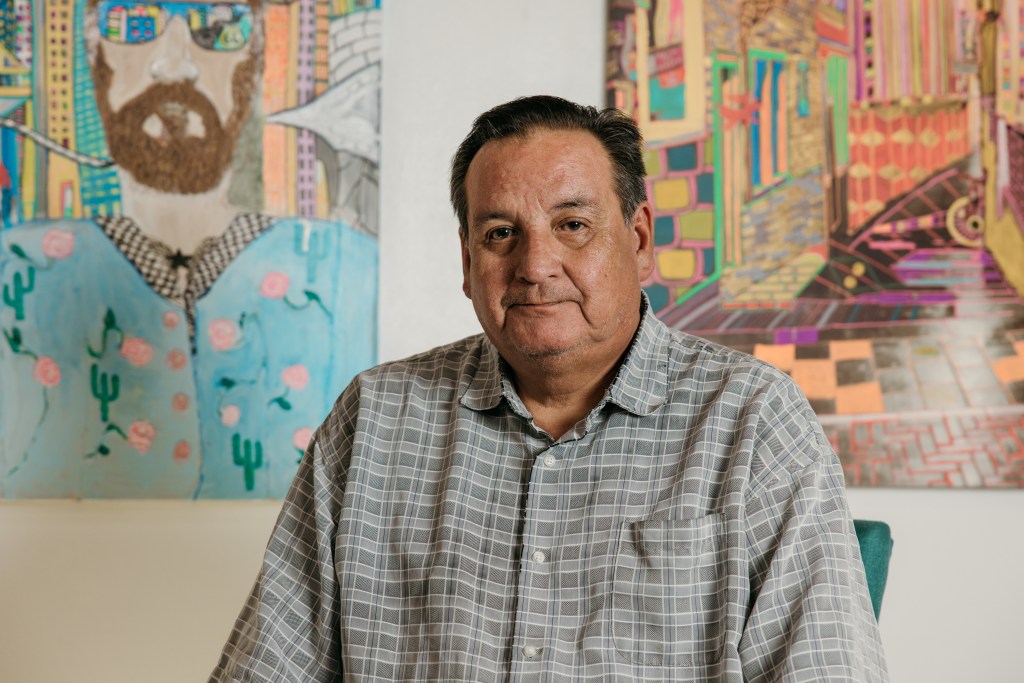
Gray remembers he was in Washington, D.C. on business where he ran into fellow Osages who told him to “open up a bunch of casinos as fast as I can.” And that’s exactly what Gray did, securing decades of economic prosperity for the nation to open up courts, fund the government and cultural services for citizens.
Four years later, in 2009, the first decision in the Irby case came down: The Osage Nation’s reservation wasn’t intact. The consequences could have been catastrophic: All the casinos would have to close.
“I was kicked in the gut, literally,” Gray said. “I look back now, and I had a successful eight years as chief. The biggest disappointment that will forever stain my legacy is losing this case.”
So, Gray flew to the nation’s capital to plead for the government to quickly put the land the casinos were on into trust so they could operate them legally. Putting land into trust is a process that takes years, but Gray was asking them to do it as soon as possible. He remembers getting down on his knees and begging officials within the Department of the Interior.
Eventually, the matter was settled and the land was put into trust. Osage Nation’s casinos all operate legally.
A fight against the tax commission
When Gray first became Principal Chief, he inherited the case from his predecessor, Charles Tillman, who had decided that Webb’s fight had bigger implications than one citizen’s taxable income.
It wasn’t about $945. It was about land and jurisdiction.
Osage County’s biggest landholders are non-Osages. Osage citizens currently hold 3.5% of the land there.
The Drummonds, a prominent ranching family with roots in Osage County dating back before the 20th century, own 8.8% of the county’s land, making them the largest private landowner, according to a map created by Bloomberg’s MapLab.
That includes Attorney General Gentner Drummond, who owns a 25,000-acre ranch near Pawhuska, and is seeking to be the Republican Party’s gubernatorial nominee in 2026. He believes the case is settled and the reservation has been disestablished. The case could be argued during his campaign, which might put him at odds with tribal nations — a key relationship he said he wants to improve.
“I believe that Irby was rightly decided. I fully respect and acknowledge the sovereignty of the Osage Nation and will always take steps and actions consistent with it, notwithstanding the jurisdictional boundary issue,” Drummond told Osage News earlier this year.
Drummond repeated those words to the Flyer. He said he has great respect for all 39 tribal nations in the state and thinks they are a huge benefit, but believes that the Irby case is settled.
“When it comes to criminal justice, there are bright lines,” he said. He believes that if the Osage Nation wanted to overturn the results of the Irby decision, they should have filed right after McGirt was decided.
“It’s a stale claim,” he said.
If the Osage Nation had their reservation resturned, Pitchlynn says not much would change for non-Osage citizens, much as it has been in Tulsa County.
“The sole difference is that the state is not going to have criminal jurisdiction to prosecute Indian defendants in state court for the crimes that naturally are going to fall under the jurisdiction of the Osage Nation tribal court,” Pitchlynn said.
Renewed flight
Lohah Homer, an Osage citizen, attorney and former vice-chair of the National Indian Gaming Commission, feels her blood pressure rise when she thinks about the arguments the Osage Nation made before the 10th Circuit and the arguments the Muscogee (Creek) Nation made before the U.S. Supreme Court.
“Whenever I put Irby and McGirt side by side, I feel like this was a complete vindication of our legal position in Irby,” Lohah Homer said.
“The McGirt decision just flicked all of those arguments out of the water,” Lohah Homer said, referring to the argument the MCN made. There was no act of Congress that disestablished the reservation.
Lohah Homer believes the Osage Nation has a very good chance to get their reservation reaffirmed. It just comes down to timing and who can side with Gorsuch, who has repeatedly ruled in favor of tribal nations.
On July 11, lawyers for the Osage Nation faced off with state attorneys in Osage County District Court.
Their arguments remained the same, with the state arguing that statehood in 1907 dissolved the reservation and the nation stating its reservation was never disestablished. There was one key difference: the 2020 decision affirming the MCN’s reservation status.
“Irby’s foundation has been changed by McGirt,” the nation’s attorney, Eugene Bertman, told the judge. “Today, the facts are different.”
A warrior for her people
Those facts have only emboldened the Osage Nation’s mission to follow through on Mary Jo Webb’s original wish. Her son Anthony said after his mom lost the case, it was hard for his parents to pay back the tax debts they owed, but they made it work.
Gray said Webb was convinced that she was just going to start a one woman fight against the state tax commission.
“She would not have filed that lawsuit if she didn’t think she could win it,” Anthony Webb said.
She knew that if she did win, it would have set a big precedent and believed the state had no right to tax her or any other Osage citizens.
“She was a warrior for her people,” Webb said.
Allison Herrera is a freelance contributor to the Tulsa Flyer. She is a 2025-26 JSK Journalism Fellow at Stanford University and previously reported for APM Reports and KOSU. Her most recent work is the Audible Original documentary “Tribal Justice: The Struggle for Black Rights on Native Land.”
News decisions at the Tulsa Flyer are made independently of our board members and financial supporters. Read more about our editorial independence policy here.