

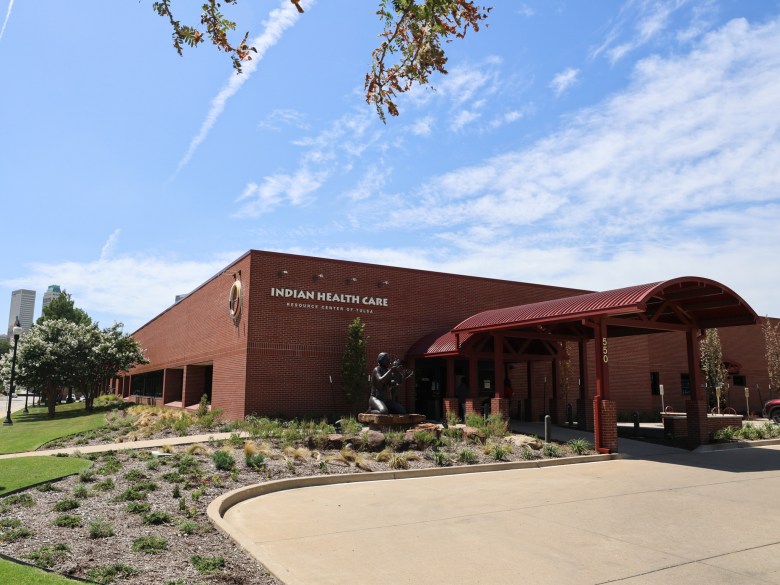
When Carmelita Wamego Skeeter was hired as one of the Indian Health Care Resource Center’s (IHCRC) inaugural staff in 1976, she worked with repurposed World War II medical equipment and a doctor who volunteered once a week at the clinic.
Now she’s the CEO and – 49 years after starting – cut the ribbon on a new, fully staffed 62,000-square-foot expansion at the corner of South Peoria Avenue and East Sixth Street.
The space, known as Building 530, has a new fitness center, physical therapy program and upgraded dental and optometry spaces. The expansion also includes three new drive-thru lanes at the clinic’s pharmacy to handle over 1,200 daily prescriptions. IHCRC also plans to open a same-day clinic and add occupational and speech therapy.
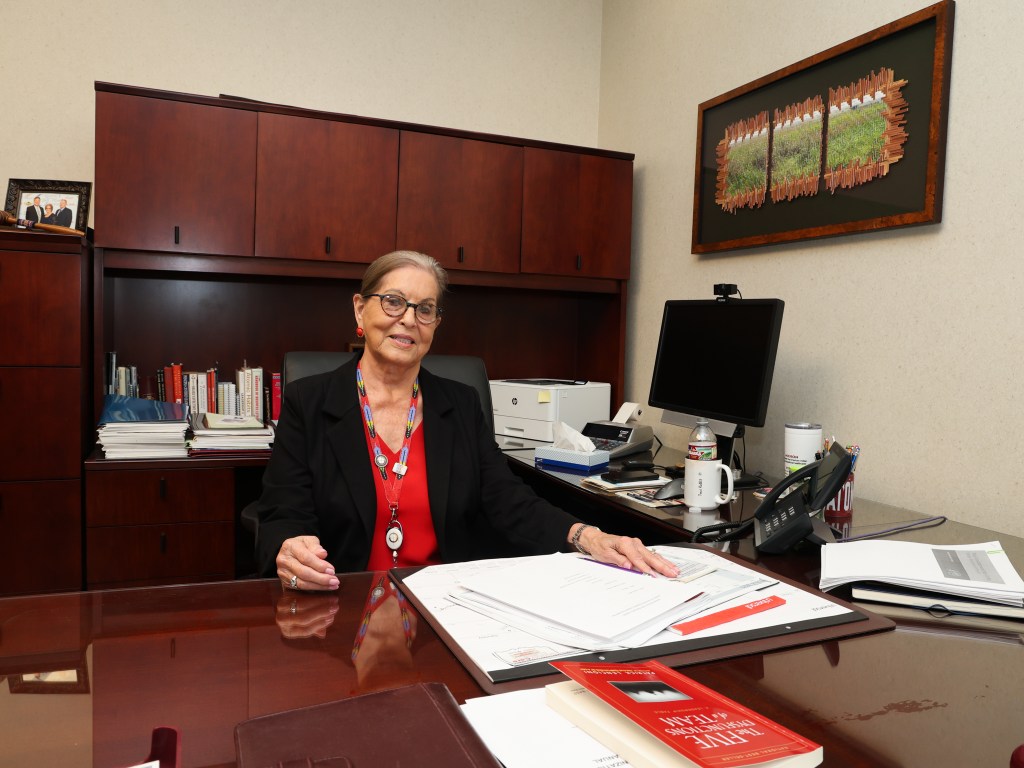
The expansion adds to an already busy clinic, creating a hub for the Native American community, culture and care. Through expanded medical services, long-term health programs and cultural events like the Dance of the Two Moons, the clinic supports both physical and cultural well-being. With more space and a fully staffed team, patients can expect shorter wait times and more access to care.
Skeeter said that before the expansion, the center’s wellness department was the size of a small office space, and the pharmacy was overwhelmed by demand. Now, IHCRC has the room to provide outpatient care to its 14,000 permanent patients without having to send them to outside providers.
“The reason we did all of this is because we were referring patients out for treatment at other locations,” Skeeter said. “We thought if we could provide those same services in-house, that would help our patients and help us.”
What services are offered at the Indian Health Care Resource Center?
- A pharmacy for prescriptions written by center physicians
- Behavioral health services
- Dental and optometry appointments to certain patient groups
- Diabetes management and nutrition education
- Medication education
- Support for pregnant women
Skeeter, a member of the Citizen Potawatomi Nation, recognizes the importance of reliable and accessible health care within the Native American community in Tulsa. Skeeter grew up caring for her 12 younger siblings, a sense of responsibility that followed her into adulthood.
“Whenever something happens that [people] need help with, I want to take care of it,” Skeeter said. “I love helping people and seeing to whatever their need is.”
In 1976, Skeeter surveyed 579 Native American households in the Tulsa area and found a lack of access to medical care in the community. Skeeter said the nearest hospital at the time, Claremore Indian Hospital, was 30 minutes away, forcing many to miss work or school and leaving those who couldn’t afford the time off without care. The clinic was the first step in creating accessible healthcare closer to home for Native American patients.
“We started with the mission of keeping children in school and keeping parents on the job,” Skeeter said.
In the years since Skeeter and her colleagues embarked on their mission to empower Tulsa’s Native American population, others have joined. The Muscogee (Creek) Nation Department of Health opened a clinic in Sapulpa and a hospital in Tulsa. With more opportunities for care available, the expansion enables IHCRC to focus on wellness.

Skeeter emphasized the importance of promoting long-term healthy habits among Native Americans through programs such as youth fitness, prenatal classes and meal prep courses. The programs extend beyond check-ups and prescriptions, creating a lasting impact in the community. Tanya Cain, the chief operating officer, said the expansion provides space for patients and staff to thrive.
“It gives us a greater opportunity to connect with our patients in meaningful ways,” Cain said. “We’re meeting people where they are, offering support that reflects their values and goals.”
Muscogee (Creek) Nation Second Chief Del Beaver attended Building 530’s opening. He said the clinic is an essential resource for tribal citizens, expanding beyond fixing broken bones and applying Band-Aids. It fosters community growth while building connections and culture.
“Our goal is to not only make them (tribal citizens) well, but to help them be well,” Beaver said.
Hayden Alexander is a freelance contributor to the Tulsa Flyer.
News decisions at the Tulsa Flyer are made independently of our board members and financial supporters. Read more about our editorial independence policy here.