

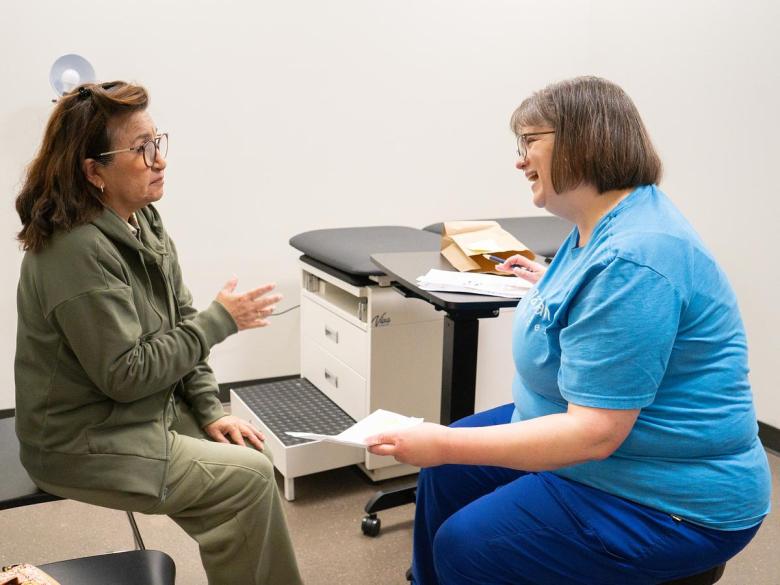
Debra Berk tells this story: A young mother with three small children walked into a Good Samaritan Health Services women’s clinic in the Tulsa area. She had no health insurance. And she was diagnosed with breast cancer.
The woman is one of more than 400,000 uninsured Oklahomans, and Good Samaritan took on the costs of her treatment. Berk, the organization’s chief operating officer, said she has plenty of stories just like this.
Services at Good Samaritan are designed to head off medical expenses before an uninsured patient goes to a hospital and the hospital has to absorb the cost of emergency services under federal law. The nonprofit tracks how many patients it keeps out of the emergency room.
“So we figure we save hospitals a couple of million dollars a year, just based on the numbers that we track,” Berk said. “But we also have no idea how many people would be forced to go to the emergency room if they didn’t come to us because they have no access to care.”

Although these programs are invaluable to a state with a high uninsured population and limited access to care, the demand for medical services outstrips the supply of funds. As a result, thousands of uninsured Oklahomans receive emergency care each year without paying.
In turn, local hospitals lose millions of dollars from providing services they would normally charge for.
Cost of uninsured care
Hospitals that absorb the cost can experience financial strain, which can result in cuts to services and staff while also placing a hindrance on expanding programs and equipment upgrades. In the worst cases, it can cause closure.
Tulsa’s Hillcrest Healthcare System experienced the consequences two decades ago. The debt from providing care for uninsured patients and financial losses became too much for the nonprofit hospital. A for-profit company, Ardent Health Services, acquired Hillcrest and has kept its head above water while still prioritizing uninsured care as required by law.
Hillcrest lost $32 million through uninsured care costs in 2024. Other hospitals have the same commitment without the financial backing.

Since the COVID-19 pandemic, uncompensated care — uninsured care not covered with external programs or financial assistance from the hospital — has cost St. Francis, a Tulsa-based nonprofit hospital, about $173 million. The hospital covered $57 million in charity care in 2024 but never received payment for more than $45 million of uncompensated care.
In 2024, it cost more than $30 million to provide medication support for uninsured patients at St. Francis — nearly 72% of the entire cost of its uncompensated care. The hospital also lost $10 million for in-house trauma coverage, which is the cost of having trauma specialists on staff in case of an emergency.
“We provide treatment to all patients with emergency medical needs, regardless of their ability to pay or their insurance status,” Neil Schultz, the VP of finance and revenue cycle for Saint Francis Health System, said in a statement. “That commitment does come with significant financial responsibility for hospitals like ours.”
Ascension St. John, another nonprofit Oklahoma hospital system, spent nearly $307 million to provide uncompensated care in fiscal year 2025.
Programs, Medicaid expansion help recover costs
Despite the cost of providing uncovered care, St. Francis and other Tulsa hospitals have committed to treating uninsured patients beyond the emergency room with help from internal and external programs. Both St. Francis and Ascension St. John have charity care and financial assistance policies. As nonprofits, some costs can be claimed as charity or community care.
“While each situation is different, the community benefit numbers we provide each year — including charity care, medication assistance and unreimbursed services — reflect the substantial investment required to care for uninsured and underinsured patients,” Schultz said in a statement. “It is an important part of our mission to treat every patient who needs emergency medical care.”
Without nonprofit status, Hillcrest Medical Center’s uninsured care debt falls completely back on the hospital. But the cost in 2024 is half of what the hospital lost pre-COVID-19, as uninsured rates in the state continue to drop, according to the U.S. Census Bureau.
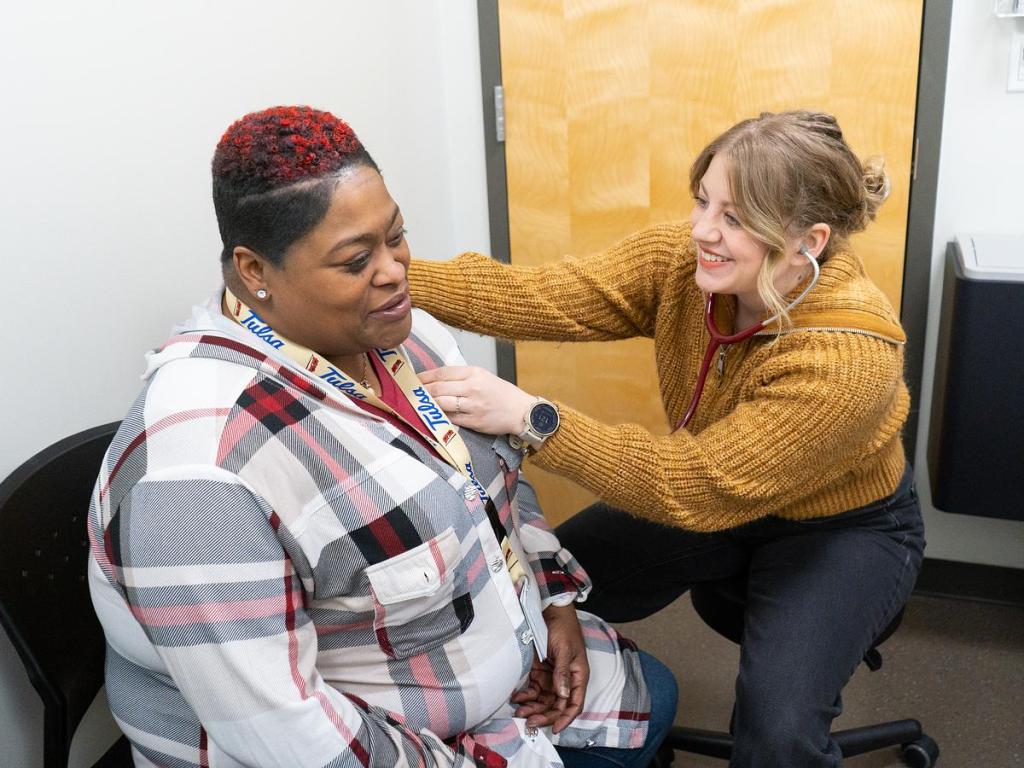
Voters approved a Medicaid expansion in 2020, and it was one of the largest organized efforts to reduce uninsured rates in Oklahoma, said Laura Wilcox, the senior director of communications for Oklahoma Health Care Authority. SoonerCare, Oklahoma’s Medicaid program, now covers adults ages 19 to 64 whose income totals 138% of the federal poverty level or under.
“SoonerCare lowers Oklahoma’s uninsured rate by offering affordable coverage to eligible residents who would otherwise go without health insurance,” Wilcox said.
The state’s uninsured population decreased by about 100,000 since 2021, the year the expansion went into effect, according to the U.S. Census Bureau. Although the number has decreased, Oklahoma still ranks third, behind Texas and Georgia, in its uninsured numbers. Hospital and community programs are covering the cost of providing care wherever it can.
Options for uninsured patients in Tulsa
Ascension St. John’s financial assistance policy may allow patients whose income is equal to or less than 250% of the federal poverty to receive a 100% discount.
“Our charity care policy is rooted in our commitment to serve all patients, regardless of their financial situation,” an Ascension St. John spokesperson said in a statement. “We believe that access to health care is fundamental to human dignity, and our financial assistance programs reflect this belief.”

Schulz said St. Francis recommends patients apply for its financial assistance policy. A patient with a family income of up to 250% of the federal poverty level may also qualify for a 100% discount. In 2024, 32,036 patients received free or discounted care after applying for financial assistance at St. Francis.
The existing population of uninsured Oklahomans can also receive charity care outside of the main hospitals. Good Samaritan Health Services provides health care free of cost across 13 locations in the Tulsa area. The nonprofit also works alongside St. Francis and Ascension St. John for necessary procedures and additional tests.
“Even if they need an emergency room visit, if they come to our clinic, we can do a really quick referral so that their emergency room visit is covered,” Berk said. “And we hope that we prevent people from going to the emergency room. We’re able to stabilize them so they don’t need to go.”
Raynee Howell is a freelance contributor to the Tulsa Flyer.
News decisions at the Tulsa Flyer are made independently of our board members and financial supporters. Read more about our editorial independence policy here.