


Last winter, Evan Dougoud drove past someone he thought was dead in the cold on Admiral Boulevard and Sheridan Road.
His body was halfway in a trash can, and he wasn’t talking.
“He was breathing though and, eventually, he was like, ‘I’m sorry.’ He said, ‘my hands are numb, my feet are numb. I stole the trash can to stay warm,’” said Dougoud, president and founder of homelessness service provider BeHeard Movement. “I just couldn’t believe it and his clothes were frozen to the ground.”
This is only one experience of many showcasing the high demand for shelter for unhoused Tulsans during the winter, especially on the eastside.
In response to the need, BeHeard Movement partnered with CREOKS, a nonprofit organization providing behavioral health services, and the City of Tulsa to open an inclement weather shelter that accepts unhoused people and their pets in east Tulsa. The shelter, located at 7216 E. Admiral Place, opened Nov. 17 and will continue accepting people through March.

BeHeard recently conducted a survey asking guests where they would go if the shelter wasn’t available.
“One person said, ‘I’d probably be dead,’” Dougoud said.
Life at the inclement winter shelter
Guests at the inclement winter shelter are welcomed with a place to stay warm and off the streets. Their day room, which turns into the men’s sleeping quarters at night, is the area where most guests spend the day.
They have access to board games and television, and receive three meals a day. The shelter has a coordinator dedicated to managing its culture and has taken guests to see the zoo and Christmas lights in the neighborhood, Dougoud said.
“She’s making sure it’s fun and so we’re not just waiting ‘til night,” he said.
Throughout the day, guests also have access to showers, laundry, mail services and case management with CREOKS.
Bobbi-Jo Herndon found the inclement winter shelter through Dougoud, who she met around the area. She’s been there since it opened in mid-November. You can often find her completing diamond art to stay busy.
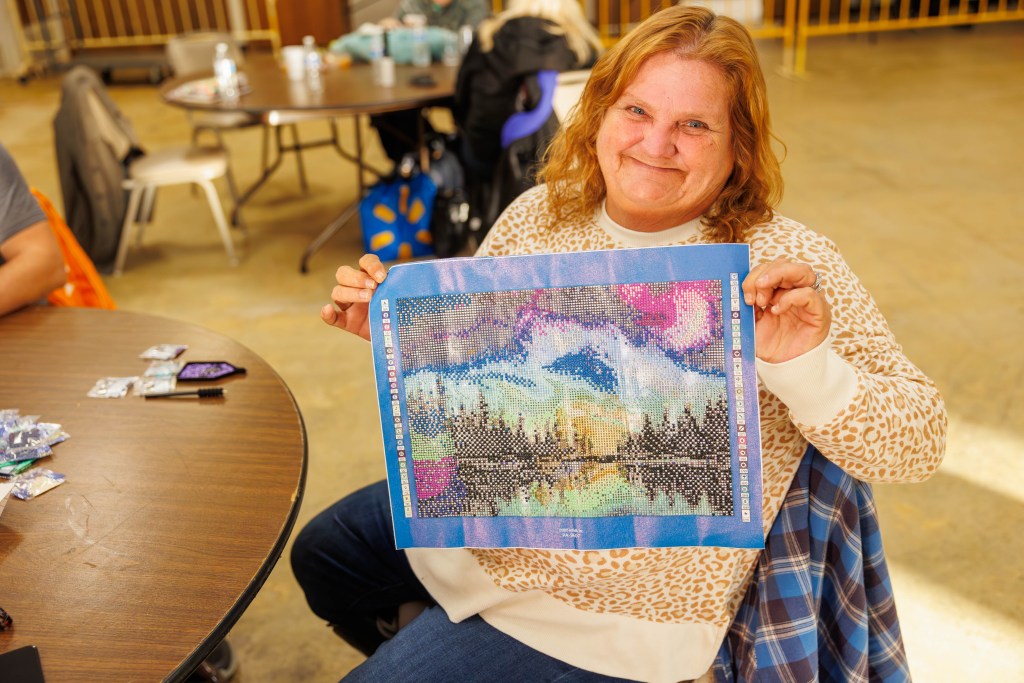
“It’s awesome being here,” Herndon said.
She is one of many helping around the shelter as well. She helps serve food, and says they recently served spaghetti and meatballs — one of her favorites.
Many guests take on chores without being asked, Dougoud said. They put out tables and chairs and help serve breakfast.
Roughly six current guests have jobs they head to throughout the day. Some often get on the bus and go somewhere else if they get tired of being inside.
Roberta Irvin said she was out in the cold after she left an apartment complex that wasn’t doing her right.
“I felt like I had to go, and yeah, the streets are hard, but I’ve done it before,” Irvin said. “… The bad thing is, it’s so cold out here. I couldn’t handle it no more.”

She found out about the shelter from her phone company. She hopped on a bus and made her way there on Nov. 17.
As she gets older, the 67-year-old said she gets tired easier and the cold is harder on her. She used to be able to bike across town, but she can no longer lift her bike on a bus due to arthritis.
The BeHeard shelter has offered refuge. Once the weather warms up, she hopes to find a place and one day achieve her dream of owning an electric bike.
Serving an underserved part of Tulsa
CREOKS recently bought the Mesa Church building where the shelter is housed and BeHeard has operated for roughly two and a half years. It started off with showers and laundry for people, and then they started doing a lot of funerals, Dougoud said.
The shelter is in honor of unhoused Tulsans who have passed away in the eastside in recent years, he said.
“We need to help prevent this and we’re not saying we can help solve the deaths on the streets,” Dougoud said. “It’s just, like, let’s help mitigate it at least.”
The winter shelter has reached its capacity of 50 people a night, all of whom were first-come, first-served. The exception was on Dec. 1, when temperatures dropped and the shelter accepted about 70 people. By mid-January, shelter operators want to ramp up the number of guests they can accept in the long term.
“We would love to help everybody in the community, but you know we’re a small org,” Dougoud said. “The 50 who are safe here tonight, they’ll be alive tomorrow morning.”
He pointed to a 77-year-old guest whose life would be at risk if he was outside on Admiral during the cold. Now, unhoused Tulsans can get a good night’s rest.
“At night, if you walk in here, everybody’s snoring and this room echoes,” Dougoud said. “It’s crazy. It’s just really cool that people get to snore and be safe.”

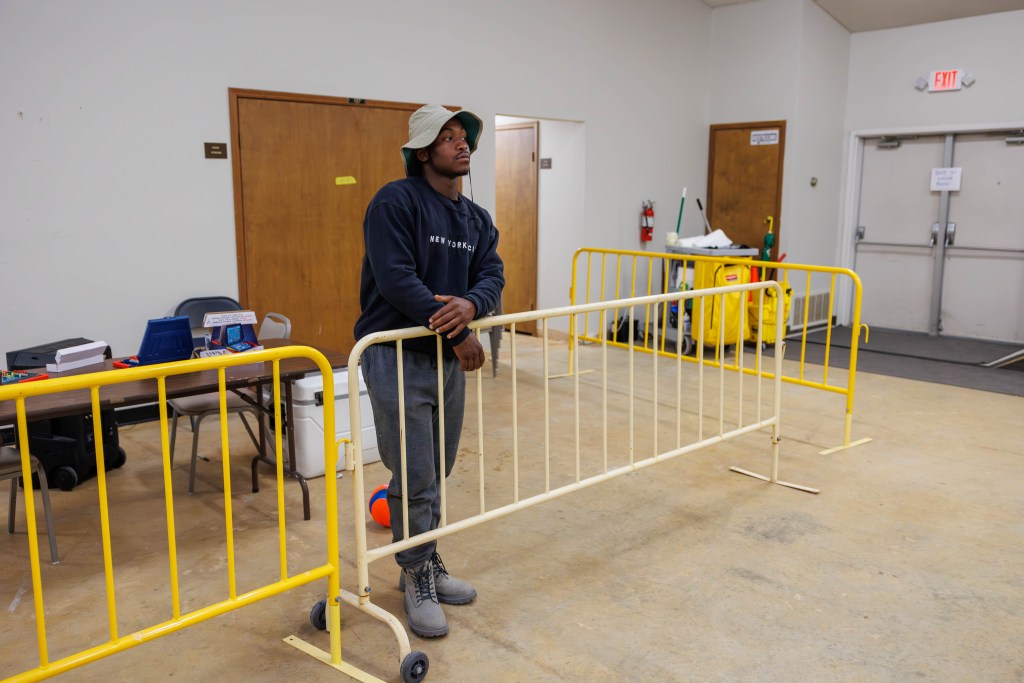

Downtown has many resources for the homeless, but there are people in east Tulsa experiencing homelessness as well, he said.
In the next few years, Dougoud hopes to expand BeHeard’s services to the 21st and Garnett corridor and open a permanent trailer with showers and other services. BeHeard also has a couple of staff members helping with Spanish translations, and he hopes to build relationships with small businesses in the area so they can serve more people.
“There were a lot of people here experiencing homelessness, but they didn’t trust us because of things going on,” he said. “I think to have that buy-in to have to be culturally diverse helps out as well.”
When he first started out in east Tulsa, he would hear that people hadn’t showered in three months. In downtown, that number was usually about two weeks.
“People out here were 24/7 outside,” he said. “They weren’t in a shelter. They were 24/7 in the heat and 24/7 in the snow. They were living off hope. ‘I hope somebody stops in their car and gives me a blanket, hand warmer and takes me to a hotel.’ That’s all they had, that was their hope.”
This article was produced as part of a partnership between the Tulsa Flyer and La Semana, a Tulsa-based bilingual Spanish-English newspaper serving Latino communities in Oklahoma.
News decisions at the Tulsa Flyer are made independently of our board members and financial supporters. Read more about our editorial independence policy here.