



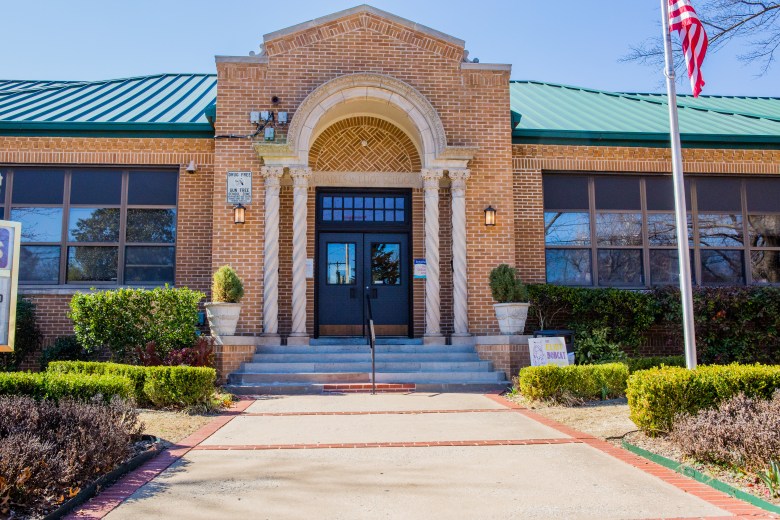
When families realized food assistance was being impacted by the federal government shutdown, parent group chats at Eliot Elementary in south Tulsa started blowing up.
The Supplemental Nutrition Assistance Program (SNAP) was halted for nearly two weeks this month during the 43-day shutdown, cutting off assistance for more than 100,000 Tulsa County residents. Food pantries, tribal nations and local nonprofits jumped to fill the gaps. So did schools.
“I think everyone’s shock and outrage turned into ‘This is wrong, how can I help, how can I make it right?’” said Erin Dye, president of the PTA at Eliot Elementary. “It’s people you know, it’s people your kids are in class with, it’s your friends, your neighbors.”
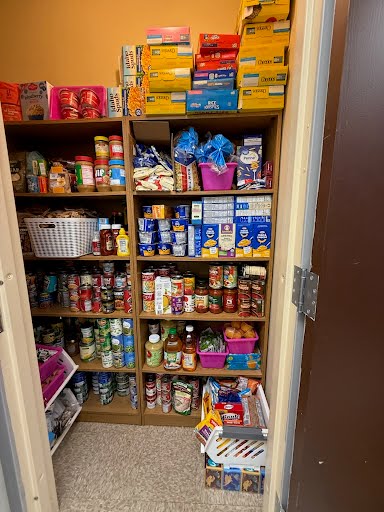
Working with the school’s counselor, Charleen McCracken, Dye and other PTA members started a food pantry. Dye says she was shocked by how many donations the school received. More than 100 families quickly filled two floor-to-ceiling bookshelves with food — it took volunteers four hours to sort through it all.
Dye’s school wasn’t alone. Across Tulsa County, schools rushed to support families facing food insecurity amid the shutdown.
“When students don’t have reliable access to food, their ability to learn suffers. And when learning suffers, so does their chance to build a better future,” McCracken said. “Food insecurity becomes a cycle that’s hard to break — yet education is one of the most powerful tools we have to do exactly that.”
SNAP is now funded through the end of next September after President Trump on Wednesday signed a bill to fund the government. Benefits are already being paid out, but communities like Tulsa have faced “significant damage,” according to Hunger Free Oklahoma.
“We will likely never be able to fully measure the long-term impacts of this shutdown on people’s financial wellbeing, or their physical and mental health,” reads a statement from Hunger Free Oklahoma. “But we will see evidence of it in our schools, in our nonprofits, in our communities, and in our trust in our government institutions.”
At Broken Arrow Public Schools, several sites launched similar programs to those at Eliot. Oakhead Elementary gave out baskets of food to students filled by donations. Arrowhead Elementary created a “sharing shelf” for families, filled with food, toiletries and other goods.
“It is amazing to see our school come together to help each other in this time of need,” said Maegan Hewitt, an English learner teacher at Arrowhead.
Other schools leveraged preexisting programs to support families during the shutdown.
Owen Elementary in Tulsa receives 80 backpacks filled with food each week from the Food Bank of Eastern Oklahoma. They continued handing these out and stocking their food closet throughout the shutdown but stepped up their communication of where to find food resources.
Weekend food bags continued at Union Public Schools and became “even more vital in bridging the gap,” said Justin Vannest, assistant principal of Jarman Elementary.
Other Union schools benefited from partnerships with faith organizations.
McAuliffe Elementary promoted free dinners at churches near the school for those who’d lost SNAP benefits, including Forest Park Christian, Joy Lutheran and Fellowship Lutheran churches.
At Boevers Elementary, food drives, cash donations and pantries from surrounding churches gave families extra support and supplemented preexisting programs.
One of the greatest challenges for families during the shutdown was transportation, said Kulsum Siddiqui, the community school liaison at Union.
“Many families do not have cars or cannot drive so they are not able to access places to get free food,” Siddiqui said. Providing resources at school sites avoided that limitation, especially for families that live far from large food banks.
Even though the shutdown has ended and families expect to receive their SNAP benefits in the coming days, most schools are continuing the efforts started during the crisis. At Eliot, Dye and McCracken plan to continue the food pantry they started through the holidays.
“So many families were already struggling with the high cost of groceries, even before the shutdown,” McCracken said. “The lapse in SNAP benefits has only deepened that hardship, creating greater food insecurity across our community.”
To celebrate the massive amount of donations the school received, McCracken, principal Sharon Holt and two teachers will all get a pie in the face at the December assembly — an incentive they pitched when the shutdown first began.
Read more stories about changes to SNAP here.
News decisions at the Tulsa Flyer are made independently of our board members and financial supporters. Read more about our editorial independence policy here.
