


When it comes to the Gilcrease Museum reopening in March, The University of Tulsa isn’t going anywhere, according to TU President Stacy Leeds.
She made the promise as TU cuts 9% of its workforce to shore up its debt and prepares to renegotiate its memorandum of understanding with the City of Tulsa about the Gilcrease Museum governance set for 2028.
For nearly 20 years, TU has managed the property and art that was deeded to the city by oil magnate Thomas Gilcrease in the mid- to late-1950s. The MOU was updated July 13 and includes the city upping its support by $1 million yearly — a negotiation that took place before Leeds took over TU July 1.
Strengthening the relationship with Gilcrease and the city is among her priorities, Leeds told the downtown Rotary Club of Tulsa Wednesday. The conversation came before the workforce cuts were public.
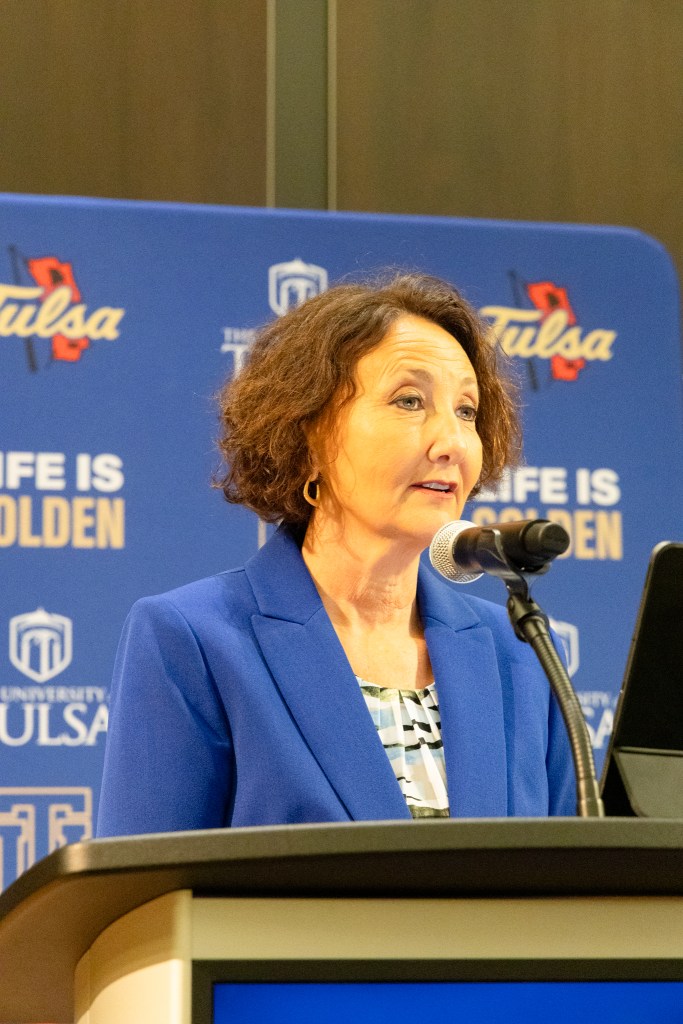
“I can see how the agreement, where TU is the managing entity of Gilcrease together with the city’s partnership, is so important for our city to have a quality museum like that tied to a university,” Leeds said.
“I think what it can open up in terms of student recruitment and people relocating to this city is substantial. But, like anything else, it’s a complicated three-way mix sometimes, right? And so, right now, it goes through another 18 months when it’s next up for conversation.
“But I’ve made it clear to everybody that TU remains very, very interested in continuing that relationship.”
TU students and employees were notified this past week that the university was cutting 9% of its workforce as of Nov. 1. Officials say much of those are vacant positions that will not be refilled and none are faculty.
The workforce reductions are part of other cost-cutting moves to address $126 million in outstanding debt and a credit rating downgrade. Officials say these will result in a positive cash flow this year.
The agreement for Gilcrease Museum governance was developed after a 2006 independent study by museum expert Robert Macdonald called the Gilcrease Museum management “dysfunctional” and warned changes were needed to ensure it could remain open.
At the time, the museum’s operating budget of about $4 million was supplied by the city and the Gilcrease Museum Association. Several changes were made as the agreement was implemented, including a new long-term fundraising campaign and charging for admission.
The city approved $5 million for the Gilcrease Museum in its fiscal year 2027 budget.
Determining a current budget for the museum is difficult because its last full year of operation was in 2019. That year shows revenue of $13.9 million and expenses of nearly $7.1 million, according to tax filings compiled by ProPublica.
The museum rebuild cost almost $141 million, putting it 70% over budget. Officials blamed the cost overruns on lingering pandemic effects of supply chain disruptions and soaring inflation.
Leeds has several initiatives underway, including upping enrollment from about 4,000 students to 10,000 students in the next decade, slashing undergraduate tuition in half and considering new degree programs. She said the institution’s work with Gilcrease Museum could expand academic studies into the area of nonprofit business management.
“When I look at all the amazing archives and museums and institutions, and on the nonprofit side we have here in this city and how it’s driving our growth, and then you put northwest Arkansas and Crystal Bridges into that mix as well, we could be ground zero for people who learn how to lead museums and nonprofits,” Leeds said.
“And so I’m thinking about interdisciplinary programs where you not just learn about how to curate archives, but how do you run the day-to-day finance and accounting and marking and legal aspects of museums of the quality that we have.”
News decisions at the Tulsa Flyer are made independently of our board members and financial supporters. Read more about our editorial independence policy here.