


Tulsa utility rate increases begin in October, and residents will see around $5.82 more on average starting with their November bills. This follows last year’s increase of $4.71.
City councilors approved the increase as part of Mayor Monroe Nichols’ 2027 budget, which was projected to bring in more than $18 million in revenue next year.
Those dollars are spent on pipe maintenance, costs of operation and treatment plants, as well as other projects specific to utility services. They cannot cover costs of homelessness services, according to the city.
The new rate adjustment is broken down by category: water, sewer, stormwater, refuse and recycling and EMSA. The increases below equate to the almost $6 increase for Tulsa utility bills.
- 7% for water
- 4.7% for sewer
- 7% for stormwater
- 4% for refuse and recycling
- Customers enrolled in EMSAcare will not see a change for that service.
For a full understanding of your utility bill, check out our coverage here.


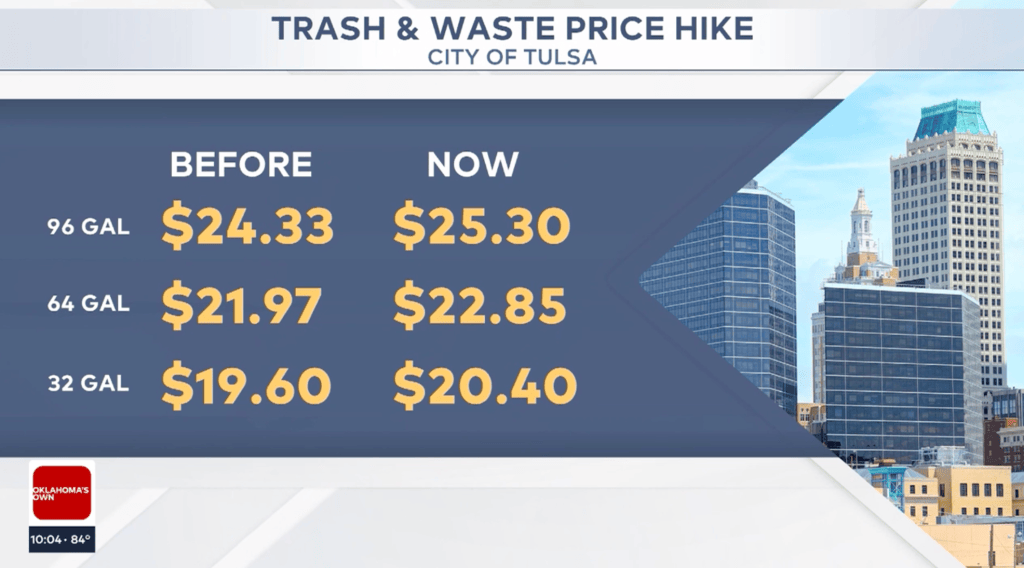
Trash and recycling service is changing the most: Twice-a-week trash collection is ending — moving to once a week — and the cost for carts is going up between 80 to 97 cents.
- 32-gallon: $19.60 to $20.40
- 64-gallon: $21.97 to $22.85
- 96-gallon: $24.33 to $25.20
Backyard collection will now cost a flat $28 per month instead of an added $10 to $20 based on the distance from your curb. An extra recycling cart used to be free but will now cost $5, and an extra 96-gallon refuse will increase from $9.47 to $15.30.
- Cart replacement: $71 to $91.
- Cart size change: $13.92 to $27.15.
- Extra refuse stickers: 50 cents to $2.
Collection of bulky waste is also going up. Eight cubic yards will cost $20, with each additional eight cubic yards costing an additional $20. Construction materials/four cubic yards will cost $20 as well. Any materials exceeding $40, will require additional authorization before collection.
There are options for Tulsans struggling to pay their utility bills. You can call 311 and set up a payment plan, or 211 to get connected with payment assistance. You can also go to the Tulsa Financial Empowerment Center, which offers one-on-one financial counseling at no cost.
City councilors are also developing a Utility Assistance Program.

News decisions at the Tulsa Flyer are made independently of our board members and financial supporters. Read more about our editorial independence policy here.