


On the day Marcello Angelini learned he would become the new artistic director for Tulsa Ballet, he and his wife Daniela Buson bought a new house.
In Cincinnati, Ohio.
The couple were principal dancers with the Cincinnati Ballet in 1995, and after a career of performing around the world, whether as guest artists or as stars of internationally acclaimed dance companies such as Deutsche Oper Berlin, England’s Northern Ballet and Les Grands Ballet Canadiens in Montreal, they had decided it was time to put down roots.
“It was our first American house,” Angelini recalled. “We went to the closing at around 3 p.m. and back to the house we were renting to celebrate. And I swear this is true — right as I was popping open the bottle of champagne, the phone rang. It was Donna Bost, who was the head of the search committee for Tulsa Ballet, calling to tell me the job of artistic director was mine if I wanted it.
“I must have turned pale, because Daniela was looking at me oddly, and asking what was going on,” he said. “I said, ‘I got the job.’ And to this day, I remember Daniela lying on the floor, just pointing at me and laughing her head off, saying, ‘You’re going to be an artistic director?’
“Of course,” Angelini said, grinning, “the joke was she didn’t know at that time she would end up working for me at Tulsa Ballet.”
Thirty-one years later, Angelini announced last month that he and Buson will relinquish their positions as artistic director and assistant artistic director at the conclusion of the 2026-2027 season. Angelini will take on the title of artistic director emeritus.
In making the announcement, Nicole Morgan, chair of the ballet company’s board of directors said “Marcello’s impact on Tulsa Ballet is impossible to overstate. He has challenged us to think bigger, dream bigger and pursue excellence in everything we do.”

During Angelini’s tenure as artistic director, Tulsa Ballet has grown from a well-regarded regional ballet troupe — best known for its efforts to preserve the Ballet Russe traditions championed by its founders, Roman Jasinski and Moscelyne Larkin — into a versatile dance company that many critics consider among the best in the United States.
In addition to performing many of the classic works of the ballet repertoire, Tulsa Ballet under Angelini’s leadership has also earned acclaim for its efforts to bring new works to life. That includes programs such as its annual “Creations in Studio K,” and in commissioning new full-length works including Edwaard Liang’s “Romeo & Juliet,” Kenneth Tindall’s “Alice in Wonderland” and the current incarnation of the popular holiday ballet “The Nutcracker,” choreographed by Val Caniparoli and Ma Cong, both of whom have served as the company’s resident choreographer.
“Because of his vision and leadership, Tulsa Ballet is recognized far beyond our city and state, while remaining deeply connected to the community we call home,” Morgan said.
That vision began when Angelini was forced to step away from the stage because of an injury.
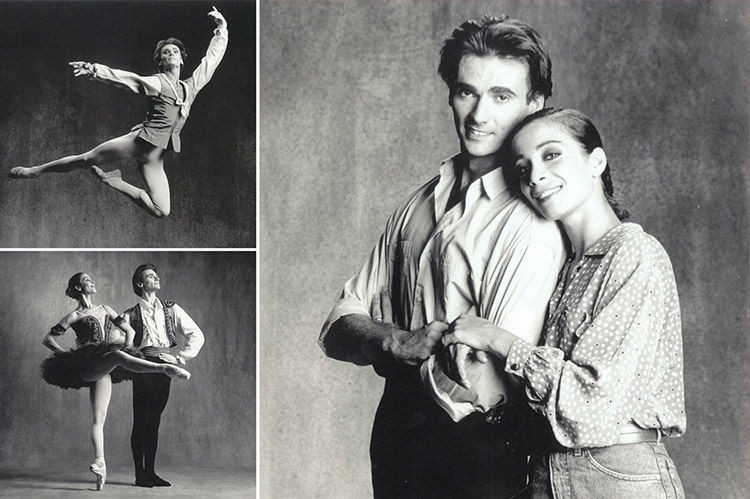
From dancer to director
“I was one of those dancers who never missed a performance,” he said. “I always danced through anything — the flu, viruses, broken bones. I always went on.”
This time, though, Angelini’s doctor warned him if he continued to dance without letting this injury heal completely, he could do irreparable damage. So Angelini took two weeks off from dancing — and naturally, for someone so active, grew restless.
“I was 32 at the time, and I knew that dancing was not something I would be able to do forever, but I had never seriously thought about what I would do once I truly stopped dancing,” Angelini said. “I remember talking with my manager, and saying that one day I would like to direct a ballet company, and he said I should start applying now.
“I asked him if there was a company that was looking for a director,” Angelini said, “and he told me the only one currently hiring was Tulsa Ballet. So I thought, ‘OK, I’m going to apply for that job.’”
He and Buson painstakingly typed up a five-page letter — as he puts it, “brevity was never one of my strong suits” — outlining Angelini’s ideas and plans, sent it off to Tulsa and thought no more about it. He went back to performing major roles with Cincinnati Ballet and going about the process of buying a home.
“I never got the chance to live in that house,” he said, laughing. “Daniela was still under contract with Cincinnati Ballet, so I moved her into that house and left the next day for Tulsa.”
Angelini reached out to several colleagues in the dance world, telling them what he hoped to accomplish at Tulsa Ballet and seeking any advice they might wish to share.
“I said that I wanted to bring works by all the great choreographers to Tulsa,” he said. “I wanted to present ballets like (Andre Prokovsky’s) ’Anna Karenina,’ and (Roland Hynd’s) ‘Rosalinda,’ and then eventually works by people such as John Cranko and Jiří Kylián.”
Angelini’s former colleagues responded to his ideas with polite dismissal. One of these was late Ivan Nagy, the famed dancer with American Ballet Theatre, who later served as artistic director for Cincinnati Ballet and English National Ballet.
“To this day, I remember what Ivan said to me,” Angelini said. “He said, ‘Darling, if you want to perform the same works that American Ballet Theatre does, then you should go to American Ballet Theatre, not Tulsa.”
Angelini said everybody told him it wasn’t possible to have a company in Tulsa like he dreamed of. It was that challenge that drove him throughout his entire tenure as artistic director.
“And we did eventually get to do all the works of the greatest choreographers of the world,” he said.
In fact, Buson made her debut with Tulsa in the title role of Prokovsky’s “Anna Karenina” — the first of many formidable performances Buson gave as the company’s prima ballerina.

Turning Tulsa Ballet into a global company
If there was a particular ballet which proved to the rest of the world that Tulsa Ballet was a company with which to be reckoned, Angelini pointed to “Jardi Tancat,” by Spanish choreographer Nacho Duato, which the company premiered in 1999.
At that time, Duato rarely allowed his works to be performed by dance companies other than the Compania Nacional de Danza in Madrid, of which Duato was the artistic director.
“I knew that if we could get a work by Nacho in our repertoire, other choreographers would say, ‘If Nacho gives his works to this company, then I should, too,’” Angelini said. “It took me about four years, not just to convince Nacho to allow us to have one of his pieces, but also to get the company itself ready to be able to perform it.”
And the major choreographers took notice. Among those whose works are now part of Tulsa Ballet’s repertoire are Christopher Wheeldon, Kenneth MacMillan, Twyla Tharp, Jorma Elo, Wayne McGregor, William Forsythe, Annabelle Lopez Ochoa, Andy Blankenbuhler, Andrew McNicol, Antony Tudor, Stanton Welch, Nicolo Fonte and more.
It was also around this time Angelini set in motion what has become one of Tulsa Ballet’s signature endeavors: commissioning new works by leading dance makers as well as up-and-coming choreographers, many of which were premiered as part of the company’s annual “Creations in Studio K” programs.
“We started commissioning new works in 1999,” Angelini said. “I realized that, in order to be a player in the dance world, you need to contribute — you need to take that risk to invest in new choreographers, giving them the opportunity to create new works and nurture these talents, because that is the lifeblood of this art form.”

Tulsa Ballet has commissioned more than 100 new ballets, from the one-act creations featured as part of “Creations in Studio K” to full-length ballets, such as Liang’s “Romeo & Juliet,” McNicol’s “Cinderella” and Tindall’s “Carmen.” All will be part of Tulsa Ballet’s 2026-2027 season, which consists entirely of works made originally for the company.
One of those choreographers on whom Tulsa Ballet took a risk was Ma Cong, a former principal dancer with the company who has created dance works for companies around the globe.
“Marcello and Daniela have had a profound influence on me,” Cong said, now the artistic director of the Richmond Ballet in Virginia. “They have shaped me not only as an artist, but as a person.
“They believed in me, challenged me, trusted me, guided me and gave me opportunities that forever changed the course of my life and career,” he said. “Those lessons continue to guide me every time I step into the studio, create a new ballet or mentor a young dancer.”
Serkan Hasanusta, another Tulsa Ballet dancer who made the transition from performer to director, taking over leadership of Ballet Des Moines with his wife and fellow dancer, Lori Grooters.
“Marcello dreamed of making Tulsa Ballet a company that could stand alongside the best, and he inspired all of us to believe in that dream with him.
“Marcello’s greatest gift to me wasn’t a role,” said Hasanusta. “It was believing in me and seeing potential I didn’t yet see in myself. The confidence he gave me shaped the dancer I became, the choreographer I grew into and later the artistic director and school director I am today.”
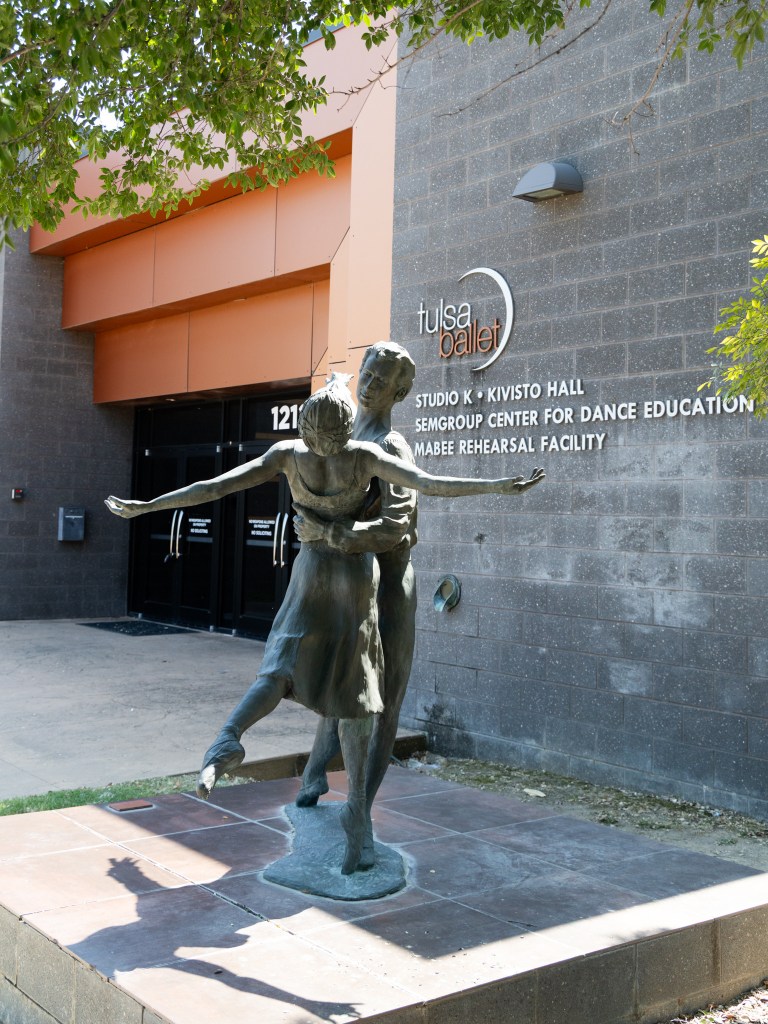
During Angelini’s tenure with Tulsa Ballet, the company built a unique theater space, Studio K, dedicated to the creation and performance of new works; opened two dance schools, one at the company’s Brookside headquarters, the other in Broken Arrow; and established its own second company, TBII, which helps prepare young dancers for a career as a professional artist. Angelini said dozens of TBII dancers have become part of the main company.
A temporary stop becomes home
Angelini had originally envisioned his time with Tulsa Ballet to last three, or perhaps four, years. He would learn all he could about the business of running a professional ballet company, and then move on to a new, perhaps more prestigious company.
And it wasn’t long before other dance companies, both in the United States and abroad, began taking notice of what Tulsa Ballet was accomplishing under Angelini’s guidance. Glowing feature articles in publications such as Dance Magazine and Pointe drew attention to the company, and its international touring earned rapturous praise from local critics.
“It was flattering, to be honest,” Angelini said. “But many of these offers seemed to arrive right when Tulsa Ballet was on the verge of something new — the opening of Studio K, or getting the Hardesty Center (for Dance Education) going. And I realized that I couldn’t leave, because what we have built as a company is something I think is very special.”
When he first began considering retirement, Angelini knew he wanted to leave Tulsa Ballet in as good a shape as possible for whoever would take over the job of artistic director.
“When I came, it was a difficult time for the company,” he said. “The company had a deficit that equaled 10% of the operating budget, which at the time was pretty crippling. And about eight dancers left the company, so even before I officially took over the job, I was having to do auditions because there weren’t enough dancers.”
His sights were set on cementing the artistic excellence of the organization, stabilizing the company’s finances and achieving international visibility.
Tulsa Ballet first performed outside the United States in 2002, when the company was invited to close out the Ballet Night Festival in Sintra, Portugal, performing a mixed-bill program one week and Caniparoli’s “Lady of the Camellias” the next.
Tours to Italy, Germany, eastern Europe and South Korea played to sold-out theaters and earned rapturous reviews from critics. The company’s most recent overseas adventure — a week of sold-out performances at England’s Royal Opera House in Covent Garden — prompted one British dance critic to say, “If there are 15, let alone 50, ballet companies in the U.S. that are as good as this, then I’ll eat my hat.”

The company has established an endowment to help organize future tours.
“Tulsa Ballet was named a cultural ambassador for the state by Gov. Brad Henry, and that is something of which we’re very proud,” Angelini said.
A $16 million campaign, called “Preserving the Legacy,” will go toward refurbishing Tulsa Ballet’s headquarters, providing better working spaces for dancers and staff and updating the Studio K Theater. Angelini said some $15 million has been raised so far.
The company has also established a Dancers’ Transition Fund to help dancers prepare themselves for the time when their performing careers are over.
“When people dedicate their life and their careers to you, I think you have an obligation to help them go from their present life to the next career,” Angelini said. “Changing careers after dancing is traumatic enough, so I want to be able to provide them with the tools and the support to make that transition as successful as it can be.”
Most importantly, Angelini said, Tulsa Ballet operates in the black, with assets worth in excess of $40 million.
“It does feel a little bit awkward, knowing that after being a part of the team that raised millions for this campaign, that I’m not likely to ever sit in the new artistic director’s office,” Angelini said. “The thought of staying on and enjoying what I’ve worked for did cross my mind.
“But this is not about me,” he said. “It’s about the company, and being able to attract the best candidate to take over and take the company forward.”
Angelini said he and Buson plan to continue to call Tulsa home. They will now be able to spend more time in their native Italy, where their families remain and they own a second home.
“This job is one of 11, 12-hour days, six days a week,” Angelini said. “You have to be involved in everything, from hiring dancers to creating a season to negotiating with guest artists, working with the board on various fundraising campaigns, entertaining potential donors and choreographers and designers.
“It’s meant that we haven’t been able to spend the time that we would like to spend with our boys, with our families, with our friends,” he said. “We bought a boat some years ago, and Daniela and I are looking forward to being able literally to sail into the sunset.”
News decisions at the Tulsa Flyer are made independently of our board members and financial supporters. Read more about our editorial independence policy here.