


When school’s out for the summer, districts remain hard at work planning how to keep the lights on, students learning and teachers paid come August.
It requires a complicated network of funds that ebb and flow throughout the year. Preliminary budgets rolled out in June and July are often more like educated guesses, administrators say.
“We’re estimating,” said Joe Stoeppelwerth, director of finance and treasurer for Tulsa Public Schools. “It’s just a lot of unknowns when we present the preliminary budget, there’s a lot of estimates.”
Per state law, each district must approve an initial budget by the first day of their fiscal year, July 1. In the coming weeks, the Flyer will break down how Tulsa’s largest districts plan to spend tax dollars next year.
Here’s what to know about the funding for your student’s education.
Each district operates with separate funds for unique purposes. These typically include a general fund, building fund, bond fund, child nutrition and others to cover district debt or workers’ compensation.
Based on the source of dollars for each fund, districts are restricted on how the money can be used.
“Only certain activities or certain line items can be paid from certain funding sources. And that goes for local, state and federal,” said Kristin Stephens, chief financial officer at TPS. “You can’t look at the total appropriated number, which is like $794 million, and assume that that can be used for anything that we want it to be used for.”
What makes up a district budget and how it can be spent
- General fund
- Funded by federal, state and local sources.
- Makes up the majority of a district’s budget.
- Primarily funds employees’ salaries and benefits.
- Building fund
- Primarily funded by local sources, like property tax revenue.
- Covers utility, maintenance or insurance costs.
- Child nutrition fund
- Funded by student meal purchases and reimbursements from state or federal nutrition programs.
- Covers the costs of meals and staffing.
- Bond fund
- Funded by voter-approved packages to take on debt.
- Covers capital improvements or large purchases.
- Highly restricted and cannot be used to cover things like teacher pay or building maintenance.
Most Oklahoma districts bring in the majority of their revenue from the state, from dedicated revenue streams and annual appropriations set by the legislature.
Oklahoma determines school district funding using a weighted calculation based on the highest student count from either the previous year or the upcoming year. Student counts are weighted higher based on specific needs, like the number of multilingual learners, students experiencing poverty or those needing special education services.
Many federal funding sources, like Title I funds, also focus on students with the highest needs.
The amount of state aid is balanced against local revenue, like property taxes, in Oklahoma’s funding formula. If the district brings in more revenue from local sources than the state’s per-pupil calculation, it would not receive state funding per-pupil and only through set sources, including for teacher salaries or transportation.
Building the budget with changing information
There are a lot of unknowns when districts start the budget building process in late January, Stephens said.
Development of the annual budget at TPS, she said, begins with student enrollment and staffing forecasts, though official student counts aren’t finalized until October.
Because funding arrives on a rolling schedule, districts rely heavily on their fund balance — a carryover pool of money that pays for essential costs.
- April: April 1 deadline for state legislature deadline to set education budget, finalized in May.
- June: End of district fiscal year June 30.
- July: State Department of Education shares expected state and federal revenue allocations for the next year. No funding is sent to districts.
- August: Monthly state payouts begin.
- October: Annual student count submitted to state, impacting future daily membership funding.
- December: State legislature adjusts budgets based on actual income to the state, which can impact monthly district state aid funding.
- January: The largest portion of county ad valorem (property) taxes arrives.
With all the moving parts, districts review class sizes and school staffing early in the school year to adjust for growth. By early spring, they amend their budgets to update their July estimates with new information.
“I think every school district will do a budget amendment in early spring to rightsize when they have better projections on how many kiddos they have, how many teachers they have, how many support staff they have,” Stephens said. “They can get a more realistic view of what their expenditures are going to look like.”
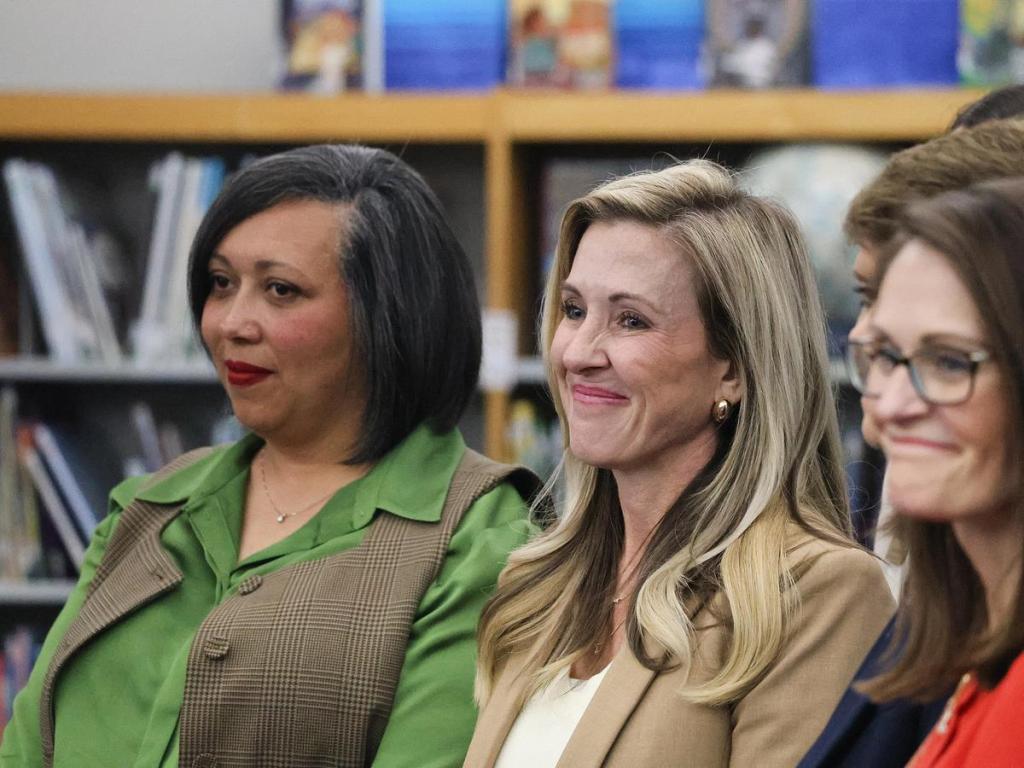
To stay engaged in finances at your home district, Stephens recommends attending or watching board meetings or getting involved through a planning committee.
“We encourage anyone that has a vested interest in the district to be active and engaged on those committees, we would encourage anyone to raise their hand and volunteer to be involved,” Stephens said. “We want the input of the community.”
After upcoming budgets are finalized July 1, districts will also update the final numbers for last year’s spending and revenue.
“I think if I was a community member, I would be curious to see, you know, did we live within our means?” Stephens said. “What did we say we were going to spend and what did we actually spend? And if those two things aren’t in alignment, that would be a big question mark for me if I was a parent or just a community member.”
News decisions at the Tulsa Flyer are made independently of our board members and financial supporters. Read more about our editorial independence policy here.
