


The City of Tulsa’s economic future is largely tied to the social and economic health of the Hispanic community, Mayor Monroe Nichols said during the Tulsa Area Hispanic Chamber of Commerce’s annual luncheon.
The Hispanic community is not only growing but shaping the future of Tulsa, he said.
“When Latino entrepreneurs succeed, Tulsa becomes stronger. When families build stability and wealth, neighborhoods improve and when opportunity is accessible, the entire city is a beneficiary,” Nichols said.
In 2024 around 116,000 individuals living in Tulsa County identified as Hispanic or Latino, according to the American Community Survey. Roughly 60% of those are foreign-born.
There are more than 6,000 immigrant entrepreneurs in Tulsa with the majority being Latino, according to the chamber.
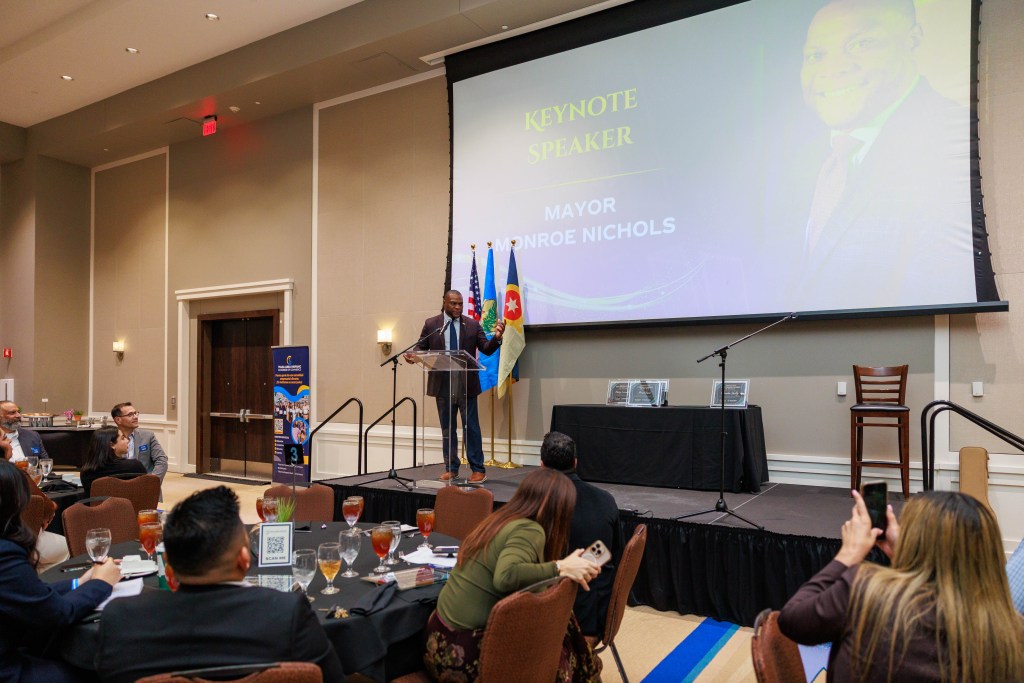
Nichols acknowledged work the chamber is doing to be a community leader and create networks, build mentorship and advocate for business owners. Created in 2024, the Tulsa Area Hispanic Chamber of Commerce supports Hispanic and Latino businesses through advocacy, networking and education.
“You do it at a critical time in American history, whether it be news of ICE raids in Minnesota or the crippling costs of things, making affordability tough for just about every family,” Nichols said. “It’s a tough time in the country. We have to be reminded that this is not the first time things have been tough.”
During the luncheon, Tomás Barrientos, board chair of the chamber, announced Maritza Jireh León Cartagena as the organization’s new chief executive officer.
In November, the chamber started its search for new leadership after founding CEO Martha Isabel Zapata stepped away from the organization.

Cartagena brings more than seven years of experience helping immigrants, refugees and Latino families and businesses across Oklahoma, Barrientos said.
Cartagena said being part of the chamber means advancing economic growth in Tulsa while honoring community and culture.
She plans to host monthly bilingual community office hours where she invites community members to connect with her in English and Spanish.
“On a personal level, I’ve seen how access, support and the right connections can change the trajectory of business and sometimes families, and that is why I believe so strongly in the role this chamber plays,” Cartagena said. “Not only as a business organization, but as a community anchor. When businesses grow and community strengths move together, opportunity expands.”
During the event, Tulsa Public Schools Superintendent Ebony Johnson spoke about the Hispanic student population’s accomplishments.
Last year, Johnson said 42% of Hispanic students were chronically absent. Chronic absenteeism is when students miss 10% or more of the school year.
This year, the rate has decreased to 32%, she said.
One attendee asked her about the district’s efforts to support students and families affected by Immigration and Customs Enforcement.
Johnson said the district has security measures in place if ICE came to a campus for an employee or a student.
District staff are directed to ask anyone the purpose for why someone is on the campus, and each person must buzz into the building, she said. The district’s legal team will be contacted by staff members.
Additionally, campus police officers are trained to intervene and ask questions. The district does not pull students out of class for adults who are not on a child’s school record.
“We have not had to follow this protocol, so I just want to make sure that’s very clear,” Johnson said. “We haven’t had one situation where we’ve had to follow it yet. However, we are prepared.”
Awards
The Tulsa Area Hispanic Chamber of Commerce also announced its annual awards, including:
- Hispanic Business of the Year – 918 Maples, Jose Bamaca
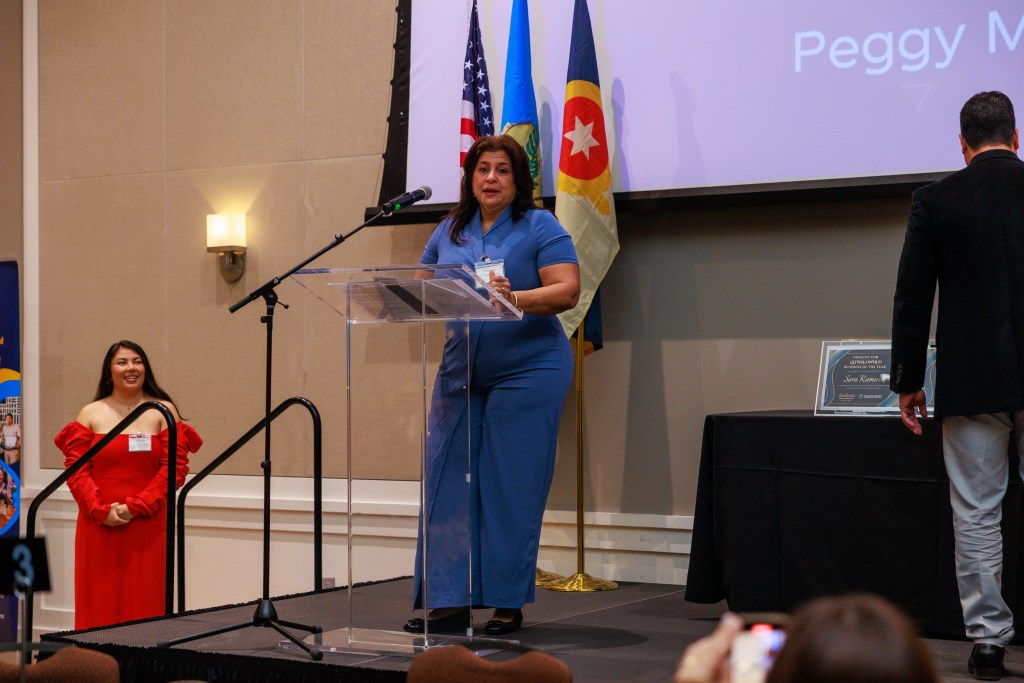
- Latina-owned Business of the Year – Peggy Flavors, Peggy Mercano
- Corporate Business of the Year – Bank of Oklahoma
- Nonprofit Partner of the Year – Guthrie Green
- TAHCC Advocate of the Year – Gabriela Guararipa Barrientos, InsightIQ & Capriccio
This article was produced as part of a partnership between the Tulsa Flyer and La Semana, a Tulsa-based bilingual Spanish-English newspaper serving Latino communities in Oklahoma.
News decisions at the Tulsa Flyer are made independently of our board members and financial supporters. Read more about our editorial independence policy here.