


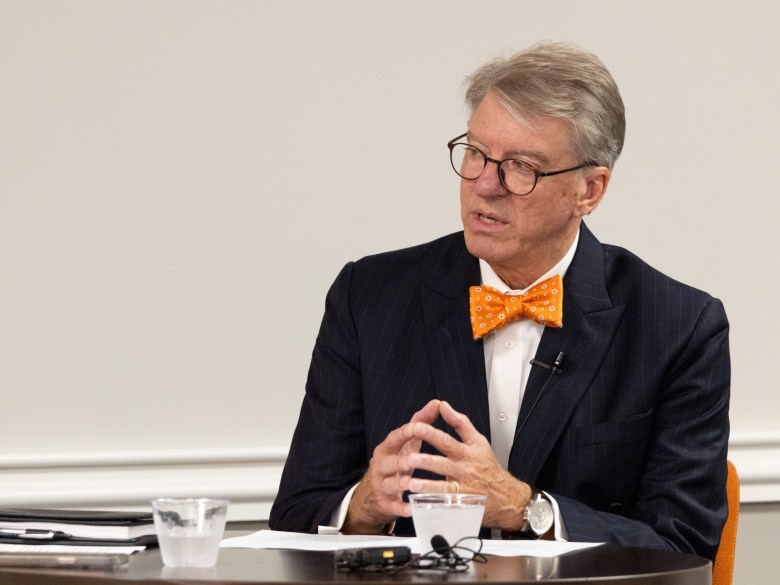
Oklahoma State University President Jim Hess won’t call his vision a takeover, but he sees a path to merging the university with Tulsa Community College. When that happens depends on the “comfort level” of TCC’s administration, he said.
Any integration with Tulsa’s two-year community college would not change the cost per credit hour or Tulsa Achieves, the popular program granting free tuition for eligible Tulsa County high school senior graduates, Hess said at a Tulsa Press Club event Monday at OSU-Tulsa.
“What we really want to accomplish is how does TCC and OSU-Tulsa fit together in a way where there is a start and finish with state institutions,” Hess said. “So, it’s not a matter of trying to take them over or change their two-year accreditation. It’s really a matter of that being all under one roof.”
TCC President and CEO Leigh Goodson released a statement emphasizing a priority on students. It kicked off a $30 million fundraising campaign last week to modernize its downtown Metro Campus, which includes improvements to its student union housed in a 100-year-old building.
“There have been talks with OSU, but nothing formal is on the table or in place,” Goodson stated. “We are committed to working with all our university transfer partners to ensure student success.”
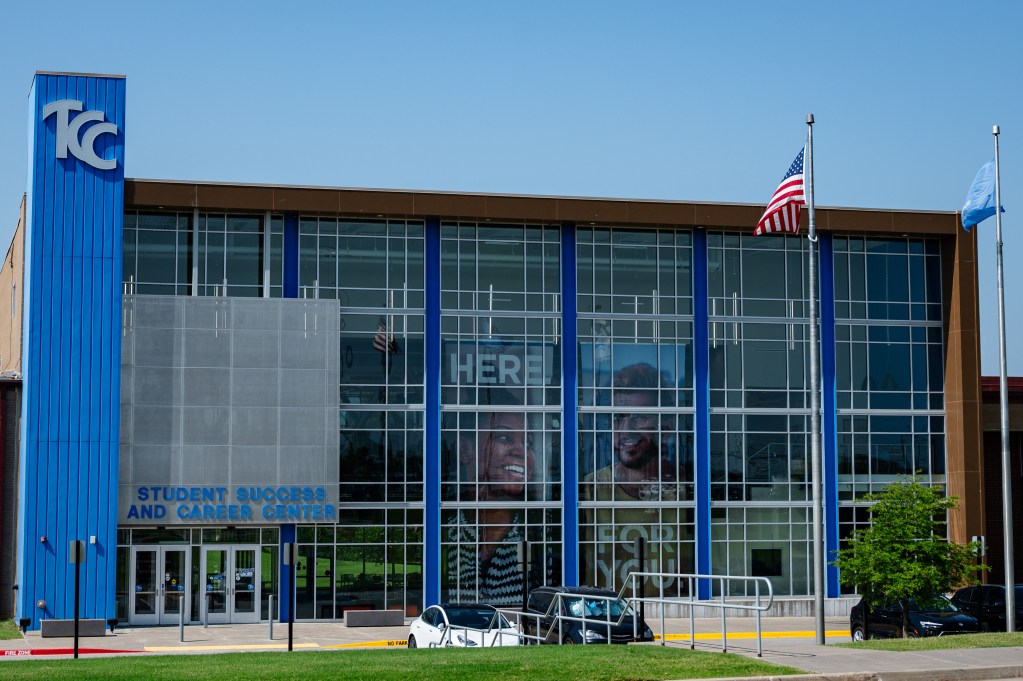
TCC began in 1970 as Tulsa Junior College and underwent a name change in 1996. For decades, TCC offered the lower-division classes with students transferring to other universities after completing an associate’s degree.
OSU-Tulsa was created in 1998 after Gov. Frank Keating and a bipartisan group of Tulsa lawmakers broke up Rogers University, which was a consortium of several universities. Among the provisions of Senate Bill 1426 was giving authority to OSU to offer upper-division courses, graduate courses and baccalaureate degree programs.
State law prevented Tulsa’s public colleges from offering duplicate classes and majors.
That changed in 2025 with Senate Bill 701 that removed those restrictions on the Oklahoma State Regents for Higher Education. Since then, OSU began offering up to 70 new classes this year, and TCC announced plans to offer a bachelor’s degree in Science and Child Development.
“Tulsa is still the largest city in America that doesn’t have a real comprehensive (public) university setting for its population. That has to change,” Hess said. “There’s an opportunity ahead of us, and we need to capitalize on that opportunity.”
Hess said the same conversations around the 1998 compromise are still being had today.
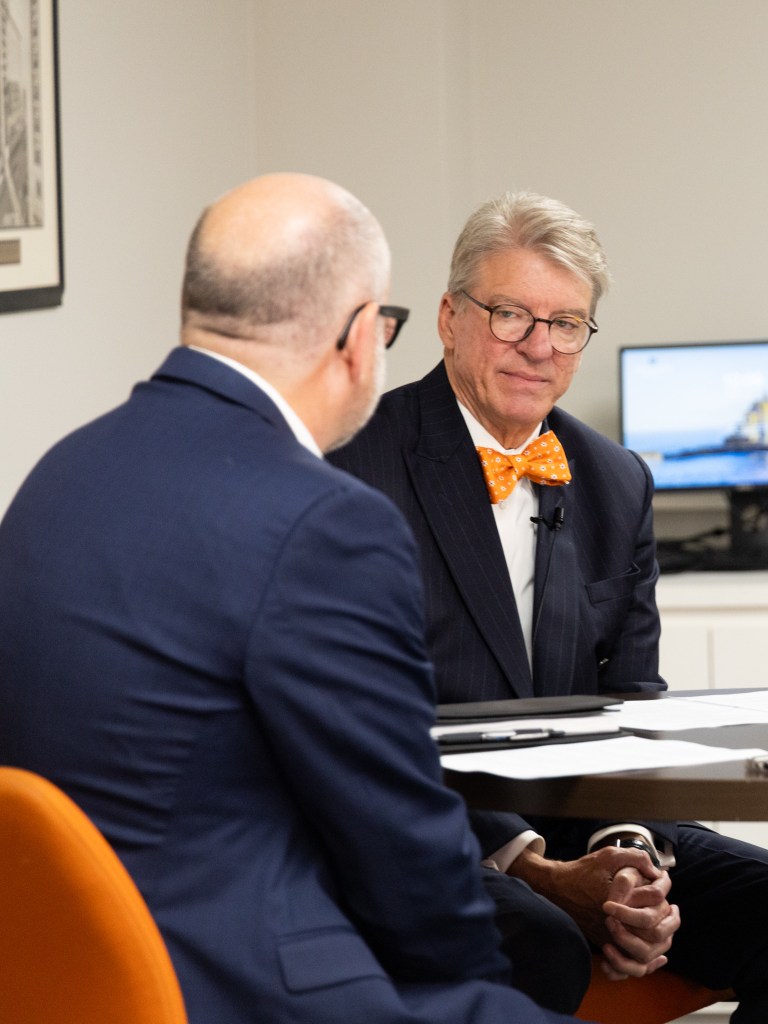
“We can do better. We have learned from history, and we’ve learned some solutions may have fallen short,” he said
“They were the best solutions at that time. I don’t want anyone to think I’m being critical of anyone in the past. … Tulsa needs a long-term, stable, four-year higher education experience where a student starts and finishes with the same institution. Anything short of that will not be solving the problem.”
The idea to consolidate the higher education institutions formed during his decades working for OSU on its Tulsa campuses, Hess said. He became president of the entire OSU system in April 2025.
“I went to (TCC President) Leigh Goodson before I was OSU president and as a friend to say this is what Tulsa needs,” Hess said. “I never dreamed I’d be in a position to try to do it. (Tulsa) has been waiting a very, very long time and maybe there’s a way to do this. So when I became president, I immediately went to everybody about it.”
TCC and OSU are governed by different boards of regents. A merger would change that governance structure and require approval by the Legislature, Hess said.
“We want the timing to be at their comfort level. We want the timing to be politically expedient but also honors their rich history,” Hess said. “I would never be critical of TCC or its leadership because they have a history to protect. That’s how I would feel.”
TCC’s funding structure is 33% by county property tax collections, 25% by tuition and fees, 22% from state appropriations and the rest from federal and state contracts.
Tuition at TCC is $116.55 per credit hour, compared to $189.10 (standard rate) or $217.40 (lock rate option for freshmen) at OSU.
“I’ve been spending a lot of my time over the last year trying to increase their comfort level — no one is going to mess with your administration, no one is going to mess with Tulsa Achieves, no one is going to mess with ad valorem and no one is going to mess up the two-year accreditation,” Hess said. “That will all remain the same.”
News decisions at the Tulsa Flyer are made independently of our board members and financial supporters. Read more about our editorial independence policy here.