


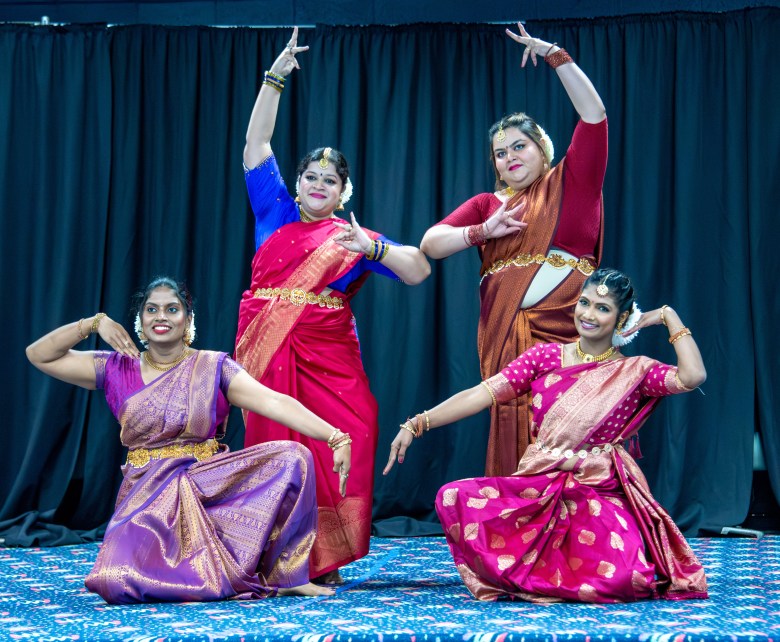
When you enter Tulsa’s India Fest, you’ll smell the spice blends, see vibrant clothing and hear beats that make you want to dance along. Organizers say it’s not a festival you attend — it’s an experience you feel.
The India Association of Greater Tulsa is looking to revitalize its flagship event, India Fest — a free, family-friendly celebration of Indian culture with food, dancing and shopping.
“I think India Fest is really to give back something to the community,” said Mohan Kolkar, a former president of the association. “We all decided to come to (the) United States and migrate here, and we wanted to showcase what we have to offer to the rest of the community.”
India Fest returns Saturday, Aug. 29 to Rhema Ninowski Recreation Center in Broken Arrow from 10 a.m. to 4 p.m. There will be performances, Henna tattoos, clothes, jewelry and food by Aroma Fusion Delicacies and Drinks, Sunny’s Catering and Tandoori Guys.
There are two stories about how and when exactly the first India Fest happened.
Kolkar says the association already existed with about 30 families before he arrived in Tulsa in 1983. He recalls planning a festival to celebrate the 50th anniversary of India’s independence in 1997, which could’ve marked the first version of India Fest.
But the India Association of Greater Tulsa later organized a fundraiser after the 2004 Indian Ocean earthquake and tsunami, one of the most powerful natural disasters in recorded history, according to a World Vision report. There was clothing, food and performances — and a shocking turnout.
“It was crazy, insane,” said Manju Kaul, a then-committee member of the India Association of Greater Tulsa. “We never thought so many people would show up.”
Up to that point, the association was a grassroots effort mostly for internal events, like a social cultural group, Kaul says. She moved to Tulsa nearly 30 years ago. They’d worship, eat and celebrate together at each other’s homes, operating on a word of mouth level.
“It was really: You saw somebody in the park who looked Indian, you approached them,” Kaul said. “That’s how I found (out) my neighbor down the street was Indian.”

After the fundraiser’s success, India Fest formally emerged as an early public appearance of the India Association of Greater Tulsa. We should do this again, Kaul thought.
Soon, they were collaborating with Tulsa Global Alliance for more outer-facing events and obtaining nonprofit status. Smaller associations for different states in India popped up too.
Kaul became president and continued to help organize the festival. It eventually drew around 6,000 people to Expo Square at its peak in the late 2010s.
Then the COVID-19 pandemic happened. India Fest took a hit, even though they still hosted internal events. Kaul says venues got booked out and there was less money.
“We could not pick up momentum, we couldn’t get Expo Square,” Kaul said. “So they asked me to come back on the committee and help them. This is going to be our third consecutive year post-COVID.”
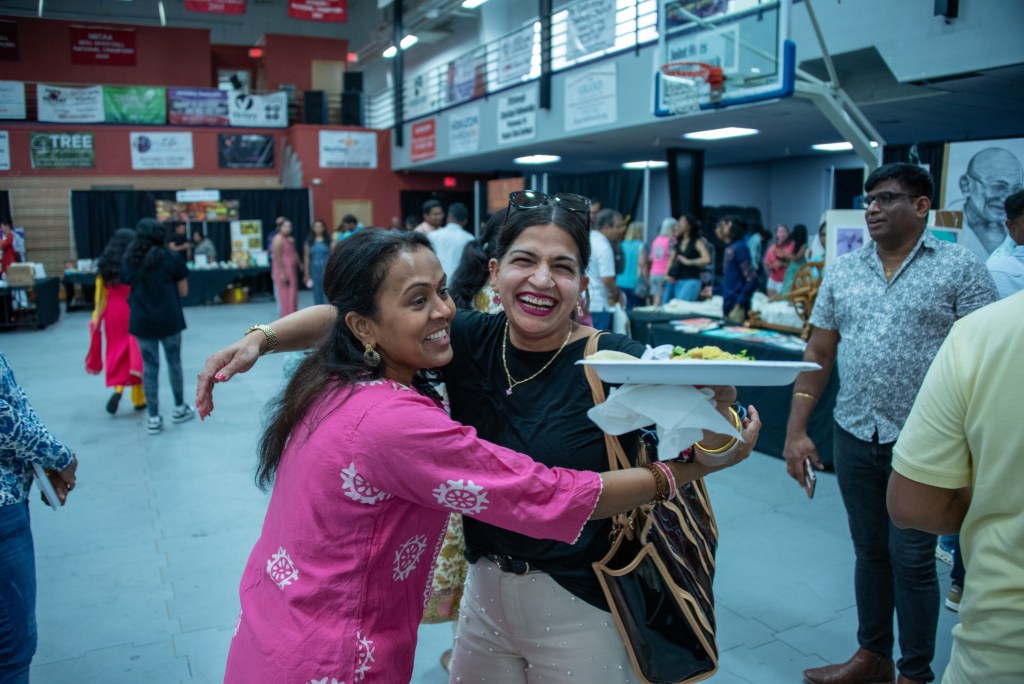
She’s back as president of the association after more than 10 years away. Attendance has steadily climbed since the festival’s return in 2024, doubling from around 1,000 people to 2,000 in 2025. Kaul says she’d be happy to reach pre-pandemic numbers this year but also says their goal goes beyond that.
“It is about rebuilding the event with a broader vision: sharing Indian culture with the entire Tulsa community, creating opportunities for different communities to connect and, most importantly, giving the next generation a sense of belonging and pride in their roots,” Kaul said.
Indians make up one of the largest groups of Asian American, Native Hawaiian and Pacific Islander (AAHPI) in Tulsa at 15.2%, according to data from the Asian Affairs Commission.
The Asian Affairs Commission hosted Tulsa Asia Fest earlier this year, sparking unprecedented momentum in Tulsa’s Asian community. Kaul herself says that’s when she realized Indians could belong in Tulsa’s broader Asian community for the first time.
Both Kaul and Kolkar want the India Association of Greater Tulsa to expand awareness of their culture. Anyone can be a member, as long as you have that shared interest.
But they also think it’s time to start passing the baton onto the next generation. Even though Kaul was called to help bring the festival back, she herself has made changes in her day-to-day life over the years as she’s watched her community evolve.
“I can walk into a grocery store, (and) if I see another Indian and I don’t know them, I don’t strike up a conversation because it feels like my cup is full,” Kaul said.
News decisions at the Tulsa Flyer are made independently of our board members and financial supporters. Read more about our editorial independence policy here.