

Multiple tribal nations across Oklahoma are talking about AI data centers. Here’s an update on where some of them stand.
Kickapoo Tribe of Oklahoma
The Kickapoo Tribe of Oklahoma Business Committee opposes data centers on tribal lands, according to a statement released last month.
The five-member committee, which serves as the tribe’s governing body, wrote it’s concerned about the impact facilities have on land, water and electricity.
“While technological advancements plays an important role in today’s economy, the Tribe believes these facilities are not compatible with its long-term vision for sustainable development and responsible stewardship of Tribal resources,” the committee wrote.
Chenille Suke, the committee’s treasurer, said the tribe has been approached for data center development several times.
Suke added the tribe supports economic development and isn’t opposed to technological advancements, but they must provide lasting benefits to tribal members. That must account for land and water, she said.
“We’ve already gotten so much taken away from us … this is just protecting what we have now,” Suke said in an interview Friday.
Honor the Earth, an Indigenous nonprofit organization opposed to data center development, celebrated the Kickapoo Tribe of Oklahoma’s decision on Facebook.
The tribe joins others who have rejected or outright prohibited data centers on their reservations, including the Seminole Nation of Oklahoma, which banned facilities from its lands in March.
“We kind of saw the need that we had to put something out as well,” Suke said.
Caddo Nation
Caddo Nation officials recently met with Colusa Indian Energy to discuss energy sovereignty projects and the possibility of creating a tribal utilities authority.
That company, owned and operated by the Cachil DeHe Band of Wintun Indians of the Colusa Indian Community in California, works with tribal governments to develop energy infrastructure, including data center services.
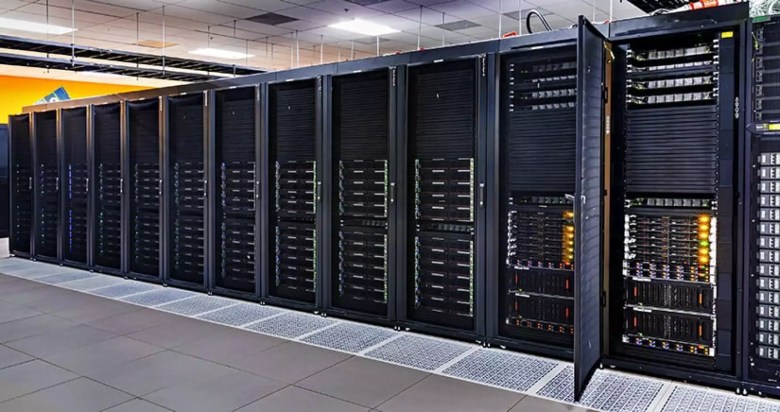
But Zackeree Kelin, vice president of the Caddo Nation Economic Development Authority, said the tribe is not considering a hyperscale data center during a membership meeting on July 25. Hyperscale facilities are large-scale, designed to house thousands of servers and often used by corporations like Amazon and Google.
“There is absolutely no consideration – categorically – no consideration for a hyperscale data center by the nation. That is not being considered at all in any form or fashion,” Kelin told tribal members. “No one is talking about creating something like a 280-acre industrial park to put a data center on … That is not even being discussed.”
Kelin’s statement responded to some controversy during the meeting.
Chair Bobby Gonzalez previously told citizens he, the Caddo Tribal Council and Kelin were gathering information related to data centers and had not made a decision yet.
One member, photojournalist Joe Whittle, questioned Gonzalez.
“When you say we’re just gathering information, that tells me that a data center is on the table still and I think a lot of people want to know a commitment from our government right now,” Whittle said. “We already know enough about data centers. We don’t need to gather any information to know whether we want a data center on Caddo land sucking up Caddo water, utilizing Caddo resources.”
Gonzalez said developing energy requires balancing interests, such as juggling the environment, culture and resources.
“We’re gathering information so we can share it with you related to what we find out, because right now we don’t know enough,” Gonzalez said. “We do know that it’s a controversial issue. And you can ask one person in here how they feel, but that still don’t represent 7,550 people.”
The New York Times reported last month the nation was in discussions with Colusa Indian Energy to develop a power plant for a data center this year.
The tribe responded to the Times’ story on July 10. It wrote that gathering information was not an endorsement for or against data centers.
On July 25, Kelin said the tribe does not have large electrical loads to justify financing renewable energy sources. Data centers could be a part of future development, he said, which could jumpstart a Caddo utilities authority.
Muscogee Nation
The Muscogee National Council approved legislation on July 25 to create the Tribal Digital Infrastructure and Data Sovereignty Task Force in a 12-3 vote. It’s designed to study artificial intelligence and data centers.
During his State of the Nation address, Principal Chief David Hill told the tribe the task force would consist of himself, one representative from the attorney general’s office, a representative and the speaker of the Muscogee National Council, the chair of the Business, Finance and Justice Committee and a representative from the tribal utility authority.
“We realize there are many opportunities for us here in Indian Country, but we also cannot prioritize development and business projects at the expense of our most precious resources: our air, land and water,” Hill said. “… It’s time that we remove misinformation and add transparency to this debate and really study what the advantages and concerns are for these projects and the best way to move forward.”
Muscogee Nation rejected a data center project last November after widespread protests.
Cherokee Nation
Muscogee Nation’s recent move is similar to legislative actions by the Cherokee Nation. In February, Cherokee Principal Chuck Hoskin Jr. established a task force to study the impacts or opportunities of data centers.
Its report, which was submitted to Hoskin in June, is supposed to guide the tribe’s future decision-making. Cherokee Nation says it’s expected to be released in the coming days.
This story was produced as part of a partnership between the Tulsa Flyer and KOSU.