


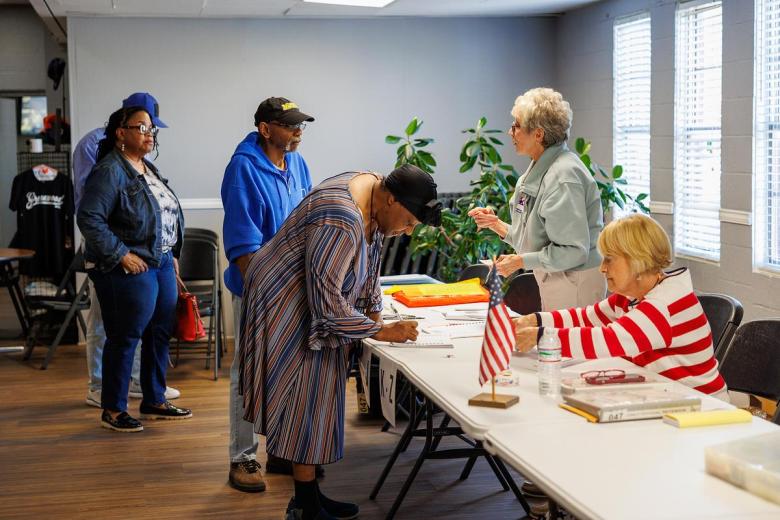
Only one in four eligible voters cast a ballot in Oklahoma’s June primary election. In north Tulsa, where turnout is historically low, field organizers say increasing the number of people at the polls requires being more intentional about breaking the barriers facing potential voters.
The area is receiving heightened attention ahead of the Aug. 25 election, with a crowded field of candidates attempting to unseat incumbent District 1 City Councilor Vanessa Hall-Harper. All candidates are expected to appear at The Oklahoma Eagle’s Aug. 11 forum.
Statewide, the city boasts multiple Tulsa-based candidates in the election for State Superintendent of Public Instruction. Jennettie Marshall, a former Tulsa Public Schools board member, won the Democratic primary and will be on the Nov. 3 ballot. OU-Tulsa professor Robert Franklin faces Oklahoma City teacher James Taylor in the Republican runoff.
While always important, voter turnout in Oklahoma’s second-largest city could have a formidable impact this fall. Within the city, north Tulsans play a potentially outsized role. But will they show up to the polls?
In interviews with The Oklahoma Eagle, a half-dozen voter engagement organizers from across the political spectrum cited three main obstacles to increasing voter turnout, particularly in north Tulsa. Members of the community, they say, face barriers to exercising their right to vote, receiving accurate voter information and believing their vote matters.

Sam Robson is a data and organizing strategist for the Terence Crutcher Foundation, a Tulsa nonprofit focused on social justice. He believes one of the most overlooked barriers to voting is the disenfranchisement residents feel from being overlooked by candidates and campaigns.
Some people may think Black people just don’t vote, but “that doesn’t survive the scrutiny of the data,” Robson said. When he first started analyzing data for the foundation a few years ago, he noticed north Tulsa had a lower voter turnout rate than other parts of the city.
Two types of data helped him paint the picture. Precinct-level turnout reveals a comparison between neighborhoods, while county-level voter history shows how often someone has voted in the past.
“Campaigns always focus on the voters they think they can get,” Robson said. “This creates pockets of disenfranchised voters.”
Robson described a cycle where candidates only reach out to voters who have a frequent voting history, leaving other potential voters feeling ignored and unmotivated.
But that can change. In August 2024, former state lawmaker Monroe Nichols shocked the state when he gained the most votes in the Tulsa mayoral election and became the city’s first Black mayor. In the August primary election, he led his opponents by only 272 votes. His victory margin in November was much larger.
An analysis of precinct-level results from the Tulsa County Election Board shows 67% of north Tulsa voters chose Monroe Nichols for mayor. Other parts of the city were more evenly split between Nichols, Karen Keith and Brent VanNorman.
In total, the breakdown in north Tulsa revealed 67% for Nichols, 25% for Keith and 6% for VanNorman. Despite making up only a sliver of the citywide electorate, the data shows turnout in north Tulsa swayed the election in Nichols’ favor.
“The only difference between a north Tulsa voter and a south Tulsa voter is the access to information and the level of effort campaigns put in,” Robson said.
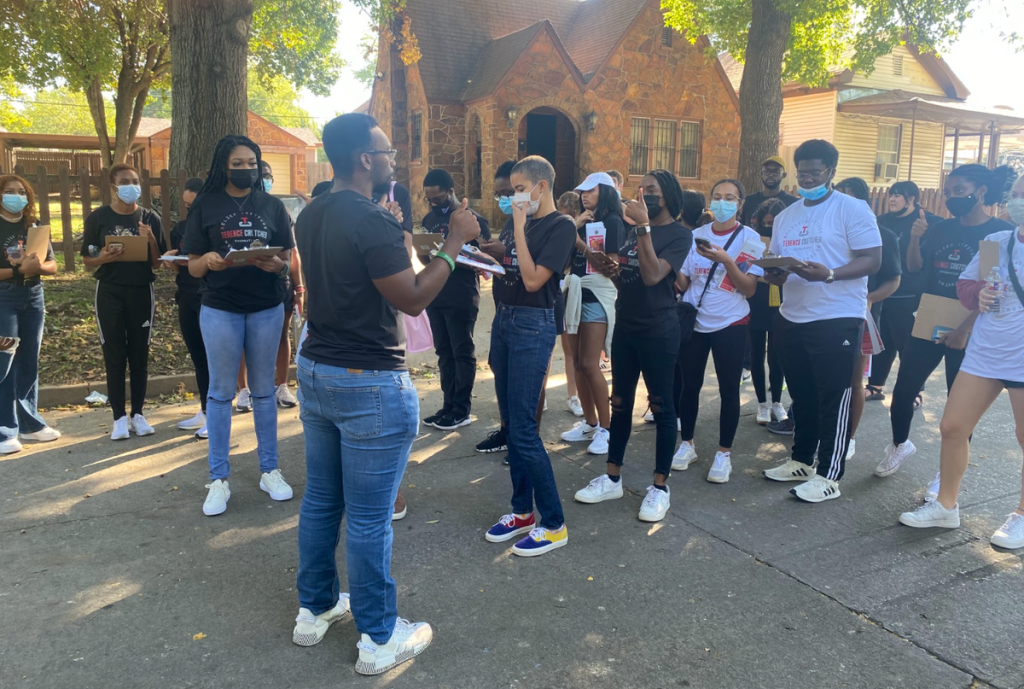
Ahead of that election, the Terence Crutcher Foundation led a voter engagement effort that reached over 30,000 Tulsans, many from north Tulsa. They released their findings in a report titled, “Voter Turnout: The Case of Oklahoma.”
The foundation has led community walks for years, and not just during election season.
“If we’re not voting, it means we don’t have power, and so our motivating factor was to really inspire people to realize the power that they have through civic engagement,” founder and executive director Tiffany Crutcher told The Eagle.
“So, when we think about community walks, it’s really not a program or initiative or activity to go and sell something or sell a candidate to our community members. It’s really an initiative that allows the Crutcher Foundation to listen to the concerns, needs, wants and desires of the people,” she said.
The overlooked voter
Political strategists from both Democratic and Republican parties acknowledged the typical strategy for candidates is to seek out people most likely to vote for them and ignore the rest.
Alicia Andrews saw that trend as a former chair of the Oklahoma Democratic Party and now as chair of the Democratic National Committee’s Women’s Caucus. The Tulsan specializes in political fundraising.
“I’m going to focus on calling the folks who always show up when I need volunteers. I’m going to focus on calling the people who always show up when I need money, and that doesn’t allow us to build capacity, either party, it doesn’t allow us. We’re not reaching out to new people,” Andrews said.
Most campaigns with limited time and resources focus on high-propensity voters, or those who vote frequently.
Tulsa-based Republican strategist Charity Marcus concurs. Most Republicans are advised not to deploy campaign resources in north Tulsa because most eligible voters are registered Democrats, she said.

“You’re not going to have a Republican gubernatorial candidate coming. You’re not going to have a lieutenant governor, all those people, they’re not coming to north Tulsa,” Marcus said.
State House District 73, represented by Democratic Rep. Ron Stewart, includes most of north Tulsa and Historic Greenwood. In a district of over 19,000 voters, registered Democrats outnumber registered Republicans 10 to one, according to the Oklahoma Election Board’s annual registration by district report.
Andrews believes increasing engagement with low-propensity voters, or those who rarely vote, can make a difference.
“We talk to the people who vote all the time,” she said. “What the Terence Crutcher Foundation and other organizations are out there doing — door knocking and community work — is they are tapping into talking to people who aren’t always talked to. People need to feel seen and feel like they’re part of the issue.”
Unlike Andrews, Marcus doesn’t believe candidates have a responsibility to reach people unlikely to vote for them. She believes it will take more Republicans becoming registered in north Tulsa for those candidates to spend significant resources in the community.
“Until people want to be engaged in politics, there’s really not much we can do in terms of candidates, consultants, people engaged in political parties,” Marcus said.
Breaking down barriers
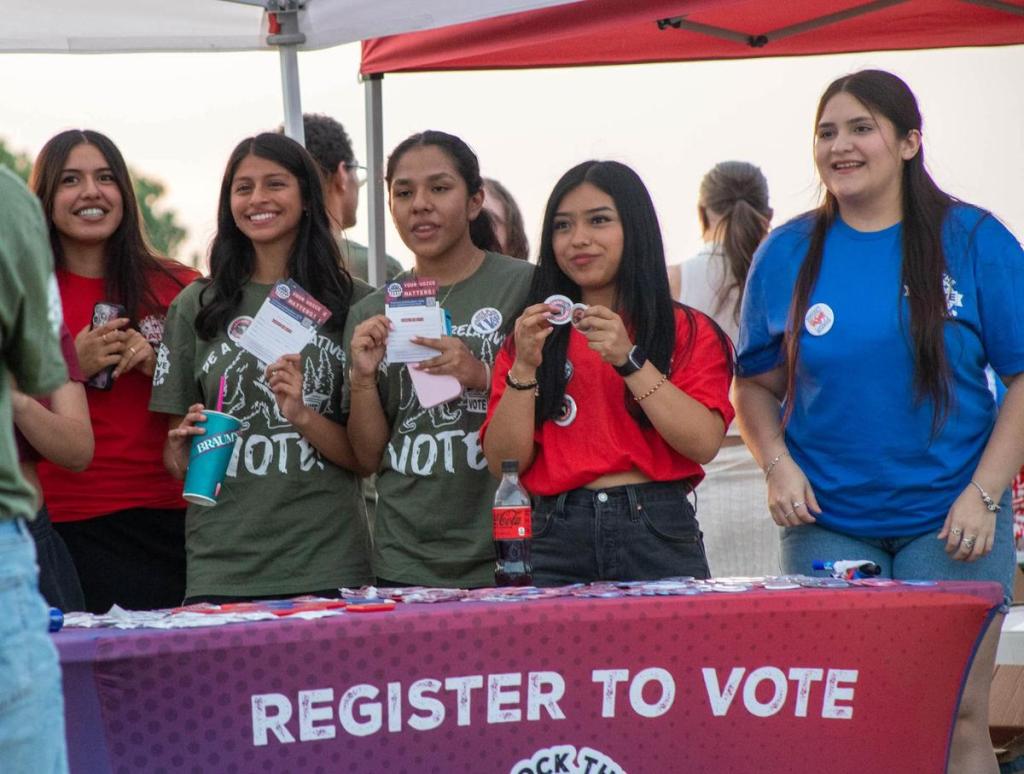
Being overlooked by candidates isn’t the only reason some voters may feel unmotivated. Distrust of government officials and historical trauma play a role, too, says Rock the Native Vote Tulsa coordinator Walela Knight.
Since 2020, the Cherokee Nation citizen has worked to encourage voting among Indigenous and Black communities in north Tulsa. The community uniquely sits at the cross section of three tribal nations: Muscogee, Cherokee and Osage.
Knight has faced rampant distrust in the voting process among some of the people she’s met. Some have even called her a traitor to her Indigenous culture for registering voters.
“We have a governor that hasn’t been treating the tribes very respectfully. So, why would anybody want to be involved in that to begin with?” Knight said, referring to Gov. Kevin Stitt’s clashes with tribal governments. “It’s very far and few between where I get criticized because I’m like conforming, I’m being, you know, colonized or whatever. But I don’t see any other way. I think it needs to come from within and from without.”
One argument she’s found successful in inspiring voter participation is reminding people of the power of coming together.
“When Gov. Stitt tried to attack the gaming compacts with the tribes, all freaking 52 of the tribes united together, and that has never happened, ever. Because of that, he failed miserably,” Knight said.
Organizers see practical barriers, too. The state’s closed primaries are one of them, according to Maggie Romine, co-president for the Tulsa chapter of the League of Women Voters.
She believes open primaries, or allowing people to cast a vote in any primary they choose regardless of their voter registration, would give more Tulsans and Oklahomans a voice in elections. Earlier this year, advocates were unsuccessful in their efforts to put open primaries on the ballot.
“Oklahoma is a quote-unquote red state, but as someone who registers people to vote, I see the split in the party affiliation, and 25% to 27% of that are independent voters,” Romine said. “They do not have the opportunity to vote in the primaries.”
She also sees an overlooked issue. When a state is low on poll workers, it must close polling locations. Fewer locations mean more people must travel farther to vote — and, with many lacking reliable transportation, fewer show up to the polls.
Ultimately, Romine wants communities to step up with voter engagement education where candidates, campaigns and classrooms fail.
“We clearly aren’t receiving it from our state, so it needs to be our neighbors and our citizens and our community getting out there and supporting each other to make this happen,” Romine said.
Tulsa-based journalist Deon Osborne contributes regularly to The Oklahoma Eagle.