


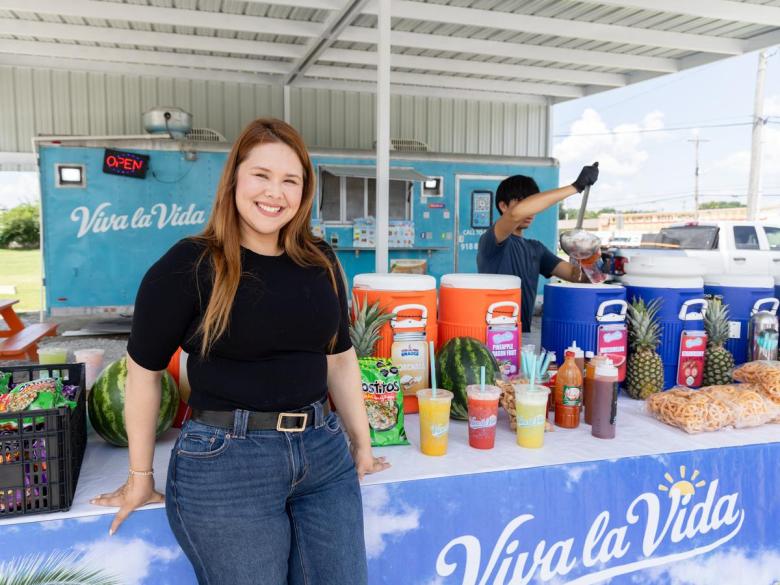
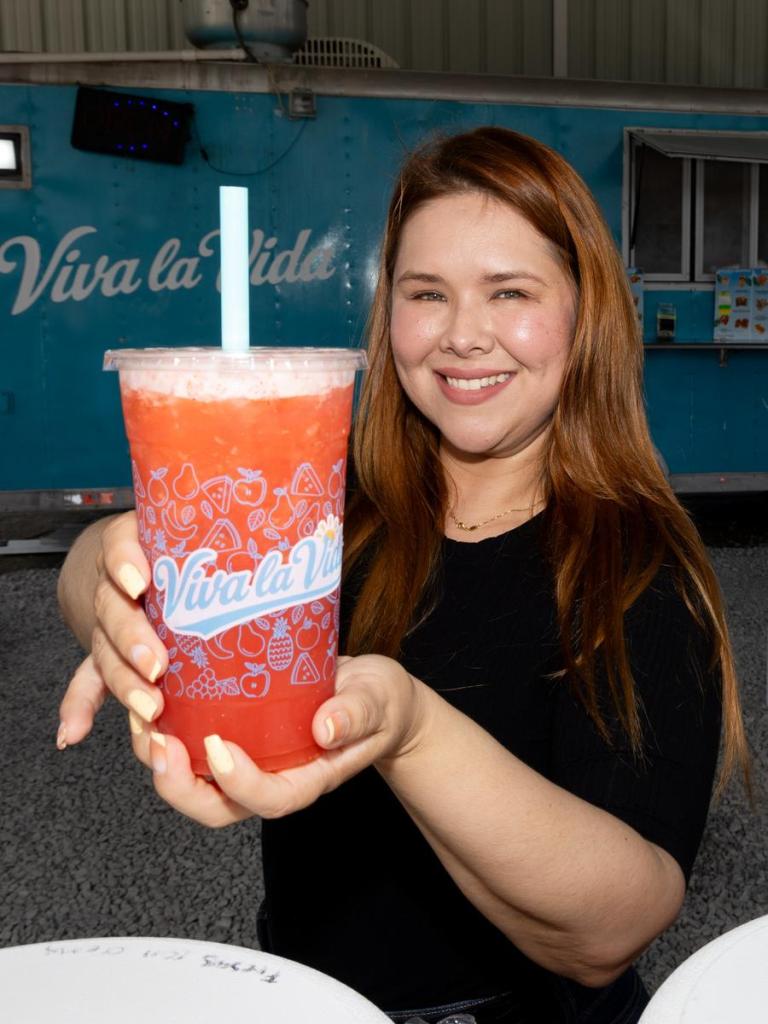
It’s a hot afternoon in July, and the Viva La Vida food truck is the place to grab a cold beverage — an agua fresca — to cool off.
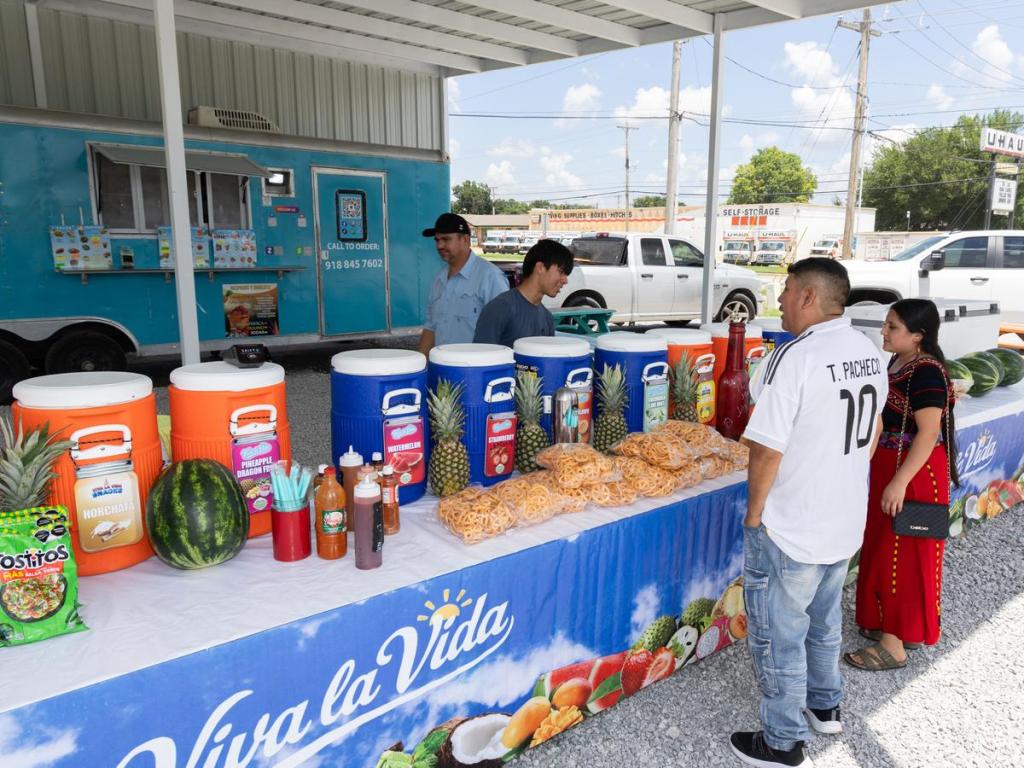
Most days you have 12 different flavors to choose from, from strawberries and cream to soursop. On weekends, sometimes up to 32. The most popular one though? Mango passionfruit.
Aguas frescas are typical Mexican drinks made with natural fruit, sugar cane, ice and water, said Alexis Rosales, owner of Viva La Vida, regularly parked at 6136 S. Peoria Ave. in south Tulsa.
Aguas frescas have been part of the Latino and Hispanic community for ages, with growing popularity across the country in recent years. In Tulsa, aguas frescas are popping up on more menus across the city at Hispanic-owned restaurants and food trucks.
Rosales says some aguas frescas, such as cucumber lime mint, have health benefits while others are simply refreshing to drink.
“I consider drinks as something that everyone in the world loves,” she said. “Drinks like aguas frescas, I believe are a universal product here, in China, in Japan or anywhere else people go to.”
From desperation to determination
Rosales started growing her business in 2020 when her family moved to Tulsa from Jalisco, Mexico. Her husband trimmed lawns for $10 an hour, and she needed an income.
“The desperation got to me and I ordered a machine for shaved ice on Amazon, and then I went to Sam’s (Club) to buy a table,” Rosales said.
Rosales and her sister took the machine and table to a local park and sold snacks that summer. She remembers crying the first time she sold $40 worth of items.
“I cried because it gave me so much joy, and I thought, ‘this is the job I was looking for,’” she said.
Their one table attracted long lines. They bought their first food truck and found a space out in east Tulsa. Then an idea sparked while selling at a local event.
Rosales says she noticed most drinks served at the event were canned or alcoholic and didn’t really help take away thirst. She went to her husband and they decided to add aguas frescas to their menu.
Although they’re known for their aguas frescas, Viva La Vida offers food items too, such as fresh ceviche, elote (corn) and raspados (snow cones).
“We are going to sell stuff that we also like to eat,” she said. “That’s something we like to do. The same good quality things we like to eat are the same things we like to provide for our clients.”
Building a community of customers and vendors
The Rosales spent a few years with their food truck in the eastside, where most of their clients were Hispanic or Latino. In March 2025, they moved Viva La Vida to its current location in south Tulsa to be closer to home and their kids’ schools.
It’s in a high traffic area has attracted a more diverse customer base, she said. Rosales even had customers from out of town, including from Hawaii and India.
“This area has a bit of everything compared to east Tulsa,” she said.
This year, the Rosales family purchased the land they previously rented. She says it opens the door to build a community for other food truck owners there. She struggled with opening her food truck and doesn’t want the same for others.
“We lived it firsthand, so we want to create something here where people can gather and create community,” she said.
Viva La Vida is working with the City of Tulsa to create a plan for the property to build out a food truck park. She wants it to be a destination for families.
The business plans to launch a biweekly community Riverwood Pop-Up Market to allow food trucks, local vendors, artists and small businesses to start using the space in the interim. The area is a perfect spot that connects with communities like Riverside, Brookside, Tulsa Hills and Jenks, she says.
“A lot of (clients) have said that we’ve made the area more sociable because no one wanted to stop by before because they were scared,” Rosales said.
Their first pop-up is set for noon to 9 p.m. Sunday, Aug. 2 at 61st and Peoria.
This article was produced as part of a partnership between the Tulsa Flyer and La Semana, a Tulsa-based bilingual Spanish-English newspaper serving Latino communities in Oklahoma.
News decisions at the Tulsa Flyer are made independently of our board members and financial supporters. Read more about our editorial independence policy here.