


More than half of Oklahoma voters who cast a ballot in the June election decided against increasing the state’s minimum wage. But advocates say they aren’t giving up.
If passed, State Question 832 would have increased the minimum wage from $7.25 to $15 by 2029. After that, all new increases would have been based on the cost of living, as determined by the U.S. Department of Labor’s Consumer Price Index for Urban Wage Earners and Clerical Workers.
Amber England is with Raise the Wage Oklahoma, the grassroots organization that first petitioned to put the question to voters back in 2023.
Now that it’s been rejected, England said the next step is to put forward a list of ideas that Oklahoma lawmakers can consider during the 2027 legislative session kicking off in January.
“We want to bring our coalition back together to ask lawmakers to pass a plan, and to ask those who spent millions of dollars opposing us to come up with a plan of their own,” England said.
These ideas, she said, may include increasing the earned income tax credit, the childcare tax credit and restoring Oklahoma Department of Human Services subsidies.
Many critics of State Question 832 fell victim to political messaging, England said, particularly when it came to the idea that increasing the minimum wage would lead to inflation. Other states, like Nebraska, Florida and Arizona passed a similar increase in recent years and haven’t seen associated inflation increases.
In Oklahoma, England says the process was nearly doomed from the start when Gov. Kevin Stitt delayed putting the question on the November 2024 ballot in favor of a June primary.
“It was specifically targeted for the June 2026 ballot, because they knew turnout would be low,” England said. “We knew the day the governor gave us the June 2026 election date, it was an uphill battle.”
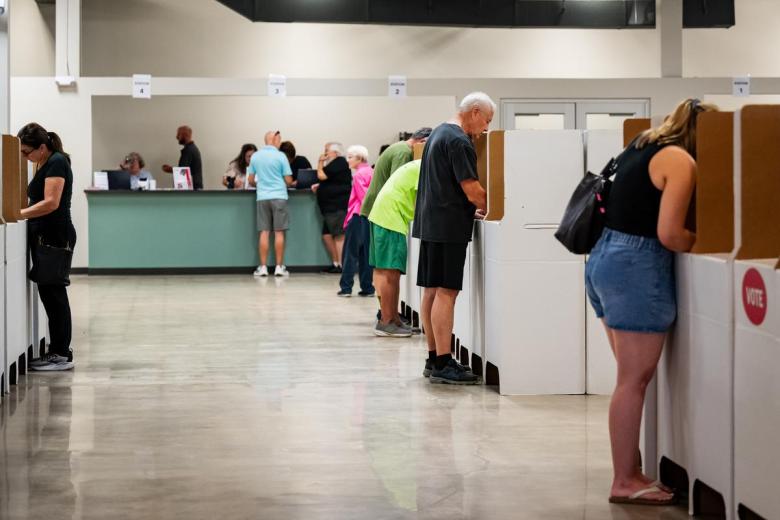
Overall, more than 630,000 Oklahomans cast a ballot for State Question 832, according to the state election board. That’s a drop from the June 2018 primary that saw 892,758 votes on State Question 788, which legalized medical marijuana, the Tulsa Flyer reported.
Oklahoma, Tulsa and Cleveland counties, which are home to the seven of the state’s eight most-populated cities, were the only counties that voted in favor of State Question 832.
England argues it will be harder to bring the question back thanks to a new state law Stitt signed in 2025. The legislation added multiple stipulations to the petition process, including requirements to show the fiscal impact on the state and giving power to the secretary of state to remove any petition in violation of the new rules.
In some states, like California, certain cities have raised their own minimum wage higher than the rest of the state. But that’s not an option for Tulsa.
Former Gov. Mary Fallin enacted a law in 2014 that restricts municipalities from independently creating their own rules regarding minimum wage, making any such changes subject to state approval. It was in response to former President Barack Obama’s attempt to increase the federal minimum wage to $10.10.
Ismael Lele is a Report for America corps member and writes about business in Tulsa for The Oklahoma Eagle. Your donation to match our Report for America grant helps keep him writing stories like this one; please consider making a tax-deductible gift of any amount today by visiting this link.
