



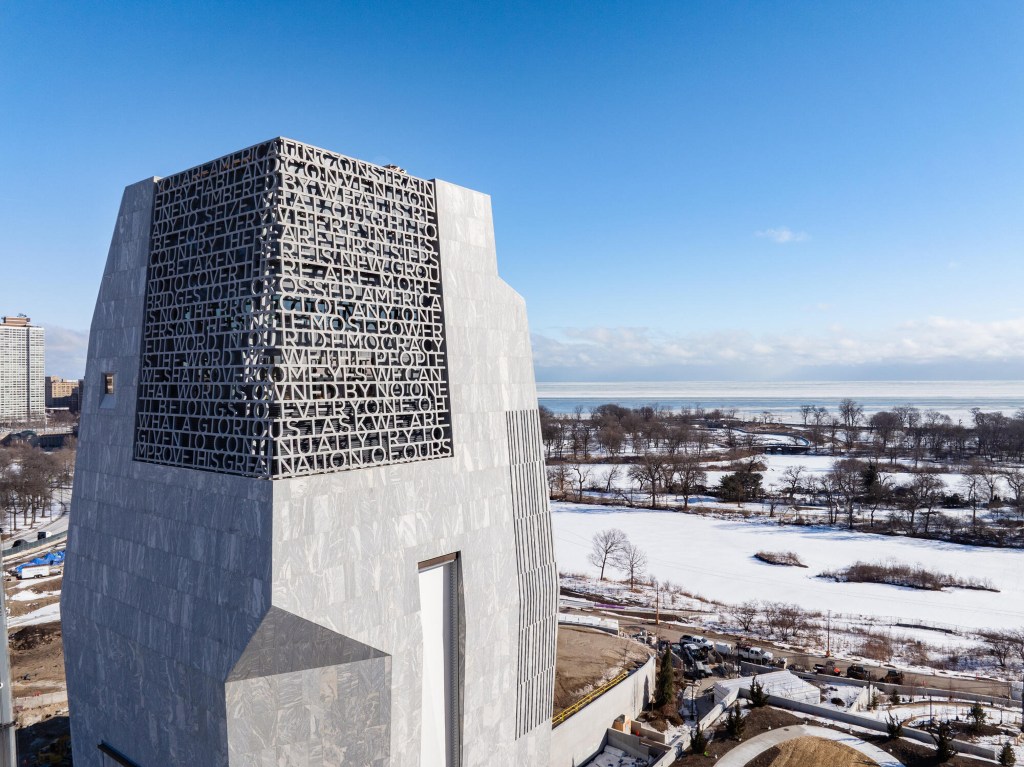
Visitors to the newly-opened Obama Presidential Center in Chicago, Illinois will get the chance to hear the stories of two Oklahoma community advocates.
The $850 million center opened to the public June 19. The sprawling 19.3-acre campus includes a museum, garden, public library and indoor basketball court.
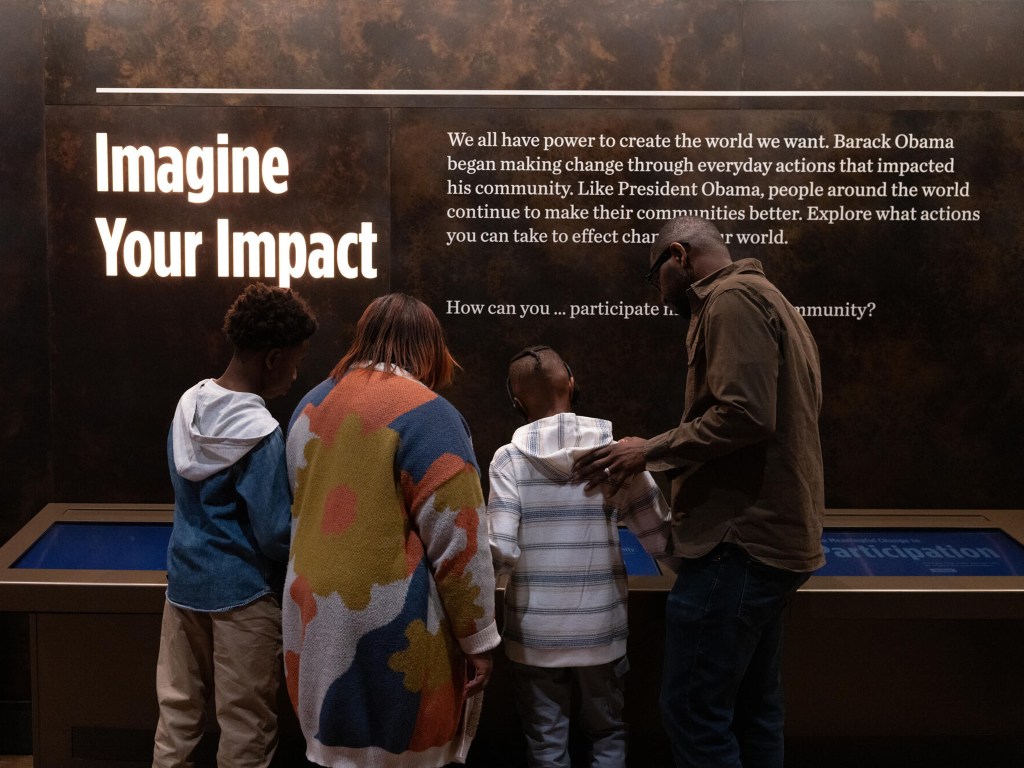
The building also features the Imagine Your Impact interactive art exhibit, which includes stories of individual changemakers from around the country. The goal is to inspire visitors to tap into their personal agency to make a difference in their own communities.
Two of the people featured are Ashley Philippsen, formerly of ImpactTulsa, and Jen Loren, senior director at Cherokee Film.
Loren, who was part of the 2023 Obama Leaders USA cohort, was selected for her work with Cherokee Film to increase Cherokee and Native American representation.
“We are trying to increase representation of Cherokees in film and media, which ultimately puts us into popular culture and makes us feel like we are a part of the future. We are not people of the past,” she said.
Loren told The Eagle her advocacy began years ago.
“I started down this road of change making when I was in high school at Booker T. I’ve been doing this work since I was a teenager,” she said.

A representative from the Obama Foundation reached out to her about a year ago to participate in the exhibit. She joined a private tour of the museum with other members of the Cherokee Nation a couple of days before the opening ceremony.
Loren said the experience was inspiring, impactful and powerful.
“President Obama and Michelle Obama’s voices are just echoing throughout this huge building on every floor. You’re hearing their voices. You’re seeing their story. But everything is a call to action,” she told The Eagle.
The center was built with “a hope that people will come here and not just passively engage but be inspired and motivated to do their part to make the world a better place,” Valerie Jarrett, former White House adviser and CEO of the Obama Foundation, told Smithsonian magazine.
Philippsen started her career as a teacher in Houston and has worked for years in policy and advocacy in Oklahoma. Visiting the site inspired her to continue the work she does — particularly after voters rejected State Question 832 in the June 16 primary, which would have raised the minimum wage.
“So many of our families are earning minimum wages, low wages—not even living wages,” she said. “So for the countless Oklahomans that will continue to have to scrap, scratch and survive, work multiple jobs, that is not improving their quality of life and it just perpetuates this cycle that will adversely affect our youngest Oklahomans.”
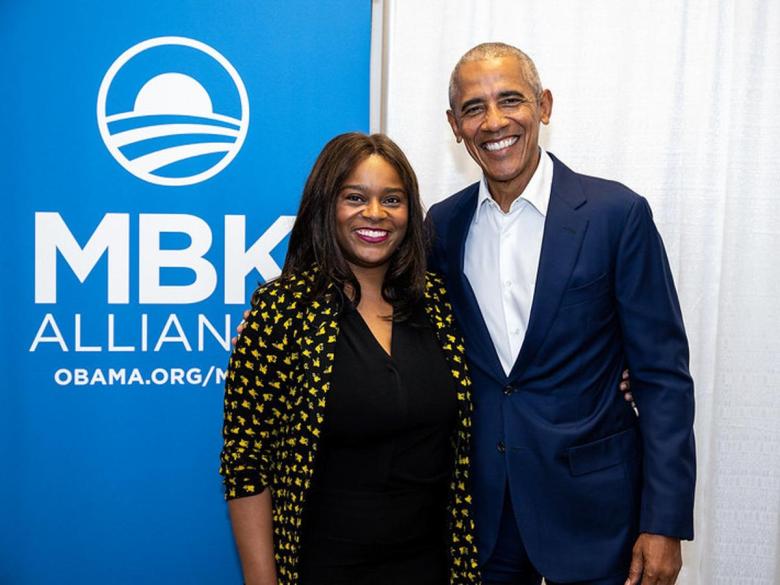
It was during Philippsen’s tenure as executive director of ImpactTulsa that the Obama Foundation recognized Tulsa as a My Brother’s Keeper alliance model city. She is now a senior implementation adviser with the Institute for Responsive Government.
She said attending the center’s opening ceremony reignited her belief in what change can be made in Tulsa.
“It’s very easy to be cynical, very easy to give up and say what are we doing?” Philippsen said. “I think going to the opening ceremony after the elections here — looking at minimum wage being struck down — was a really inspirational day for me personally. (It was) just a reminder of what’s possible when people do work together. We will not succumb to cynicism. That is what the opposition wants.”
Loren said reflecting on these principles is more important now than ever.
“Especially as we’re looking at the 250th birthday of our country and what it means to be an American…birthdays and anniversaries offer you a time to stop and reflect,” she said. “How can you contribute to what you want to see in America?”
