



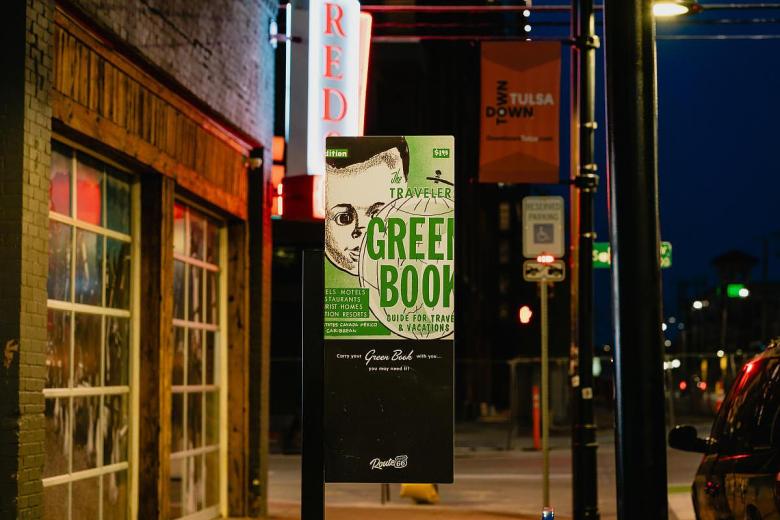
Candacy Taylor says she first discovered “The Negro Motorist Green Book” around 2014 while visiting a museum in Los Angeles. At the time, she’d just started diving into research to develop a Route 66 travel guide.
Before that moment, the New York City-based historian said she had no idea The Green Book existed. She wondered if her family had known about it. So she called her stepfather.
“Everybody had one. You needed it,” he told her.
Victor Hugo Green, a New York postal worker, developed The Negro Motorist Green Book in 1936 as a directory to help Black travelers identify businesses that would welcome their patronage in a time of legally-enforced racial segregation.
Green and his wife, Alma, published the first copy exclusively for New York businesses. As their publication team grew, they began documenting Black-friendly businesses around the country. Soon, it became the most widely-used Black travel guide of its time.
Taylor’s call to her brother would prove to be revelatory, inspiring her 2020 book “Overground Railroad: The Green Book and the Roots of Black Travel in America.”
Green Book’s role for Black travelers
A few years after Route 66 opened for travel, the Great Depression and the Dust Bowl ravaged the country. Many Americans in search of prosperity migrated west to California along the Mother Road.
But this did not apply to everyone.
Black travelers on the move during the era of Jim Crow segregation had to employ savvy planning. More than half of the stops along Route 66 were in “sundown towns,” all-white communities that barred African Americans after dark. Dozens of such communities existed in Oklahoma, Tougaloo College researchers found.
The shoebox lunch emerged as one innovative way for travelers to avoid the hostility of this time period. Still, figuring out where to stop to sleep, get gas or simply use the restroom was often a life or death decision.
That’s where The Green Book came in.
As cities like Tulsa commemorate the 100th anniversary of Route 66 this year, Taylor says Green’s travel guide is an essential piece of that story, as it helped Black travelers navigate the highway safely.
Greenwood District became a safe haven
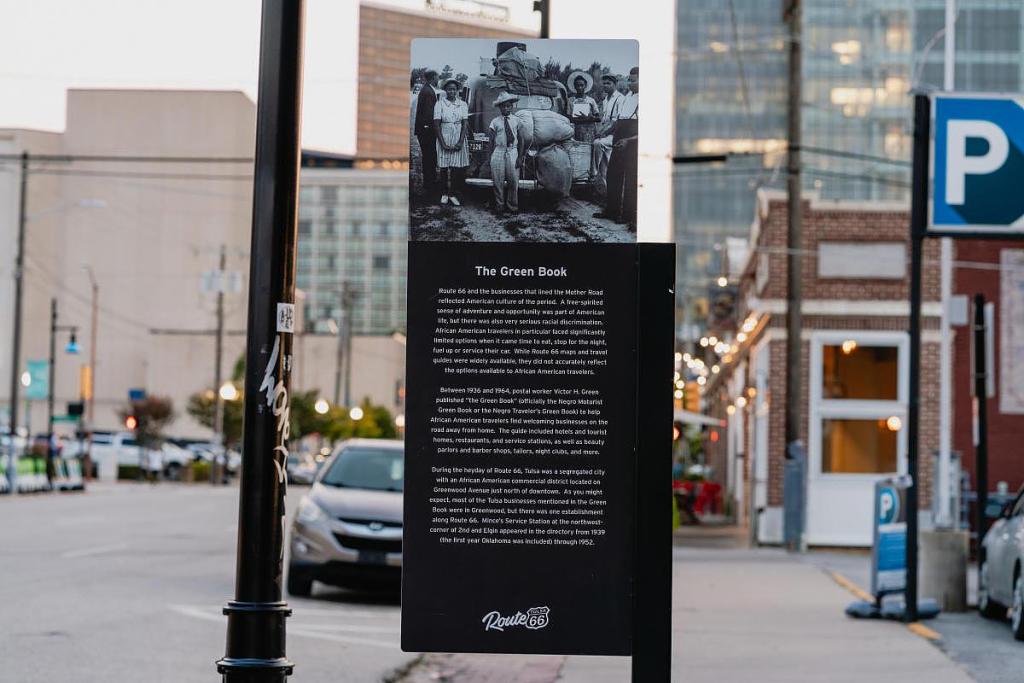
In Tulsa, which claims the title of ”Capital of Route 66”, Mince’s Service Station was the sole business along the route featured in The Green Book. A historic marker erected in what is now Tulsa’s Blue Dome District highlights where it once stood.
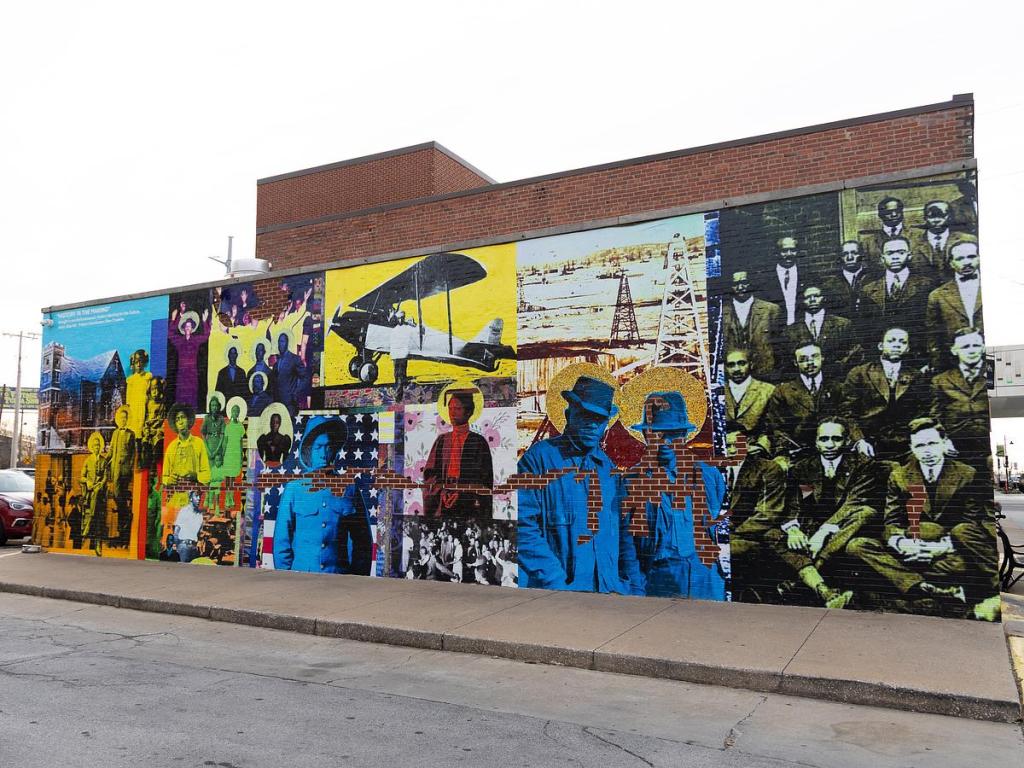
The majority of Black-friendly businesses in Tulsa were located in the Greenwood District, author Hannibal Johnson told The Eagle.
“The first entry of Tulsa establishments in The Green Book is in 1939. There are hotels, tourist homes, restaurants, beauty parlors, barber shops, taverns and service stations,” he said.
This was 18 years after the 1921 Race Massacre, which shows how the Greenwood community rebuilt its economic infrastructure, Johnson said.
“Black folks had, by 1939, really resurrected the Greenwood District that was destroyed,” he said.
As Black travelers stopping in Tulsa faced the possibilities of discrimination and disrespect, the Greenwood community welcomed their dollars and met their needs.
Johnson called this an “economic detour.” As Black people were rerouted, they took their dollars with them. Taylor illustrates this in her book “Overground Railroad.”
“In the 1950s, Greenwood was still a major tourist destination for Black travelers, and one they were proud to visit,” she wrote.
Listings for Tulsa featured the C.L. Netherland Tourist Home at 542 N. Elgin St., on land near what is now Oklahoma State University’s Tulsa campus. Tourist homes offered sleeping accommodations for travelers and were similar to modern short-term rentals like Airbnb.
Green was hopeful for the day when Black people would no longer need his book, but he would not see that day come to pass. He died in 1960, four years before the passage of the Civil Rights Act of 1964 made race-based discrimination in public spaces illegal.
Two years later, Alma and her team released the final volume of The Green Book.
Confronting Tulsa’s past
The arrival of the Interstate Highway System — an initiative tied to urban renewal projects across the country — phased out the necessity for Route 66. Major roadway projects also decimated Black communities across the country, Taylor said, including Greenwood.
Interstate 244, which was constructed directly over Greenwood Avenue, split the city in two.
In 2021, a national urban planning think tank recommended removing the portion of the highway that runs over Greenwood. Four years later, Mayor Monroe Nichols, the city’s first Black mayor, agreed and urged state lawmakers to consider initiating a process to remove the piece of highway over Greenwood. For now, it remains.
Ultimately, Taylor said this year’s Route 66 centennial celebrations reflect broader tensions that exist in how America narrates the stories of its history. But she believes Tulsa can serve as a model for how communities can confront the past.
She visited Tulsa in 2022, around the time the city began its large-scale 1921 Graves Investigation, to discuss her book on Black travel.
She told The Eagle she sees the recent grave excavation efforts as a metaphor for wanting to get to the truth —”even if we have to dig it out of the ground.” This ethos represents “a unique perspective that we all could benefit from if more people had that attitude,” Taylor said.
See more of our reporting on how Tulsa is commemorating the Route 66 centennial here.
Editor’s note: This story has been corrected to show Taylor called her stepfather, not stepbrother.
