



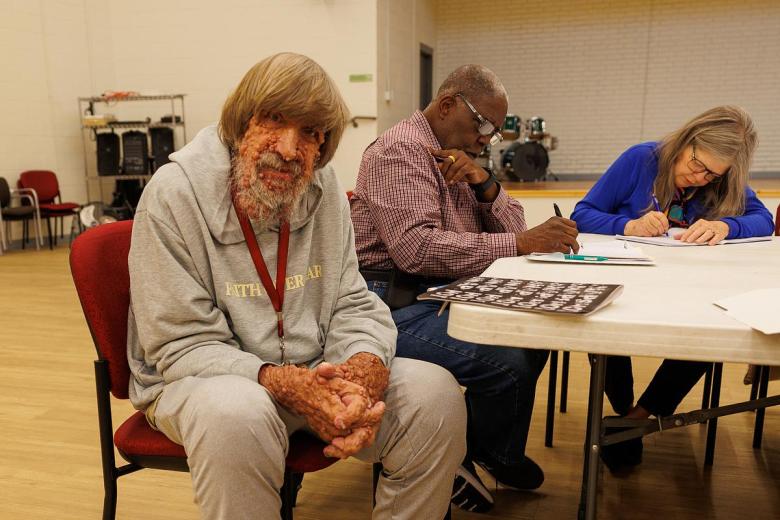
Gary Burke just wants people to stop being freaked out by his appearance. The 68-year-old’s face, hands and other parts of his body are covered in different sized tumors.
Burke was diagnosed with Neurofibromatosis 1 (NF1) when he was 13. At first, the genetic disorder caused spots on his arms, but they later turned into tumors.
Growing up, his high school classmates supported him, but when he got around strangers, they either stared or looked away. In some cases, Burke said, they asked him to leave.
“I did go to a church one time when a lady asked the pastor to ask me to leave because I was freaking her out because of this. And he looked at her and said, ‘there’s the door,’” Burke told The Eagle.
In the last few years, he said, Burke has made a good life for himself and become less sensitive.
“I got to where I don’t really care. If they don’t like me being around, it’s their problem,” he said.
With May being NF Awareness Month, he wants to draw more attention to his and others’ condition in hopes it will lead to more research funding.
“I would love, one of these days, for there to be a cure,” Burke said. But he’s well aware it likely won’t happen in his lifetime.
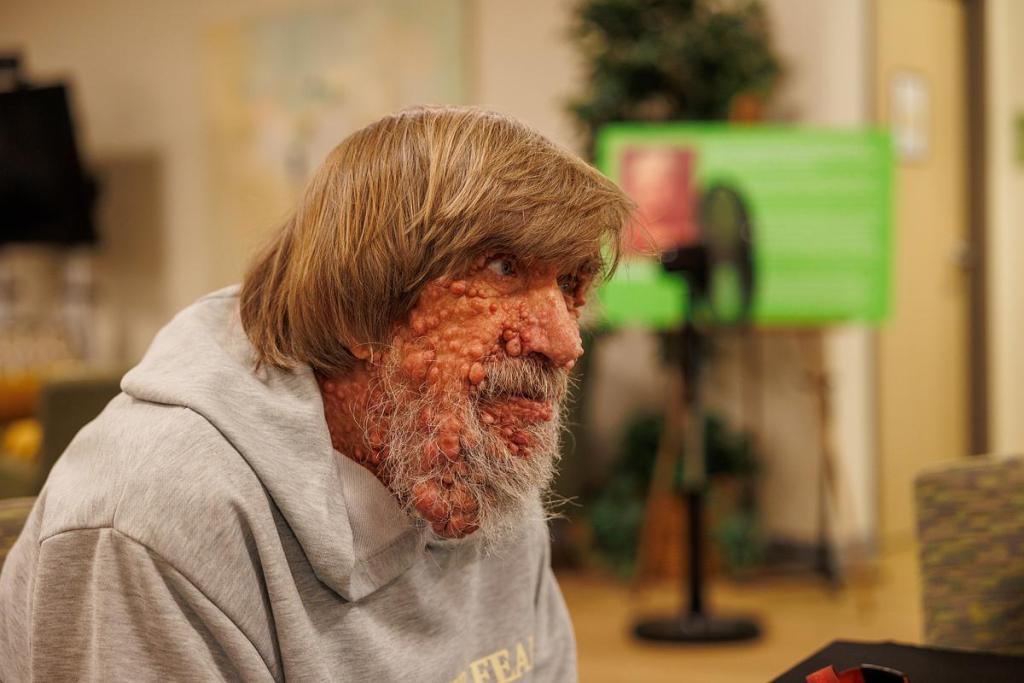
NF is a group of genetic conditions that causes tumors to grow on nerves anywhere in the body. Nationally, it affects 1 in every 2,500 to 3,000 births. In Oklahoma, that number is roughly 15 to 20 for every 50,000 births.
Dr. Michael Kayser, a Tulsa genetic clinician, said Burke’s condition is a more extreme form.
There are many other people who suffer from less severe variants that cause “cafe-au-lait,” or darkened, spots. Others have more nerve pain and disruption to internal organs.
Carol Frederic, Burke’s older sister, said the family dynamic changed drastically when he was diagnosed. Their mother became his primary caregiver, but his father was in denial, Frederic said. Their parents divorced shortly after.
Frederic said her brother continues to be ostracized in social situations. A family member, bothered by his appearance, recently disinvited him for Thanksgiving dinner.
“He doesn’t let it stop him,” Frederic said. “He’s shy, but he’s very outgoing at the same time. Everywhere we go, somebody knows him.”
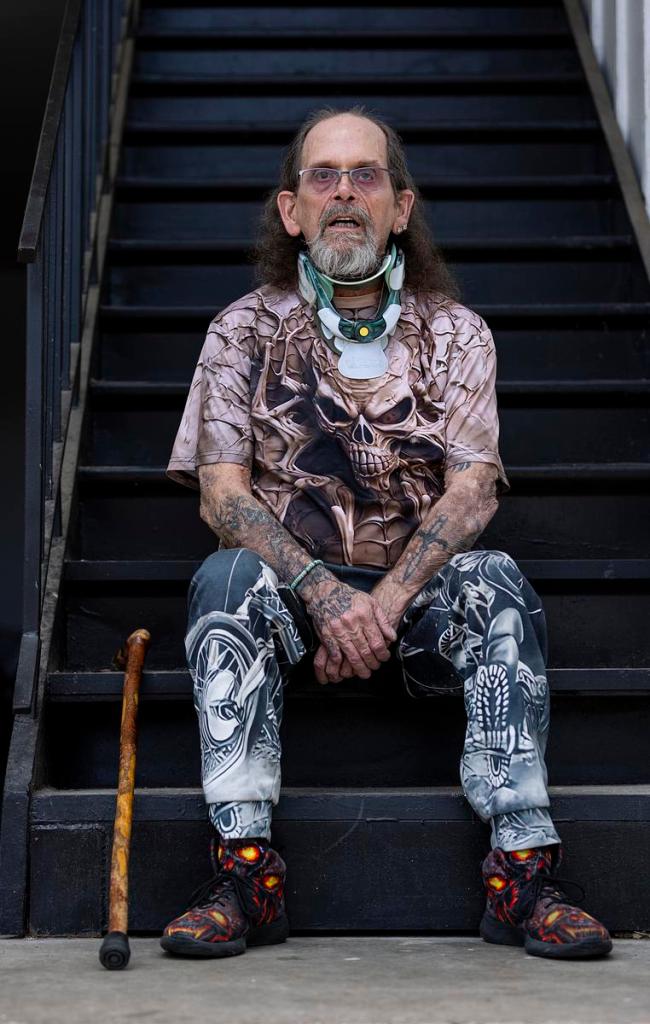
Mike O’Dell is another Tulsan living with NF1 who hopes greater awareness will reduce the stigma surrounding the disorder. People often wrongly assume the condition is contagious.
O’Dell, 64, has had 300 internal and external tumors removed, but they can grow back. He said he still has pain from the nerve endings on tumors on his feet. He had an eye removed, a finger amputated and has ongoing stomach problems.
“We are not freaks. We’re loving, compassionate human beings, just like any other,” he said. “I’ve built a tough exterior against the jokes and ridicule.”
O’Dell’s days are heavily shaped by the complications and pain caused by NF. But he has true friends, both locally and globally.
“I have a very small community around me… Some people don’t care if I have it. They don’t look at me that way,” he said. “Those are my true friends.”
As administrator of the 3,000-member Facebook group “NF Family and Friends,” he talks to others living with the disorder and helps spread information.
Burke’s support comes mainly in person. He relies on his church community and also visits a health clinic at LIFE Senior Services’ Roma Berry Center, where he attends weekly creative writing classes.
A cure is the ultimate hope. But until then, both men are hoping a greater awareness of NF will help people see past appearances and respond with understanding instead of fear.
