


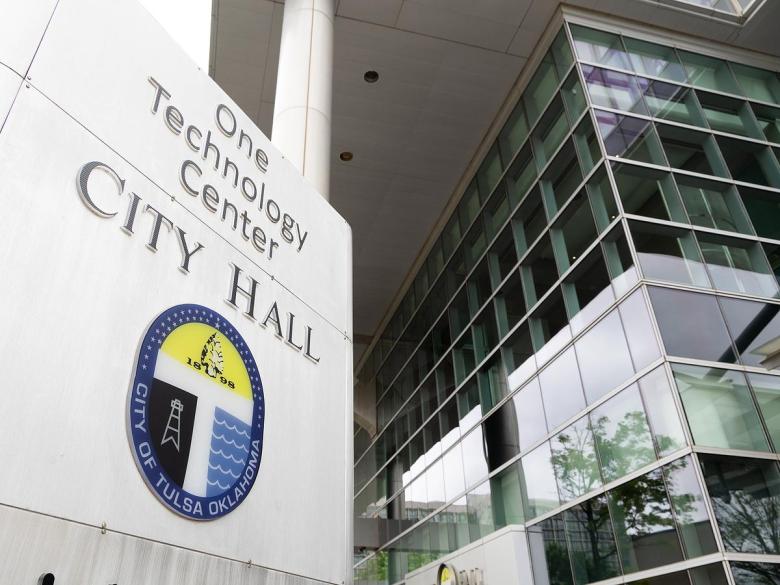
Mayor Monroe Nichols says year two of his Office of Children, Youth and Families will focus on implementation. He wants a new full-time director to run it.
After a year spent laying the foundation — but falling behind on several goals initially set for the office — Nichols says the next step is “to bring someone into City Hall that can have a laser focus on moving this work forward.” Despite the office accounting for a fraction of the mayor’s $1.22 billion budget proposal, Nichols highlighted its impact in his rollout.
Pending approval of the budget, the city will hire a director for the Office of Children, Youth and Families. The office’s budget will stay flat at $275,000, but nearly half would fund the new director’s “independent employment,” according to the mayor’s budget breakdown. The remaining funds would go to ImpactTulsa, the nonprofit contracted to run the office.
In year one, half of the office’s funding went to six staff salaries at ImpactTulsa, the rest to the office’s programs. In the first five months of operation, then-executive director Ashley Philippsen earned $20,241.90 for her part-time work as co-chair — around $68 an hour. Philippsen transitioned into an advisory role with the office in January and will continue through May.
According to its year one report filed April 3, ImpactTulsa says it brought three areas of “quantifiable value” to Tulsa: strategic vision and coordination across sectors, $960,000 in value and “ready-made capacity.”
The office hosted meetings for groups like the Children’s Cabinet and five of the seven planned Action Alliances. Action Alliances, as defined by the city, are working groups with local leaders, educators and others that come together to improve outcomes for Tulsa’s children. More than 100 local organizations have attended the two Action Alliance meetings so far.
The office also designed a framework for tracking youth outcomes and mapped the money going to youth initiatives in Tulsa. As of April, neither of those two products have been rolled out to the public.
Nichols said progress in areas like pre-kindergarten enrollment, chronic absenteeism and math outcomes is “because of a shared goal and clarity on student outcomes” originating with the office.
The office united several districts this year in a campaign to raise preschool enrollment, building off of ImpactTulsa’s years of work in the area. Chronic absenteeism gains in Tulsa Public Schools, like those at McLain and Will Rogers high schools, are supported by site-level interventions and the district’s Attend-to-Win initiative that started in 2024.
While the mayor championed a “more than 200 additional eighth graders” now proficient in math, the office has not named specific efforts toward math interventions.
According to ImpactTulsa, a formal policy and funding agenda is slated for year two in tandem with more pilot programs. It plans to “develop community messaging framework” for progress on the office’s overall goal of 15,000 youth on the path to economic mobility.
With the addition of a director, the mayor hopes to launch pilot programs focused on early literacy and youth internships in year two.
“This is not about changing the partnership. It’s about strengthening the structure,” Nichols said. “It ensures that this work is fully integrated with the city and continues to move forward with focus and urgency.”
News decisions at the Tulsa Flyer are made independently of our board members and financial supporters. Read more about our editorial independence policy here.
