


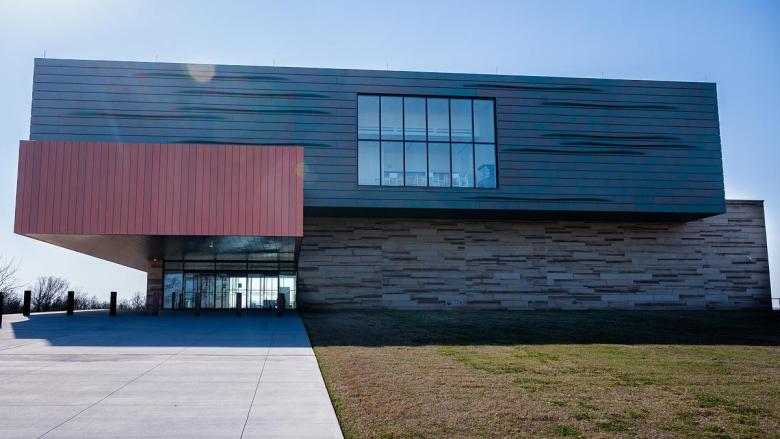
It’s fitting that the journey to construct a new Gilcrease Museum matches the dips, curves and heights of its surrounding vista. The Tulsa institution will open back up in spring 2027 — a year later than expected, smaller than before and nearly 70% over its original budget.
The pushed-back opening comes from delays in the fabrication of exhibit fixtures as well as concerns about winter weather and ensuring the climate level for exhibits. The smaller size comes from scrapping education space as a way to save money in the face of spiraling costs. The budget overruns came from pandemic-era supply chain interruptions and escalating prices.
Executive Director and CEO Brian Lee Whisenhunt says the $140 million museum in north Tulsa has a multi-layered purpose. There is the mission of sharing the collection for education, enjoyment, engagement and inspiration. It also has a responsibility to protect and care for the items, he said.
“This is not a conventional building,” Whisenhunt said. “We’re talking a lot about the visitor experience — how they look at these galleries and see the collection. But there is a lot built into the safety and security of the collection.”
The $2 billion collection has about 300,000 items that were packed away and inventoried five years ago. Each item will be inspected and inventoried again during and after the move.
Funding structure
The late oilman Thomas Gilcrease, who was a Muscogee (Creek) citizen, amassed the largest collection of American Western art in the U.S. along with significant historical documents, maps, books and artifacts. He opened the Gilcrease Museum as a private museum in May 1949, near his home in the Osage Hills northwest of downtown. As oil revenues lagged, he could not keep up with the costs of the museum.
In August 1954, Tulsa voters approved a $2.25 million bond — about $27 million in 2026 dollars — to buy the Gilcrease collection with a campaign of “Save Gilcrease Museum for Tulsa.” It passed by a 3-to-1 margin. The city’s parks department assumed management of the institution.
The museum has evolved through the decades by cobbling together five buildings into one facility.
In 2019, museum officials — though owned by the city, the museum is managed by the University of Tulsa — recognized the existing climate systems had outlived their functionality. A firm was hired to present options on updating the institution with a top priority of maintaining an appropriate humidity range and temperature for the collection. Only one possibility guaranteed a reliable mechanical system: A new building.
Initially, the city had planned on spending $83.6 million. That came from $65 million approved in the 2016 Vision Tulsa sales tax package, $8.6 million from the Improve Our Tulsa package and a $10 million gift from the A.R. and Marylouise Tandy Foundation.
The museum closed its doors to the public on July 5, 2021. That December, the earth-moving, pre-foundation work began. Previous estimates of construction did not anticipate the lingering effects of the pandemic’s supply chain collapse and subsequent soaring inflation.
Taxpayers chipped in another $10 million from the Improve Our Tulsa 3 capital improvements package, and the museum matched it with another $10 million in donated funds. In total, the new building cost $140.9 million: $91.5 million from public funds and $49 million from private funds.
“There is no other museum in the United States that was founded by an Indigenous person and built this collection from that perspective,” said Whisenhunt, who became the museum’s leader two years ago. “So it’s a very precious thing to us, to our city, to the world.”
Wide open spaces
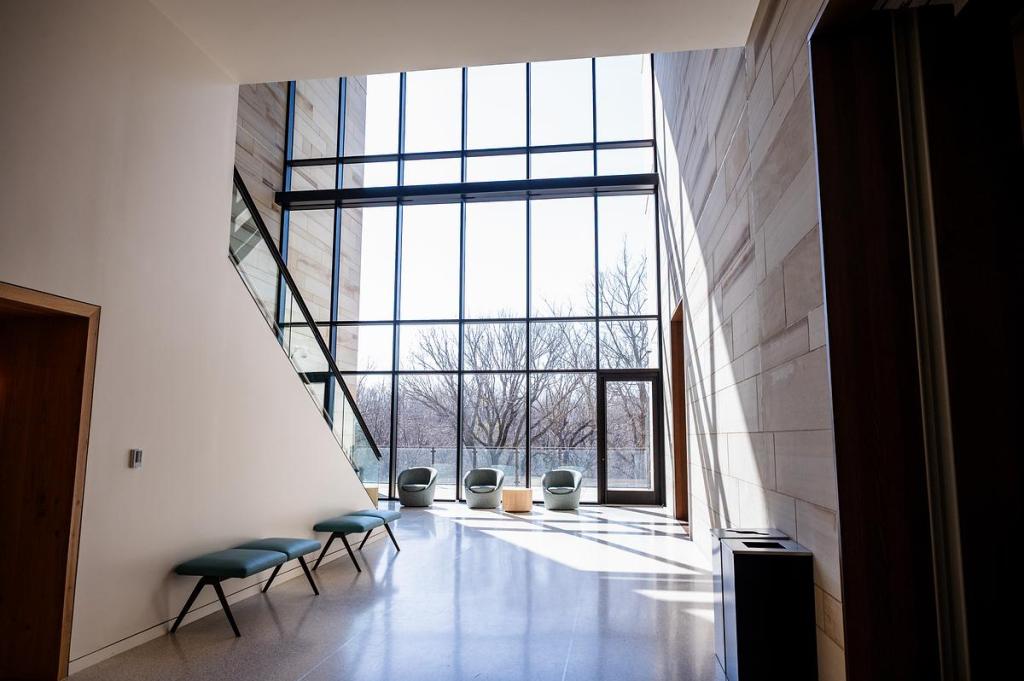
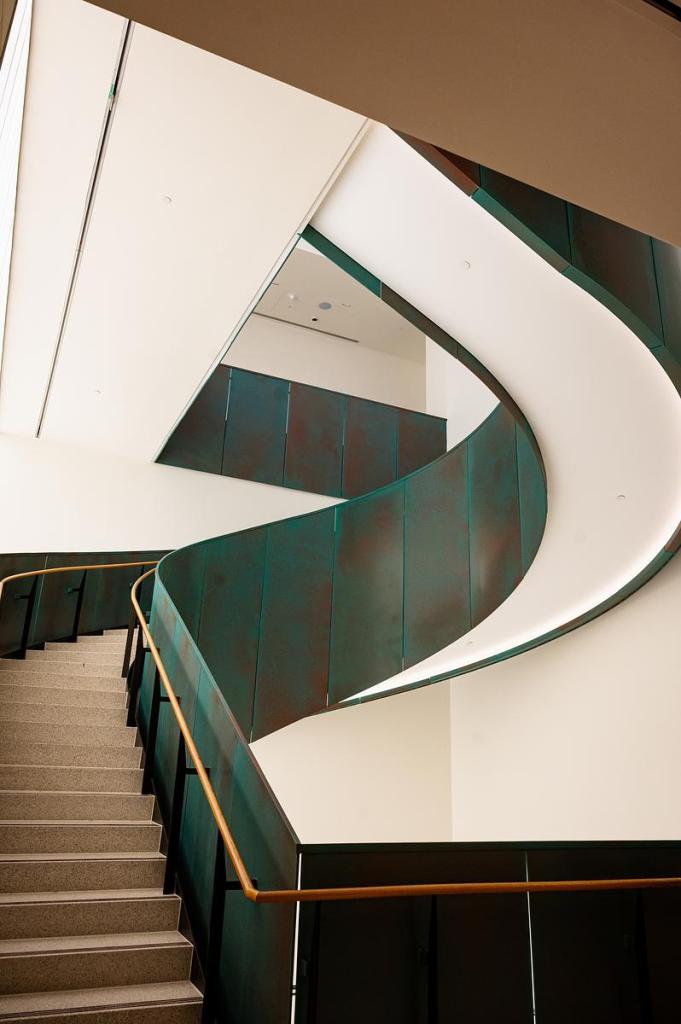
The six-story museum is surrounded by more than 14 miles of mountain biking and hiking trails. A floating staircase hangs at the facility’s center, and windows offer a panoramic view of the Osage Hills to the west and downtown to the east.
Sculpted gardens of native plants are being designed between the museum and TU’s Helmerich Center for American Research located on the south side. An amphitheater anchors the north side. The modern design incorporates earth and sky tones with sustainable materials.
Among the complaints about the new 95,000-square-foot museum is that it is smaller than the original and does not include education classrooms. Museum officials say 20% of the former building was unusable, making the new facility more space efficient.
The education area was scrapped to save money, but officials are planning to eventually add a classroom building on the campus. Gilcrease has also hosted community feedback sessions to gather ideas from residents about what its landscape should look like.
Despite the dips and curves in the plan, museum officials believe they are crafting a new type of museum for Oklahoma. The redesigned museum has galleries that are organized but not sequential, allowing visitors to start at different places.
“The stories all connect in different ways, and that’s part of what we built into this experience,” Whisenhunt said. “We’re talking about the collection making connections, but you have other knowledge. You have your family history, your culture, your education and your experience.
“We’re asking you to bring that as well and be a part of this conversation, be a part of this dialogue that we are creating in the gallery.”
News decisions at the Tulsa Flyer are made independently of our board members and financial supporters. Read more about our editorial independence policy here.