

Federal support for Oklahoma’s low-income and first-generation college students is at risk as the Trump administration continues cutting TRIO program funds.
Oklahoma has eight Educational Opportunity Centers that help residents access higher education through academic counseling, support with college applications or getting a GED. Only 55 of these programs across the country will receive federal funding next fiscal year, down from an average 140 annual recipients over the last two decades.
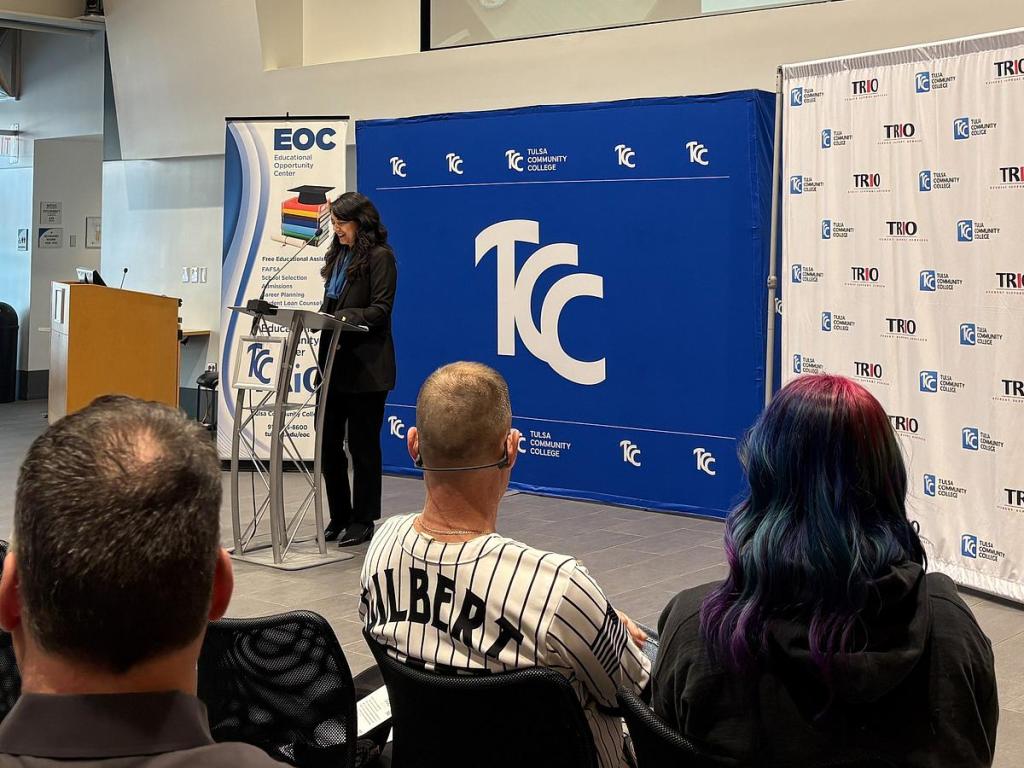
It’s not yet clear if Tulsa Community College will be one of them.
“If you’re dealing with low-income, first-generation students, you’re dealing with people who don’t understand the process,” said Rex Burnett, the EOC program director at Tulsa Community College. “These people come into our office and depend on us for expertise to give them this expanded knowledge, to let them know, hey, there’s a lot of opportunities.”
The center is TCC’s longest-running federal grant program, helping thousands of Tulsans find a pathway to college over two decades. All programs like TCC’s will have to reapply for their federal support by May and meet new criteria for workforce pathways or financial literacy.
“We don’t just get people into TCC. We can help them go to Tulsa Tech. If someone wants to go to Harvard, we can help them go to Harvard,” Burnett said.
Burnett is hopeful the college will retain its support, citing preexisting workforce efforts.
“We already have the pieces in place,” he said. “It’s just a matter of doing more thoughtful and purposeful activities.”

In the last year, the Trump administration has called TRIO a “relic of the past,” revoked funds for more than 100 programs and shrunk the number of eligible grants going forward. Many attributed the cuts to the federal government’s crackdown on diversity, equity and inclusion initiatives.
The Council for Opportunity of Education represents colleges and nonprofits across the U.S. with TRIO programs and condemned the revisions in an email to providers Monday.
“This is a clear, direct, and targeted attack that threatens all of TRIO and the thousands of low-income, first-generation students, including adult learners, who stand in need of college access and support services,” wrote COE president Kimberly Jones.
Even if TCC or Northeastern State University keep their opportunity centers, thousands of potential students are likely to lose direct support for college access, Burnett says.
“With everything we’ve dealt with the past year and all the threats of closing us, after a while, you just become almost numb,” he said. “Now they’re just throwing something else. So let’s see how we can adapt and be resilient.”
News decisions at the Tulsa Flyer are made independently of our board members and financial supporters. Read more about our editorial independence policy here.
