

After launching a fundraising effort in February to remove a controversial statue in Owen Park, James Taylor with the Tulsa nonprofit Kitty Gang Family Foundation asked the Tulsa Park and Recreation Board to develop a petition process for residents who want monuments to be reviewed for controversial material.
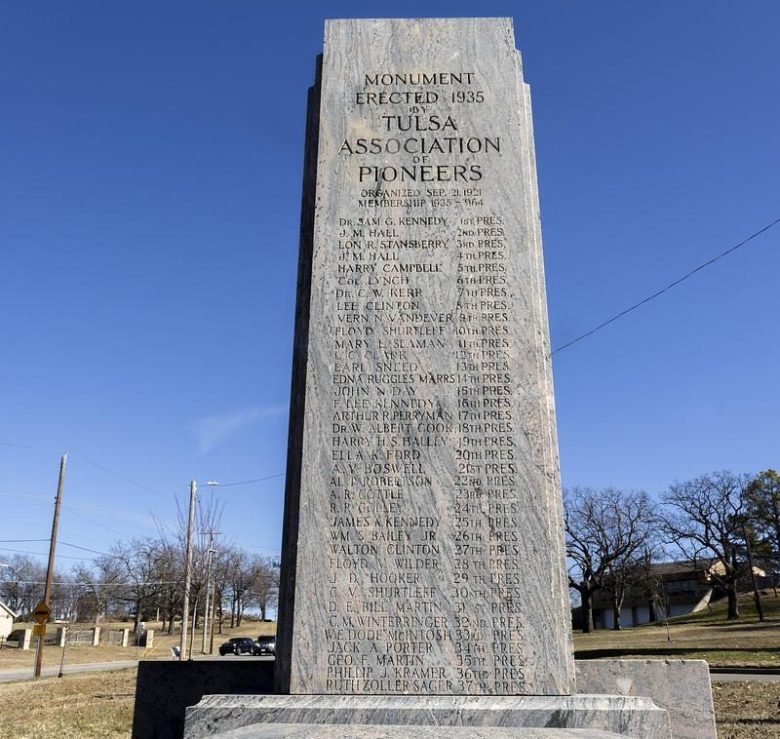
Taylor recently spoke with the Flyer about his nonprofit’s effort to raise funds to remove the Tulsa Association of Pioneers monument from Owen Park. The statue features the names of two known members of the Ku Klux Klan, among a list of many of Tulsa’s founders.
“This monument is often described as a neutral historical record, and it is not,” Taylor said to the board at its March 3 meeting. “It functions as what historian Kristi Williams has described as a Klan trophy, an object placed in public space, not simply to record history, but to signal power, dominance and belonging to some, while warning or excluding others.”
The statue is meant to honor the Tulsa Association of Pioneers’ first meeting and the city’s earliest settlers. The date etched on the stone is Sept. 21, 1921 — but the Tulsa Daily World’s Sept. 18, 1921 edition reported the inaugural convening had already occurred.
Instead, that date marked a gathering of the Sons of Confederate Veterans at Brady Hotel. Prominent businessman Tate Brady, whose name appears on the statue and is a known member of the KKK, was the son of a Confederate soldier.
Taylor said there needs to be some kind of clarification of these inaccuracies.
“These facts are well documented, and yet they are often omitted from official descriptions, including by institutions like the Tulsa Historical Society or the Museum of Tulsa History,” Taylor said. “That omission matters. History is not made neutral by leaving out inconvenient facts. Selective storytelling is not objectivity — it is a choice.”
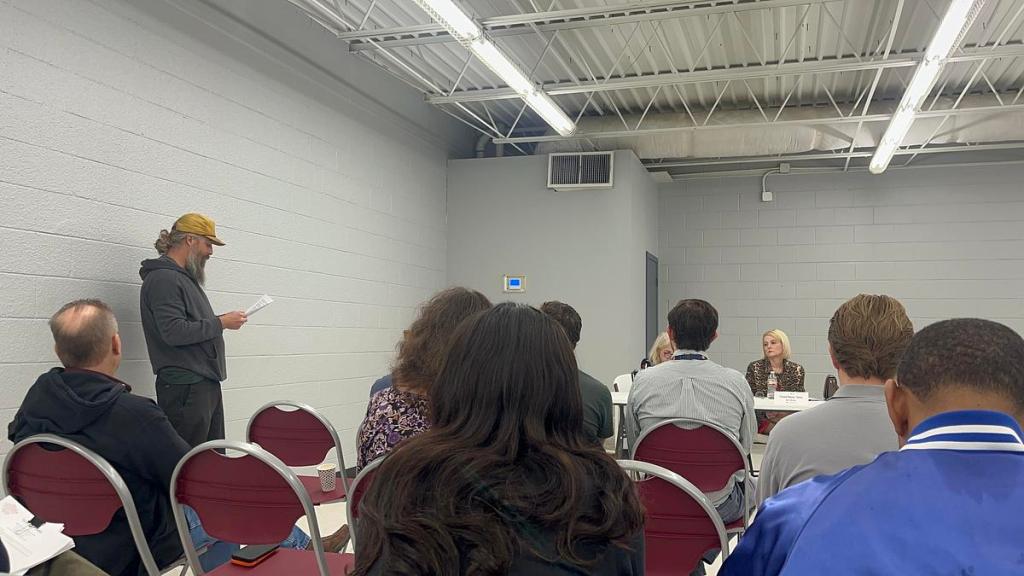
Taylor said the city needs to create a formal process to review controversial statues or monuments in public spaces.
“For years, the absence of a clear framework has allowed delay and consistency and avoidance to persist,” Taylor said. “What is needed is a transparent citywide process with clear criteria and meaningful public input so decisions are informed, consistent and accountable, rather than shaped by omission or institutional inertia.”
Harmon: Removal of monument would feel ‘like an erasure’
While Taylor and his nonprofit are adamant that the Tulsa Association of Pioneers’ statue should not be displayed in a public park, Jennifer Harmon, a long-time Tulsa resident and a member of the Delaware Tribe of Indians, said it would be a tragedy to have the statue removed.
“It just feels like an erasure,” Harmon said.
Harmon noted there are multiple Native American families’ names on the statue, including one of her matrilineal ancestors, George Bullette. She referenced a portion of the Museum of Tulsa History’s archives, which states “the group honored the Native American inhabitants of the area as pioneers.”
Bullette opened the first store in the Tulsa community, Harmon said. An article published in the Tulsa Tribune in May 1922 states that George and John Bullette opened a department store in August 1882. However, there are other reports that state J.M. Hall and Harry C. Hall — whose names are also etched on the statue — opened the first store in what would become Tulsa.
“I guess there was always a running joke with them: ‘Let those Hall boys know that I was here two weeks earlier,’” Harmon said. “He’s actually known as the original. He’s the guy who put sticks down.”
Harmon said Bullette served as chairman of the Delaware Tribe and helped bring railroads to the city. He was also a member of the group that would eventually become the Tulsa Chamber of Commerce.
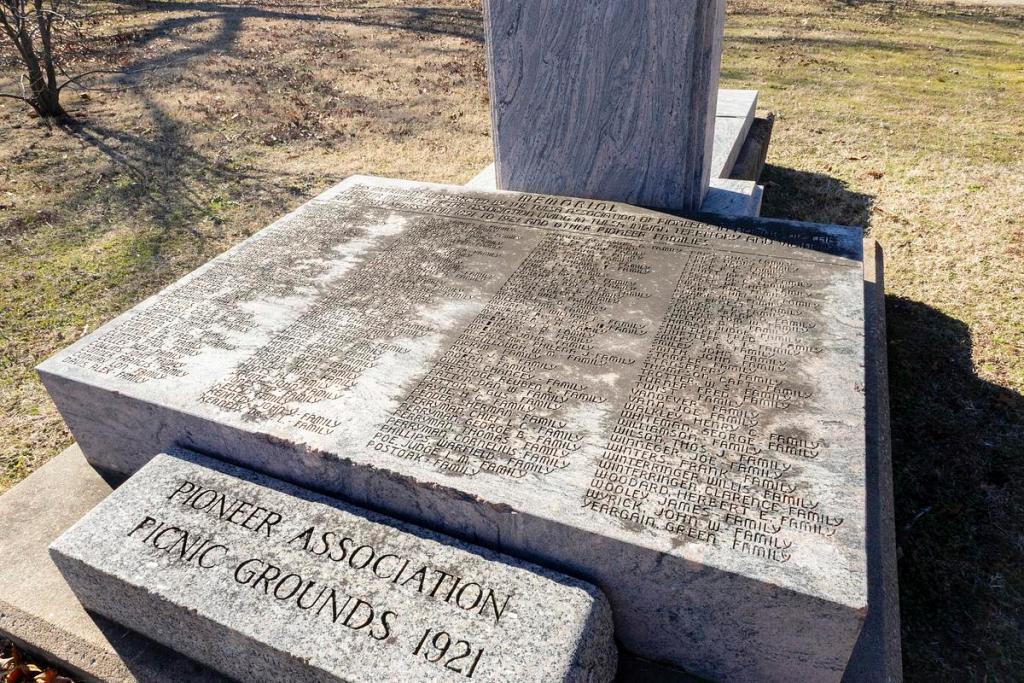
Harmon said most people “participated by proxy” in the early days. She worries removing the monument will further obscure the history of Tulsa’s Native American founders and restrict residents from reckoning with the city’s past.
Carson Colvin, a spokesman for the City of Tulsa, said markers and monuments in public spaces are evaluated on a case-by-case basis and typically involve the Tulsa Arts Commission or the parks board, depending on the nature of the installation.
Colvin added that the city is currently developing the first Public Arts Master Plan to create a more comprehensive framework for public art, community engagement and installations across the city.
“Looking ahead, the City remains committed to listening to community perspectives and approaching questions about shared public spaces in a thoughtful and collaborative way,” he said.
News decisions at the Tulsa Flyer are made independently of our board members and financial supporters. Read more about our editorial independence policy here.
