


Mental Health Association Oklahoma has acquired thousands of housing units over 35 years. Now its leaders are wondering if it can afford them.
The nonprofit will spend the next 10 months analyzing how much of its 23 properties it can financially handle and fixing up what it has, the organization’s top leader said.
The end result could be selling properties, launching a capital campaign, creating new partner arrangements or some combination of those. Whatever happens could affect Tulsa’s efforts related to homelessness and affordable housing.
“We are not trying to make a large profit, but we are trying to run each property effectively enough to not be in the red on a regular basis,” said CEO Carrie Blumert.
MHAOK enters this self-examination now for several reasons, said Blumert, who took over the nonprofit in October 2024.
“No. 1, it is very expensive to maintain aging properties,” Blumert said. “(MHAOK) has struggled in the past to invest properly in the capital needs of its housing portfolio, leaving us with millions of dollars in deferred maintenance. No. 2, it is important to the board and staff that every property brings in enough revenue to sustain itself.
“No. 3, if we want to engage funders to help us grow the portfolio in the future, we need to show them that we can properly maintain and lease out our current units.”
Of its sites, two are in Oklahoma City and the rest are in Tulsa. In total, they own 1,324 units and lease 122 apartments for a permanent support housing program known as Housing First. The Housing First program has a total of 400 units. MHAOK is the state’s largest provider of this housing model that keeps people with significant mental health and substance-abuse challenges and a history of homelessness from returning to the streets.
All but two properties have a mix of non-clients paying below market-rate rents and clients at different levels of supportive housing. The buildings range in age from 50- to 75-years-old.

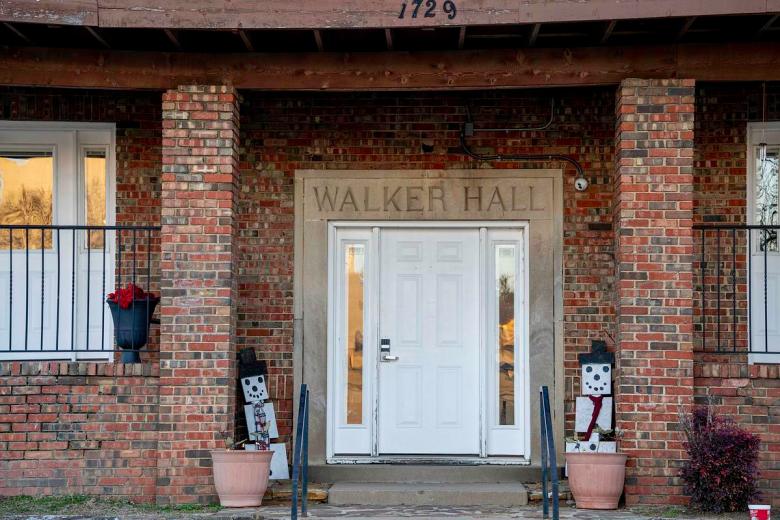
The 12-unit Walker Hall, 1729 S. Baltimore Ave., was the association’s first purchase. Since then, MHAOK acquired more housing to support a range of needs for clients to live independently, from 24-hour on-site services to less frequent check-ins from a social worker. These units are at 86% capacity.
Many clients are ineligible for public housing for past behavioral problems, making them particularly at-risk for homelessness. At MHAOK properties, non-clients rents range from $500 to $800. These are at about 90% capacity.
While MHAOK does the assessment, renovations will continue to ensure properties are meeting city code requirements. Between 2020 and 2025, several properties had code enforcement calls for issues such as balcony repairs, staircase replacement, parking lot surface damage, pool water stagnation or trash areas unsecured.
Most complaints were about deterioration problems and have been fixed or were deemed unfounded.
Three properties have been renovated since Blumert arrived. Two properties —- Lewiston Apartments at 5270 S. Lewis Ave. and Pheasant Run at 2002 E. 73rd St. — are undergoing improvements at a cost of $3.2 million.
A $1.66 million rehabilitation project at Quincy Square Apartments, 1239 S. Quincy Ave., will begin later this year. About $1.3 million is coming from the City of Tulsa Home Funds, with MHAOK matching about $332,000.
Blumert said the nonprofit’s work will continue to fit into Tulsa’s homelessness strategy, which includes the A Way Home for Tulsa and Safe Move Tulsa.
A Way Home for Tulsa is a collaboration of 60 agencies rooted in the Housing First model that moves people from homelessness into long-term housing with supports such as health care and social services. Safe Move Tulsa is the recent $6 million city-led program to end street homelessness.
News decisions at the Tulsa Flyer are made independently of our board members and financial supporters. Read more about our editorial independence policy here.