


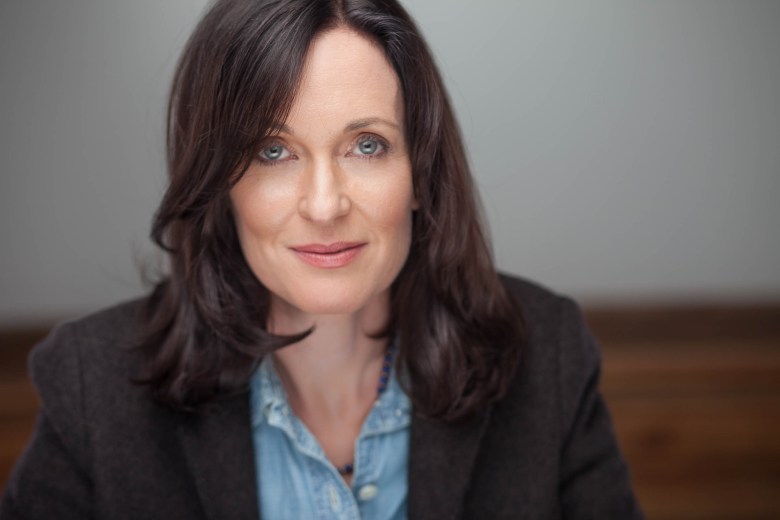
When she’s not out in the field, Oscar- and Emmy-winning documentary filmmaker Molly O’Brien can often be found on the 19th floor of 30 Rockefeller Center in New York City.
As the head of documentary for NBC News Studios, O’Brien’s job is to mine NBC archives dating back a century to help create premium documentary films and series. She’s worked with numerous talented filmmakers, including Oscar winner Errol Morris, Dateline’s Dan Slepian, Oscar nominee Nicole Newnham and “Rise Again: Tulsa and the Red Summer” director Dawn Porter.
“I spend a lot of time watching and reading NBC News stories, both from the past and trying to keep as current as I possibly can,” O’Brien said. “Then I also spend a good amount of time keeping up with the documentary filmmaking community, making sure I know what they’re doing. I just went to the Sundance Film Festival with my colleague to make sure I have my finger on the pulse of the marketplace.”
She will discuss her wide range of experiences at 7:30 p.m. Thursday as part of the University of Tulsa’s Presidential Lecture Series. The public event is sponsored by the Darcy O’Brien Endowed Chair — named after her late father, who was a longtime TU professor and author.
“My dad was a professor at the graduate school of English at TU for many years, and I grew up in Los Angeles. I would visit him from about age 11 to when he passed away when I was 31,” O’Brien said. “I think I came probably once a year, so I’ve been there many, many times, but it’s been nearly three decades because my father passed away in 1998, and I came back once more in like 2000 to visit my stepmom.”
O’Brien virtually sat down with the Flyer ahead of her return to Tulsa this week. Admission to the event at Lorton Performance Center is free. Guests are encouraged to pre-register for tickets.
What can attendees expect from your talk at TU?
I’m very honored to be able to mark this 25th anniversary of the lecture series and for my father. I’ll be speaking briefly about his influence on me as both a writer of fiction and nonfiction. He had a huge influence on me in terms of my professional desire to go into nonfiction storytelling with documentaries. He wrote incredible true crime novels and other nonfiction. And then I’m gonna sort of dance lightly through my career and touch on the various genres of documentary filmmaking.
I’m going to kind of go through the historical documentaries, the journalistic documentaries, the personal films like “The Only Girl in The Orchestra.” I did advocacy for the Sierra Club and branded films. I also did reality television, which wasn’t really my jam, but I learned a lot from those folks. They’re very efficient, and they’re good at what they do. I’m gonna dance through all these subgenres of documentary filmmaking and make it personal and talk about how I got where I am.
Tulsa in recent years has become a hotspot for filmmaking. What would you say to the aspiring documentary filmmakers that are looking to tell stories here in Tulsa?
I think the world needs documentary filmmakers from Tulsa and frankly, from anywhere but California and New York. We’re so concentrated in those two places. I think there’s a real need for more regional filmmaking. When you’re telling stories that are based in fact or in reality, representation matters quite a bit. Who’s telling that story? I think it matters even more than it does when you’re doing fiction.
If you’re going to tell a story in Oklahoma, who better to tell it than someone from Oklahoma? Really the best documentaries, and I think the best works of art, period, are always personal. A director or producer needs to find what resonates for them personally if they’re going to make anything that’s worth watching. Otherwise it just becomes, you kind of phone it in, right? If it didn’t have a little bit of heart in it, at least, if not all of your heart in it, it won’t be as good.
There’s so many stories that have yet to be told. So I think it’s terrific, and I would be happy to talk to anyone about it. We need more regional filmmakers.
It’s a tough time for documentary filmmaking financing, and it’s rare to see one on the big screen these days. What motivates you to continue putting in the work?
One of the pioneers and maybe the greatest documentary filmmaker to ever live died (Feb. 16) — a man named Frederick Wiseman. When I was in high school, I saw his film “High School,” which is an observational film following a group of students in high school. I watched that film as a 17-year-old, and my jaw was on the floor. I was affected in a way that there was absolutely no way a fiction film could ever affect me.
You don’t have to suspend your disbelief when you watch a documentary. You’re not having to go, “well that’s not an F1 driver. That’s Brad Pitt. I’m watching “F1” and I’m watching Brad Pitt. I’m not watching a Formula 1 driver. I’m enjoying watching Brad Pitt for sure (laughs). There’s a couple of seasons of a great series on Netflix about Formula 1. It’s all of that same kind of thing, but the pretend is gone.
Maybe I’m a little bit nosy, and I like to be invited to places I wouldn’t normally be in my life. I’m curious about how other people live. I live in New York City, which means I like to live with strangers. I like watching strangers. I like learning about other places, other cultures. I like seeing myself represented as well, which happens more in documentaries than it does in other films. There are so many reasons why documentaries are so vital. It’s almost like our shared family album.
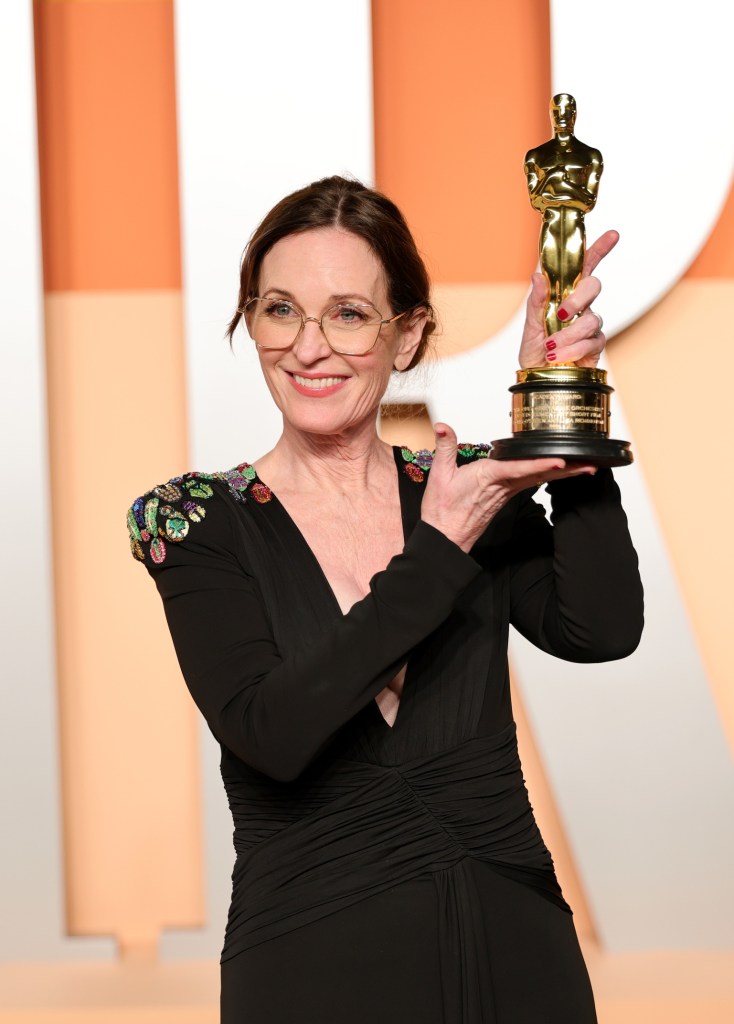
Last year you won an Oscar for Best Documentary Short Film for “The Only Girl in the Orchestra.” How good does it feel to hold an Academy Award?
It feels really good. I keep it on a bookshelf in my bedroom, and sometimes, when I’m a little bit grumpy, I’ll just glance up at it and go, “Well, I can’t be that grumpy. Look what happened.” There’s no false humility. It’s a magical, wonderful thing to happen. And I had a wonderful night that night, and I’m still giddy thinking about it. It was a magical night.
News decisions at the Tulsa Flyer are made independently of our board members and financial supporters. Read more about our editorial independence policy here.