

Every four years athletes from around the world gather to prove themselves in their chosen disciplines in the series of challenges called the Olympics.
In much the same spirit, about every five or six years over the past two and a half decades, the artists of Tulsa Ballet take on what is one of the most monumental challenges in the entire ballet repertoire: “The Sleeping Beauty.”
This collaboration between choreographer Marius Petipa and composer Pyotr Tchaikovsky has been a landmark of classical ballet since it debuted in St. Petersburg, Russia, in 1890. Originally presented in four acts, the complete ballet runs about four hours.
Tulsa Ballet’s version, which has been choreographed by artistic director Marcello Angelini after the Petipa original, has been greatly trimmed. The Sunday matinee performance, the final in the company’s weekend run, ran right at two and a half hours.
But the ballet still contained all the elements that have made it a favorite of audiences and a showcase for a dance company: the familiar fairy tale of a young princess cursed to sleep for 100 years, and the high degree of technical skills, artistic expression and physical stamina needed to make that simple story take flight.
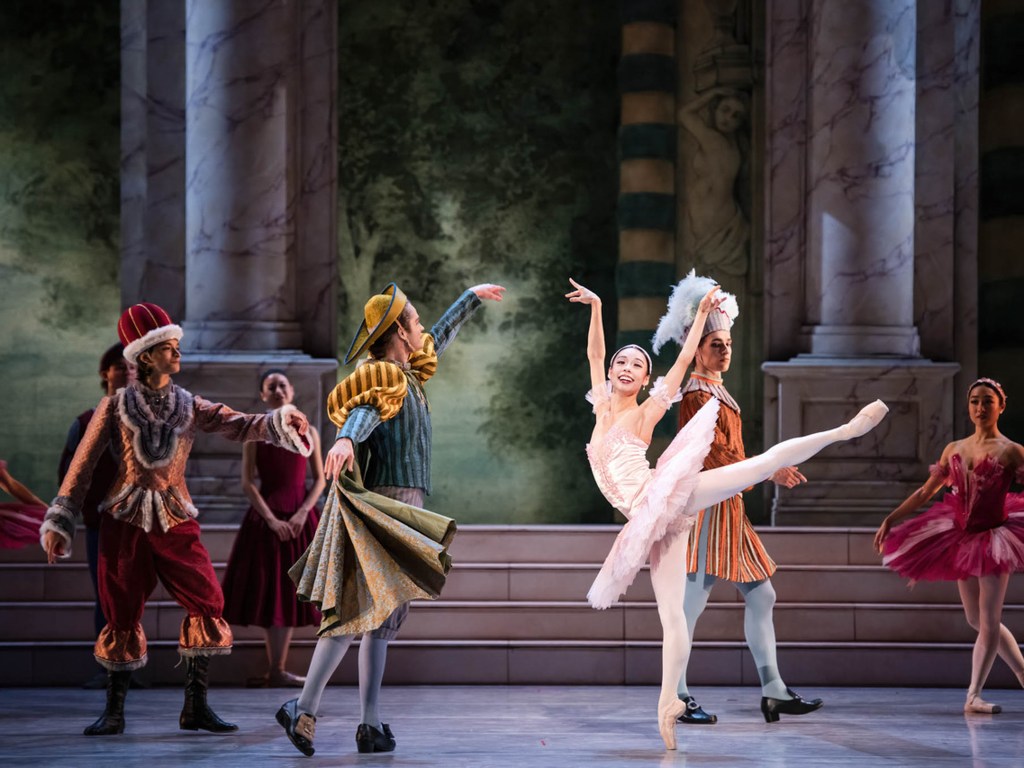
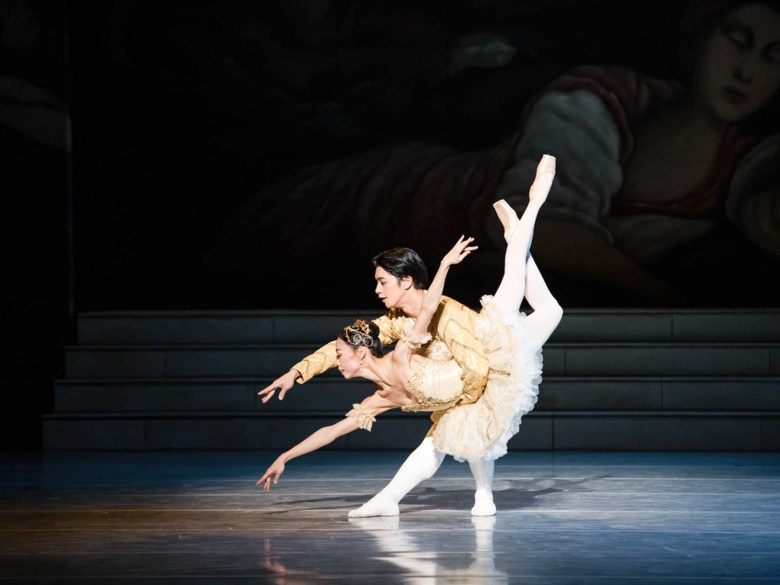
The title role, here called Aurora, is one of the most demanding for a ballerina, one that exploits just about every aspect of classical ballet. Principal dancer Nao Ota has always excelled in classical roles, and she delivered a powerful performance Sunday.
The most famous element of the ballet is the “Rose Adagio,” in which Aurora is presented with four potential husbands, who take turns spinning her around like a top and offering her a hand of support as she strikes and holds an arabesque, poised en pointe on one leg for several minutes.
This happens soon after Aurora makes her first entrance, and there was a moment or two when Ota had a bit of a wobble in her stance, but she quickly recovered. And her dancing seems to grow stronger and more confident as the ballet progresses; she has a unique fluidity to how she moves that makes what she does look a whole lot easier than it is.
Fellow principal Jun Masuda also cut a dramatic figure as the Prince who is chosen to rouse the sleeping Aurora with a kiss. He executed all manner of soaring leaps (he was overbalanced during one leaping entrance near the end of the ballet, but recovered quickly), and his partnering of Ota was impeccable.
Principal dancer Jaimi Cullen greatly enjoyed being bad as the evil fairy Carabosse, who was so upset at not being invited to Aurora’s christening that she curses the child with death. JooYoung Kwon offered a calming presence as the Lilac Fairy, who becomes something of Aurora’s guardian during her years of slumber.
But really, there wasn’t a weak performance by anyone. The four Fairies who come to bestow gifts on the infant Aurora — Haley Mae Wilson, Regina Montgomery, Haruka Tanabe, Aina Oki and especially Yuika Fujimoto — combined steely pointe work with sparkling, distinctive personalities, while Giulia Canavese and Ian Stocker drew a great deal of the laughter from the crowd with their antics as the Cats.

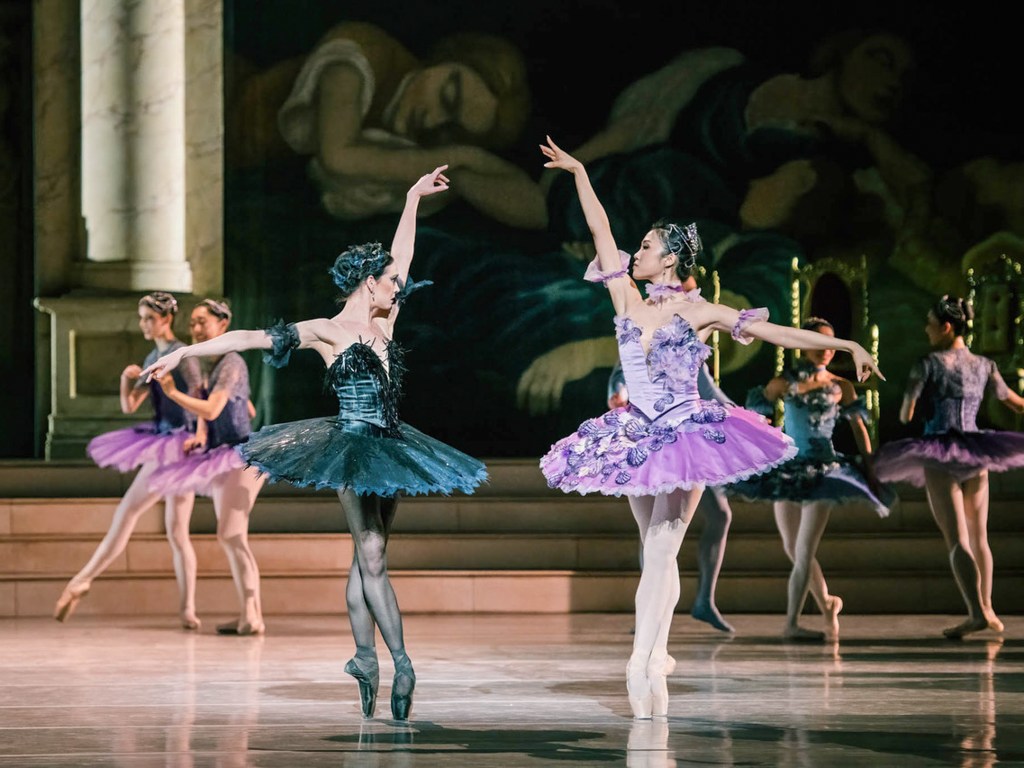
Even the large ensemble dances had a great deal of charm and visual interest, with dancers executing intricate patterns with spirit and precision.
Peter Stafford Wilson conducted the Tulsa Symphony Orchestra, which delivered a performance as full of energy, passion and precision as what was presented on stage.
This production also debuted elaborate new costumes and sets designed by Emma Kingsbury that combined classical Greek elements with Renaissance opulence.
James Watts is a freelance contributor to the Tulsa Flyer.
News decisions at the Tulsa Flyer are made independently of our board members and financial supporters. Read more about our editorial independence policy here.