

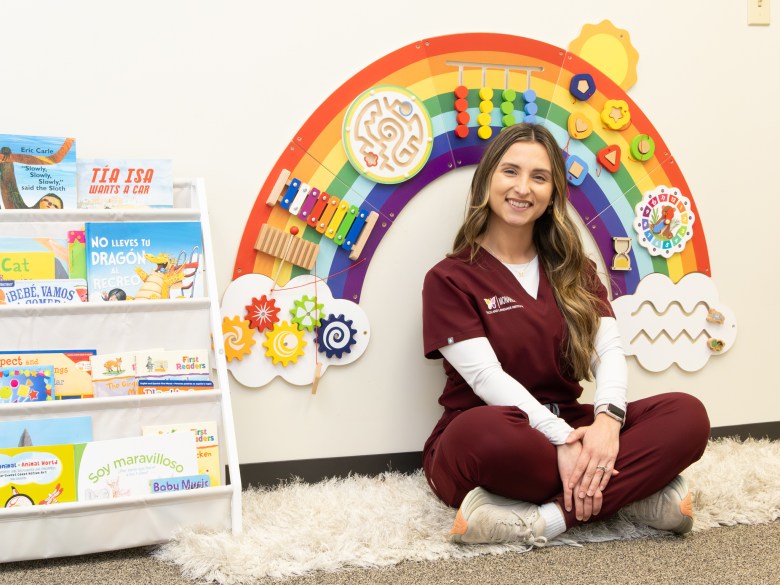
Eliana Provenzano-Lewis has always felt caught between two cultures. As an Italian-Argentinian American, she frequently felt like an outlier growing up.
Provenzano-Lewis, who speaks Spanish and English, moved to the U.S. in 2000.
“I did not sound the same as my Hispanic peers, nor did I fully share the same traditions as those around me,” she said. “Over time, however, I learned to embrace these differences and see them as a strength.”
Now, Provenzano-Lewis strives to help children with similar backgrounds through offering bilingual speech therapy at her new practice Monarch Speech and Language Institute, LLC, in east Tulsa.
There is a lot of misinformation around being bilingual, especially with some people believing it may cause language development delays in children, she said.
“Bilingualism does not cause language delays,” she said. “It’s important to have that representation and someone to clear up the myths and facts and also to help give advice and techniques to properly raise bilingual children.”

Finding bilingual speech pathology as a career
Provenzano-Lewis draws on her personal experiences when she works with bilingual kids. She moved to Tahlequah, about an hour outside of Tulsa, when she was five years old.
Speaking no English, she was paired up with another student who spoke Spanish. But, he spoke a different dialect since he was Mexican.
“I remember telling my mom, ‘He speaks funny,’” she said.
Over time, she developed English skills — but Spanish remained the primary language spoken at home. When she started college, Provenzano-Lewis had no idea what she wanted to do. All she knew was that she wanted to be able to use both of her languages in her career.
She considered social work and linguistics, but heard of speech language pathology and declared that her major her sophomore year.

Vanessa Alcala, a Tampa-based speech pathologist and one of Provenzano-Lewis’ mentors, said the work Provenzano-Lewis and other bilingual speech language pathologists do is rare. It’s important because they can fully assess, diagnose and treat individuals in both languages.
She described Provenzano-Lewis as someone with a calm and peaceful demeanor, which is important, especially with the communities they serve as bilingual providers, she said.
“She truly embodies cultural competence and how that is not just for any nationality,” Alcala said. “She’s kind of opened up and blossomed in different ways, become more vocal, become more clear on what it is that she wants.”
Taking the risk of opening a practice

She conducted house calls and visits at day cares, schools and libraries throughout the last year before taking the plunge and opening a permanent location in January.
It’s always been a dream of hers to have her own space. Her family’s support pushed her to keep going despite potential challenges.
A physical space comes with its own challenges, especially if there’s a snow storm or someone’s car breaks down. There are more factors impacting the families finding their way to the space, she said.
“Them following me here, I mean that speaks volumes on the trust I’ve built,” she said. “I mean, they’re willing to support me chasing my dreams and they’re advocating for their kiddos and making sure they continue to come to therapy no matter the commitment.”
One of the clients who followed her is the Wapato family. Skylar Wapato and his wife Itzel Wapato are raising bilingual children.
It was important to them to find someone that could help their children keep Spanish alive in their home. Itzel Wapato speaks Spanish fluently along with English, while her husband only speaks English.
“It’s something free that I can give them from my culture, from my family and it’s special because I hope they can help others who may not speak another language,” Itzel Wapato said.
Continuing to help Hispanic children
In her clinical experience, Provenzano-Lewis knows some families have been told their children are delayed and should only focus on one language — often English. That can keep them from nurturing their native languages, she said.
“By doing that we’re taking away their identity, their culture because that’s what language is, right, how is grandma supposed to talk to them or how are they supposed to talk to their family if they’re only going to be practicing English?” she said. “The family’s obviously going to follow the advice of the professional.”
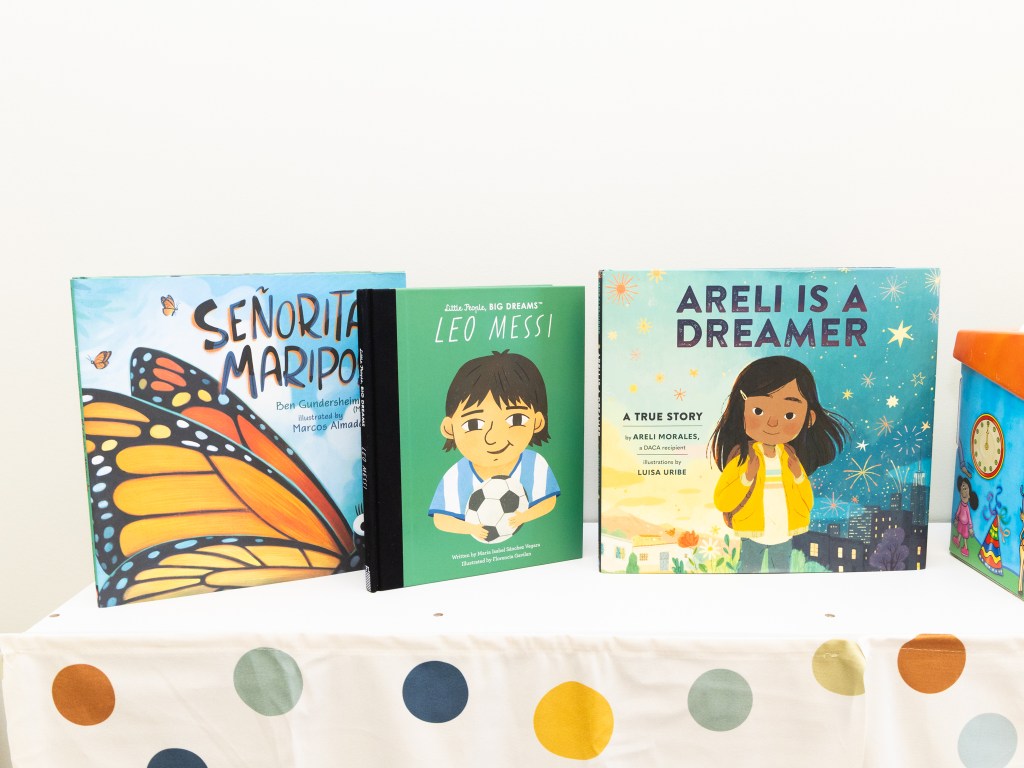
She wants to hire more bilingual speech therapists and a staff member who can provide services in the community. Her plans include workshops and presentations informing parents, caregivers, teachers and the general public more about bilingual speech therapy and how to support their children.
Her ultimate goal is to give the Hispanic community more access to resources and ensure parents feel confident raising their bilingual children — whether they have a communication disorder or not.
For now, she’s focused on the daily improvements with her clients. When a child goes from non-verbal to waving or touching a communication device for the first time, Provenzano-Lewis knows she’s making progress.
“The first time a kiddo is able to say ‘I love you’ or say their name, like, there’s so many things we take for granted,” she said. “You don’t see that type of struggle every day so any small win is a big win.”
You can call Eliana Provenzano-Lewis at (918) 840-0870 or you can fill out her online questionnaire to inquire about services from Monarch.
This article was produced as part of a partnership between the Tulsa Flyer and La Semana, a Tulsa-based bilingual Spanish-English newspaper serving Latino communities in Oklahoma.
News decisions at the Tulsa Flyer are made independently of our board members and financial supporters. Read more about our editorial independence policy here.
