

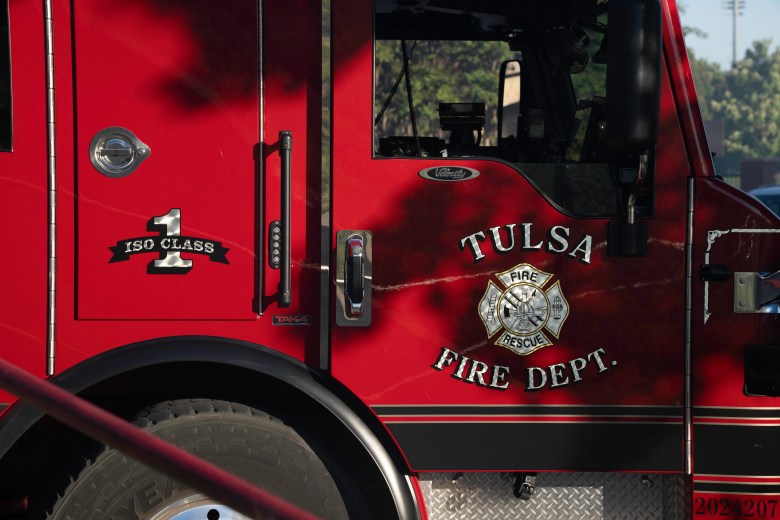
Housed in the nearly 100-year-old Tulsa Fire Alarm Building, the Tulsa Fire Museum is developing a long-term interpretive plan that leaders say will guide smart growth and broaden public education efforts.
Local leaders say the effort comes at a critical moment as the museum outgrows its space and collection storage.
The building’s history
The Tulsa Fire Alarm Building was constructed in the 1930s and served as the city’s emergency communications hub, operating what was effectively the 911 system of its time.
Fire alarm boxes placed on street corners transmitted alerts to the building, which then dispatched fire trucks across the city.
The structure is listed on the National Register of Historic Places and is believed to be the only Art Deco building in the world built exclusively for firefighting operations.
Mike Ward, chair of the Tulsa Fire Museum, said the building has always been about service.
“It was built as a building of service to firefighters and citizens,” Ward said. “That’s still what we’re doing today through history, education and community outreach.”
A new expansion plan
The museum has partnered with Exhibit Concepts, a museum design firm, to develop an interpretive plan that will serve as a roadmap for future growth. The plan will identify how stories are told, how artifacts are displayed and how space can be used more effectively before any construction begins.
The project is being led by Cindy Mercer, who helped launch the Oklahoma City National Memorial Museum.
Ward said the planning phase is essential before moving forward with any expansion.
“This isn’t just about getting bigger,” he said. “It’s about doing smart expansion and making sure we’re using this historic building in the best possible way.”
Why now?
Ward said the museum has owned the building for about 10 years and has accumulated far more material than it can currently display.
Artifacts, documents and oral histories continue to grow, while exhibition space remains limited.
“We’re kind of bursting at the seams,” Ward said. “There are things we want to share with the public that we simply don’t have room to show.”
He said firefighting history is deeply tied to Tulsa’s development and public safety, but remains largely unknown to many residents.
The fundraising goal
The museum is raising $170,000 to fund the interpretive planning phase, the first step toward a full expansion. To support that effort, the museum has launched a “Torchbearers” campaign, seeking donors willing to give $1,000 or more.
Ward said the museum is aiming to secure 175 torchbearers, whose names will be permanently recognized in the building.
“These are the people who believe in this project from the start,” he said.
Looking ahead
The planning process is expected to take about a year. Construction timelines will depend on funding, architectural design and contractor availability.
Ward said the museum’s goal is to complete the expansion and open the enhanced facility by late 2028.
This article was originally published by News on 6. You can see the original story here.