


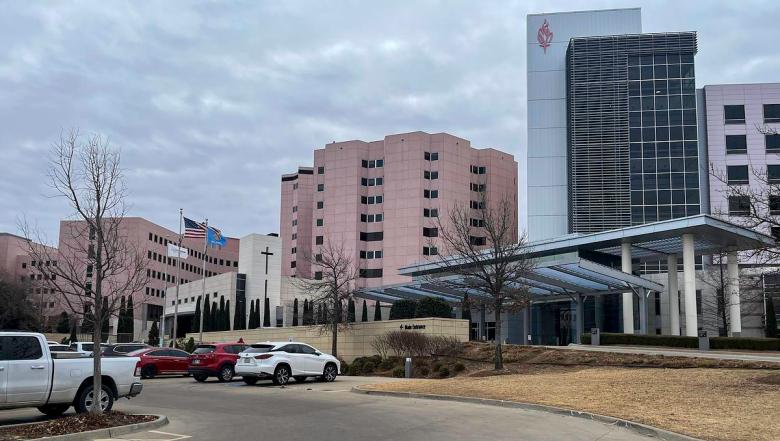
As a severe winter storm blows into Tulsa this weekend, medical professionals at Saint Francis Health System are bracing for a flood of cold weather injuries.
Should you suffer one, here’s where they say you should go.
Emergency rooms or urgent care
Dr. Benjamin Greiner, an internal medicine physician, said some medical emergencies cannot wait for the storm to blow over.
“If you have any problems that are true emergencies, something along the lines of chest pain, shortness of breath, stroke-like symptoms, including extremity weakness, arm leg weakness, slurred speech, worsening infections, things of that nature — you certainly need to go to the emergency department, call 911,” Greiner said.
For less severe issues, Greiner said Urgent Care will still be open, and Saint Francis offers a virtual Urgent Care option.
“It’s great for people that are having upper respiratory illnesses that don’t include worsening symptoms or profound shortness of breath where you might need to go to the emergency departments,” Greiner said.
Additionally, Greiner said severe winter weather often leads to worsening symptoms for chronic conditions.
“For instance, a person that has diabetes, they run out of their insulin and are having an uncontrolled episode of their diabetes,” he said. “I see a lot of people with heart failure that run out of their medications to help them get rid of all that extra fluid on their body.”
Dr. John Marc Shellenberger, a trauma surgeon, said snow and ice show no mercy.
“It doesn’t care how old you are, how young you are. It doesn’t care how good your balance and coordination is,” Shellenberger said. “If you have to go outside in the snow and ice, be safe. Take your time. Wear proper footing, but also realize that checking the mail, taking out the trash, those sorts of things — they don’t need to happen right now.”
About a million people visit emergency rooms after slipping on snow and ice each year, he added.
“At Saint Francis Hospital, we’re going to see about 75 to 100 patients this year related to that same injury pattern,” Shellenberger said.
Signs of cold weather-related illnesses
Brooke Acosta, a registered nurse, said children are far more vulnerable to cold weather injuries than adults. For those planning to play in the snow, Acosta encouraged parents to dress their kids in multiple layers with a waterproof jacket, boots and gloves, as well as scarves and hats. If they get wet, they need to change immediately, she said.
“Some of the symptoms to look for are pale skin, red skin, shivering if they go quiet, if they start having slurred speech,” Acosta said. “Those are the things that we see coming into the ER here at Saint Francis.”
However, Acosta said the more time kids spend inside, the better.
“If it’s below 20 degrees, they need to only stay out for 20 to 30 minutes (at a time). Under 10 degrees, it’s only 10 to 15 minutes,” Acosta said. “Younger kids, even shorter time. They have a really hard time regulating heat and cold.”
Dr. Tim Toole, an emergency medicine physician, said severe winter weather often causes carbon monoxide poisonings to ramp up. He warned Tulsans to avoid turning on their car in a closed garage and firing up the stove to warm their house.
“The tricky thing about carbon monoxide is that it doesn’t have an odor, doesn’t have a taste, so people don’t know it’s building up until it’s dramatic,” Toole said. “So headaches, dizziness, vomiting, nausea — those would all be symptoms.”
Find our full winter storm guide here.
News decisions at the Tulsa Flyer are made independently of our board members and financial supporters. Read more about our editorial independence policy here.
