



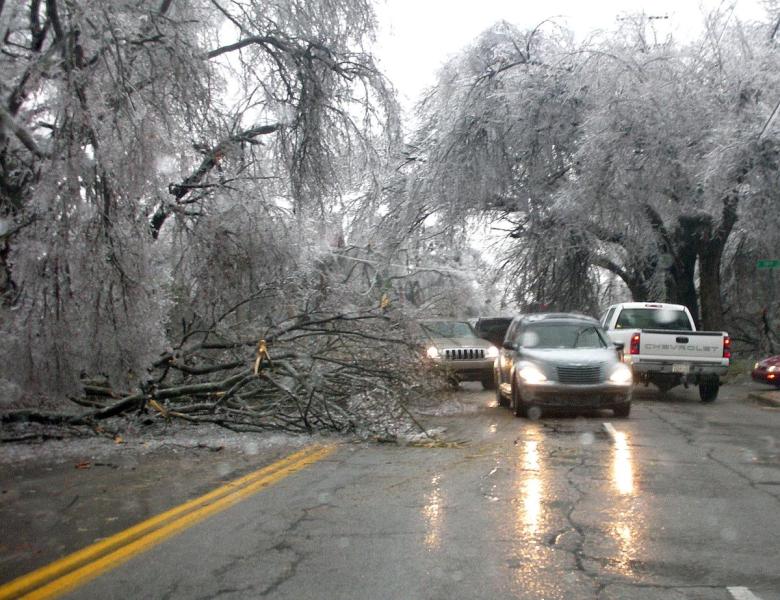
If you ask a Tulsan what they remember about the 2007 ice storm, they’ll probably recall the eerie quiet of night broken by cracking tree branches and blown transformers. Some even liken it to living like pioneers — gathered around wood fireplaces while power outages persisted.
Three inches of ice blanketed everything in sight Jan. 9-11. Clearing the fallen trees took weeks and damages were estimated at $780 million. More than 200,000 people lost power.
But born out of that storm was the Sperry-Piltz Ice Accumulation Index. Named for its developers Sidney Sperry and Steve Piltz, the system uses an algorithm and the forecast to predict the amount of ice up to three days in advance of a storm.
Piltz is lead meteorologist for the National Weather Service office in Tulsa. At the time, Sperry worked with the Oklahoma Association of Electric Cooperatives. They were still in beta testing ahead of the 2007 event.
“It wasn’t maybe 10 days later when the ice storm hit eastern Oklahoma, and we had predicted what we would call in our SPIA index categories, a level 4, and it met that criteria to a T,” he said. “We were pretty accurate with our forecasts.”
Used primarily by the electric industry, transportation departments and local NWS forecasters, the index has become a crucial tool for storm prep.
Ahead of this weekend’s incoming winter storm, Greg Roulet, CEO of Western Farmers Cooperative in Moore, says he’s keeping an eye on the index.
“It allows us to get a little bit more pinpoint about where the major ice will be, and then we can dispatch crews, or see how that fits into where our crews are located,” Roulet said.
As of Thursday afternoon, ice wasn’t a major part of the forecast for the Tulsa area, though the latest forecast predicts up to 12 inches of snow. But with subfreezing temperatures and sleet expected, ice could form.
The Oklahoma Department of Emergency Management says it will use the Sperry-Piltz index to give them more information on specific locations to deploy resources before the storm arrives. They’ll make those decisions based on potential impact to roads, vegetation and powerlines, according to OEM public affairs director Keli Cain.
The index’s free website offers forecasts 24 hours in advance, but a $99 yearly subscription will give users up to a three-day advance warning.
