



There’s good news and bad news if you receive Social Security benefits and use Medicare.
The good news is, thanks to the federal government’s 2026 Cost of Living Adjustment, you’ll receive 2.8% more in Social Security starting Jan. 1. That’s an average of about $56 more each month.
The bad news, though, is Medicare premiums are going up and you’ll likely pay more for your prescriptions in the new year.
“Unlike any other year, this is not the year to just say, ‘oh, what I have right now is going to be good enough for next year,’ because (there’s) a high chance that it will not be,” said Alex Tarasenko, CEO and co-founder of the Tulsa-based Everything Insurance Group.
Oklahomans have until Dec. 7 to enroll in a Medicare plan for 2026. Here’s what you need to know.
How does medicare coverage work?
Medicare is a federal health insurance program primarily for people 65 or older and some people with certain disabilities. There are four parts of Medicare coverage:
- Part A helps cover the cost of inpatient care at hospitals.
- Part B helps cover the cost of outpatient care at doctors.
- Part C, also known as the Advantage plan, combines Part A and Part B with added benefits like prescription drug coverage (Part D). There are 27 approved Medicare Advantage plans that also include drug coverage.
- Part D helps cover the cost of prescription drugs.
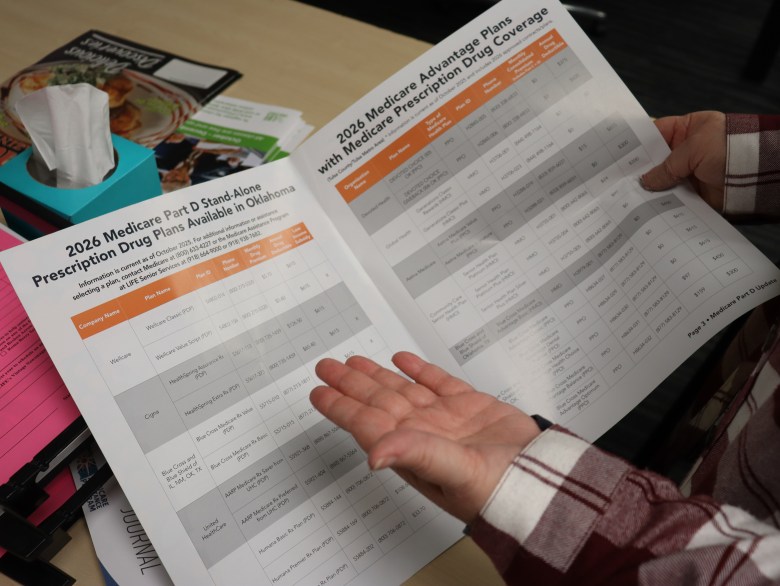
There are multiple options for Parts C and D. You can compare them using your medicare.gov account. After entering your prescriptions and pharmacies, the system will sort the plans for you.
“It takes a lot of the work out of having to go from plan to plan to plan. The system just automatically sorts the best and most cost-effective,” said Kathy Jones, Medicare and tax assistance program manager at LIFE Senior Services in Tulsa.
How are Medicare plans changing in 2026?
While there are changes to premiums, deductibles and copayments across the board, the “most concerning,” Jones says, has to do with prescription drug coverage.
Jones says there are fewer prescription drug plans offered next year, prescription deductibles are going up from $590 to $615 and your out-of-pocket maximum is also increasing from $2,000 to $2,100.
This means if you take expensive medications, you’ll pay more starting in January. On top of that, some medications will require you to pay a percentage of the total cost after you’ve met that deductible.
“There could be a medicine that they were paying $47 a month for this year, and come January, they’ll have to pay the $615 deductible, plus it’s approximately 20% of the drug,” Tarasenko said.
If you can’t pay these prices all at once, you can spread them out into monthly payments through the Medicare Prescription Payment Plan.
People who receive extra benefits for over-the-counter items through the Medicare Advantage Value-Based Insurance Design Model could lose those benefits when the program comes to an end Dec. 31. Similar plans remain available, but people must now have a qualifying chronic health condition, such as anxiety, high cholesterol or depression.
“Let’s say you are perfectly healthy and don’t have any health conditions, you’re just low-income, you won’t be able to qualify for the food benefit,” Tarasenko said. “If they don’t review their plan and see if they qualify, come Jan. 1, they might not have that.”
LIFE Senior Services offers free Medicare Part D services. You can make an appointment by calling (918) 664-9000, ext. 1189. You can also get help from Everything Insurance Group by calling (918) 688-1197.
News decisions at the Tulsa Flyer are made independently of our board members and financial supporters. Read more about our editorial independence policy here.