


Temperatures are dropping, and if your home uses natural gas your bill is probably doing the opposite.
We’re rounding out our series breaking down your utility bills, going line by line to explain what each charge means, how it’s calculated and how you might be able to save a little money. This time, we’re tackling your gas bill.

A tale of two fees
Not only do you pay a flat fee for service, but you also pay for the cost to store and deliver gas to your home. So there are two charges at play here — your service charge and your delivery charge. Both depend on which plan you have.
There are two plans, according to Oklahoma Natural Gas. Plan A caters to customers who have lower gas usage while Plan B is for higher usage. Plan A charges $26.99 for service, plus a delivery charge rated at $4.28020 per dekatherm (more on that below). Plan B is $44.84 a month for service with no delivery charge.
Your service charge covers costs to process bills, conduct meter readings, provide meter equipment, maintain service lines and pay customer service teams, according to ONG.
How is my gas usage measured?
Gas is measured per dekatherm, which is the estimated amount of energy per 1,000 cubic feet of natural gas. Heating a 1,500- to 2,500-square-foot house typically uses five dekatherms a month (60 dekatherms a year), according to Santanna Energy Services.
People using less than 50 dekatherms a year might consider Plan A, while Plan B is for people using more. According to ONG, most residents are enrolled in Plan B.
Plan A is the only plan with a delivery charge, which ONG says is set by state regulators for “fairness and transparency.” This charge pays for getting natural gas to homes and doesn’t change with the cost of gas.
What is the customer fuel cost?
As confusing as it may sound, the cost of fuel is actually different from the cost of gas. Instead, this is the actual amount of natural gas you consumed in a given month. It is based on how much ONG paid for natural gas on your behalf.
The current rate for fuel increased from $6.787 in October to $6.961 for November. You can see this on the same line as your meter reading information. You’ll be charged for your total gas usage in dekatherms times the rate.
This cost is updated each month based on the market, according to ONG, and can be found on its website.
What are the other fees and taxes?
In order for ONG to send gas through city pipelines, they have to pay a tax called the franchise fee. City and county taxes are determined by the government, with city taxes being approved by each municipality.
In 2022, Oklahoma Corporation Commission approved the Winter Event Cost Recovery charge to recover costs from Winter Storm Uri in February 2021. It’s mainly used for natural gas and power purchases. You’ll see this on your bill until 2047.
There is also a Maximum Daily Quantity fee and a charge for temperature adjustment. The MDQ fee helps cover costs during peak demand and only applies to transport customers, not residential or commercial accounts. The temperature adjustment charge increases during warmer weather and lowers during cooler weather to offset the impact of weather variations.
What are the meter readings?
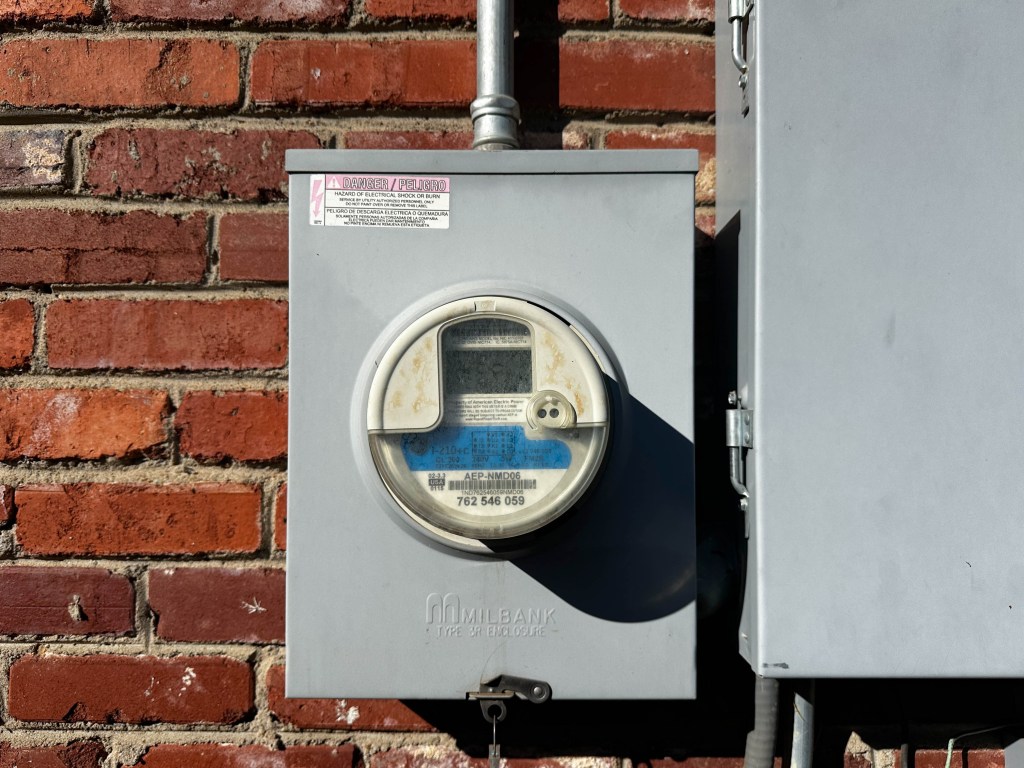
The exact day gas meters are read varies, but most are collected automatically using vehicle-based technology, according to ONG. Either way, this is how the amount of dekatherms you’ve used is tracked.
You can read your own meter pretty easily as well. From left to right, you’ll see dials with the numbers 0-9 going clockwise or counterclockwise. You’ll always want to track the most recent number that the dial passed, even if it’s close to reaching a new one.
How can I save money?
Similar to the Public Service Company of Oklahoma, ONG has a rebate program. These are partial refunds for certain appliances. However, funds are on a first-come, first-served basis and are limited. These are funded and approved by the Oklahoma Corporation Commission, or OCC.
The Low-Income Home Energy Assistance Program also helps with some energy costs. It is federally funded through the Department of Human Services and has income and household size requirements.
ONG also has some tips of their own to save on energy costs.
“Our priority is to help customers feel confident about their bills. We encourage our customers to contact us if they have questions or need more information. We’re here to provide clarity and support,” ONG said in a statement to the Flyer.

News decisions at the Tulsa Flyer are made independently of our board members and financial supporters. Read more about our editorial independence policy here.