

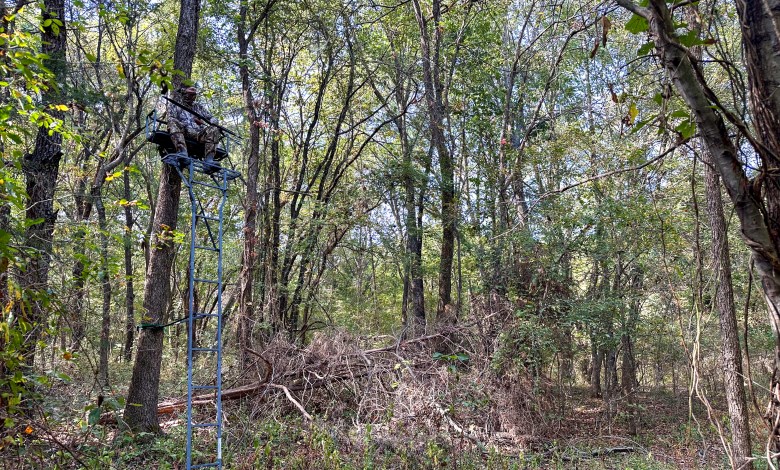
For hunters, location is everything, and Tulsa’s location offers just about anything a hunter might want.
In the Arkansas River Valley, near the western edge of the Ozark Uplift, where the Cross Timbers meet the Great Plains, the region is rich in wild game.
Public lands within a one-hour to 90-minute drive offer hunting for small game, as well as upland birds, waterfowl, white-tailed deer, elk, wild turkey and feral hogs. The area is home to many professional hunting guides, some of whom will pick up hunters downtown or arrange a nearby pre-dawn meetup to lead a caravan to privately-owned hunting areas.
Northeast and north central Oklahoma are also home to private hunting lodges for waterfowl and upland game, as well as other private ranches available for lease or so-called “high fence” lodges that offer a variety of hunting opportunities for wild game, exotic species or feral hogs.
Professional hunting guides are not licensed by the state, so comprehensive lists don’t exist. However, sporting goods stores, wild game processing facilities listed by the Oklahoma Department of Wildlife Conservation and Facebook hunting interest groups are good places to find leads.

When and where can I hunt?
Hunting seasons truly kick off Sept. 1. That date marks the opening of dove season, practically a state holiday with thousands of hunters taking their shotguns to the fields. The next major days are rifle season for white-tailed deer, which opens on the third or fourth Saturday in November (this year it falls on Nov. 22), and big-game archery seasons, which opens Oct. 1. Hunting for feral hogs and coyotes is open year-round.
Of lesser fanfare, but no less important, are early teal and local Canada goose seasons in September and wintertime openers for all waterfowl and especially the upland seasons for quail and pheasant. Springtime hunting for wild turkey, which opens statewide April 15, is a time for rich Oklahoma hunting traditions.
One important and too often overlooked season is the Oklahoma Controlled Hunt Drawing period, which opens in April and runs through mid-May, with results issued in July. The drawings offer excellent opportunities to hunt deer, elk, turkey and antelope in public areas where access is restricted.
What do I need?
The Oklahoma Department of Wildlife Conservation is the primary source of information for learning about rules, seasons and license requirements. Information is available online at wildlifedepartment.com or at the regional office located at 300 S. Aquarium Drive in Jenks. Cherokee, Choctaw and Muscogee (Creek) Nation members should verify licensing and eligible lands with their respective tribal natural resources offices.
All hunters may require a state or federal permit or special licenses, which can be obtained online through the state’s Go Outdoors Oklahoma app, available for free on Google Play or the Apple App Store.
What about public lands?
Public hunting areas nearest Tulsa include Wildlife Management Areas (WMAs) and Oklahoma Land Access Program (OLAP) areas, which are managed by the Oklahoma Department of Wildlife Conservation. Additionally, areas associated with nearby reservoirs are overseen cooperatively by the state and the U.S. Army Corps of Engineers’ Tulsa District.
Oklahoma Land Access Program areas rely on annual contracts with landowners; therefore, available areas change. Checking maps ahead of time is essential.
Where are the nearest public lands?
Only 3% of Oklahoma is available as public lands, and some of that is off-limits to hunting. But tens of thousands of acres are open to public hunting nearby.
Draw a 60-mile diameter circle on a map of Oklahoma centered on Tulsa, and that line will cross or encompass acreages of at least 20 state Wildlife Management Areas, numerous U.S. Army Corps of Engineers hunting areas and the 21,000-acre Sequoyah National Wildlife Refuge in Vian.
That circle would include public lands in parts of Osage, Creek and Cherokee counties, which are among the highest-producing for white-tailed deer hunting in the state. It also contains the major river watersheds and rich associated wetlands of the Arkansas, Cimarron, Verdigris, Grand, Deep Fork and North Canadian rivers — containing some of the best waterfowl hunting areas not just in the state, but in the nation.
What are some areas I should check out?
The 22,000-acre Keystone Wildlife Management Area encompasses the upper reaches of Keystone Lake on its two major tributaries, the Arkansas and Cimarron rivers. Some access points to either section are within a 30-mile radius of Tulsa.
The Skiatook Wildlife Management Area surrounds Hominy Creek, the major tributary feeding upper Skiatook Lake that is also roughly 30 miles from Tulsa.
Other WMAs that should be on any local hunter’s list include, but are not limited to: Oologah, Cherokee, Spavinaw, McClellan-Kerr, Fort Gibson, Okmulgee and Deep Fork.
Kelly Bostian is a freelance contributor to the Tulsa Flyer.
News decisions at the Tulsa Flyer are made independently of our board members and financial supporters. Read more about our editorial independence policy here.