



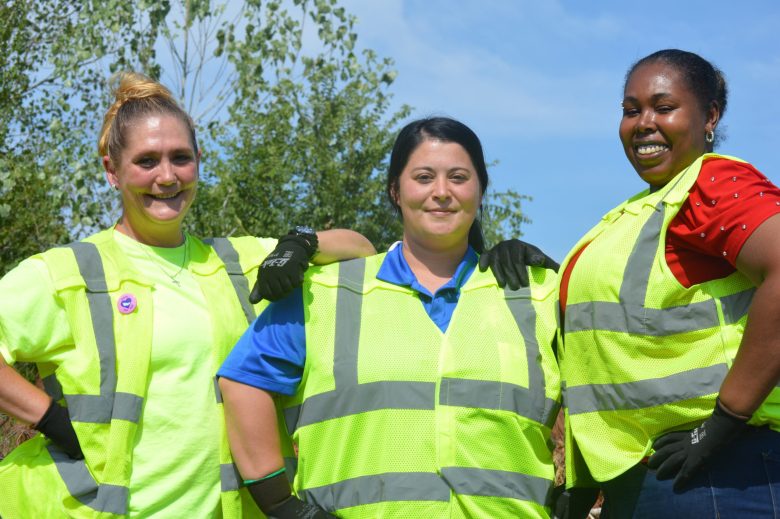
When Stephanie Atkins thinks about who she was before going to prison in 2018, she describes herself as “a broken little girl.”
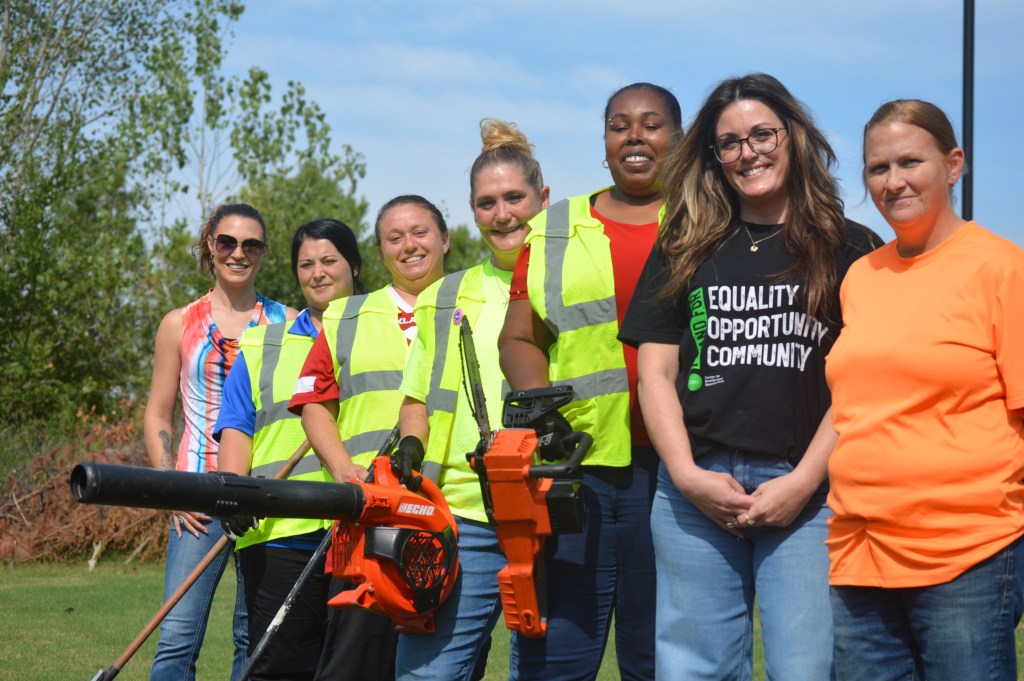
Now, two months out of prison, the proud grandmother works as part of the Center for Employment Opportunities’ all-female crew maintaining the grounds for Tulsa Community College campuses.
“Getting to come here and be around like-minded women pushes me every day to be something better,” she told The Eagle Friday.
Known as CEO, the organization headquartered out of 556 N. Denver Ave. employs eight work crews of men and women who work four days a week at sites across Tulsa. They are paid an average of $55-60 daily, program manager Mattie LeMay said. Participation in the program is completely voluntary, not court-ordered.
LeMay worked as a nurse for over a decade but said she struggled with addiction and ended up in prison in 2021. After her release, she didn’t think she could find the type of employment she had before.
“Because of my charges, I can’t go back into nursing. And so what the CEO gave me was an opportunity to see where I could use my skill set and my talent somewhere else,” she said.
Access to work is just one piece of the program — and participants aren’t expected to stay long. One day a week, crew members attend meetings with job coaches who help them navigate the unique challenges of reentry after prison.
That can include help searching for housing, getting a bus pass, finding childcare, preparing for a job interview or revamping their resume. Ultimately, the CEO’s goal is to “break down that barrier that a felony conviction places on your ability to have employment” and reduce the chances of returning to prison, LeMay said.
Finding work and housing was something Sherry Shacklefoot says she struggled with after leaving prison last year.
“I was getting turned down for jobs and housing left and right,” she said. “I was calling my probation officer crying like, ‘I don’t know what I’m going to do.’ I got my kids. I just got out. It’s real hard, you know.’”
For Shacklefoot, one of the most impactful benefits of the program was getting help to sign up for federal Supplemental Nutrition Assistance Program (SNAP) benefits.
But recent changes like new documentation and verification requirements, staff shortages and increased wait times have made it “really difficult for the people who need benefits to get benefits,” LeMay said.
Another way the organization helps formerly incarcerated people navigate life after prison is through vocational training. Courtney McFeely, who served about two years in prison, is especially excited about the prospect of getting back into school.
“They’re offering me welding classes that I’ve always wanted to do,” she said. “I’ve never done school. I’ve always wanted to but never did it.”
Beyond the daily pay and vocational training, one of McFeely’s favorite aspects of being in the program is how the all-female crew has built their own community.
“We help each other. If somebody doesn’t have it, the other person will,” she said.
Having a community of other women who can relate to your experience is vital, particularly in a state with one of the highest rates of female incarceration in the nation, LeMay said. Many of them connect over their challenges rebuilding relationships with their children, those they still have or the ones they are trying to regain custody of.
Today, Atkins is embracing the opportunity to show up for her grandchildren in a way she couldn’t for her children when she was incarcerated for nine years.
“My little 1-year-old grandson, he gets to never know who that lady was. He gets to know who this woman is,” she said.
Atkins said she’s grown into a woman who understands who she is and what her worth is.
“I don’t regret my past. I couldn’t be who I am today without walking through every one of those dark days,” she said. “I made a lot of bad decisions. Every right decision that I make now makes up for all of that.”
