


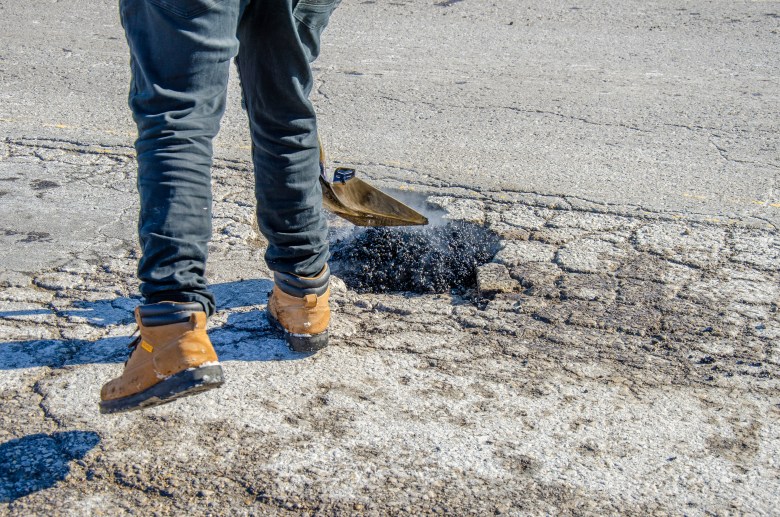
Potholes are a constant source of frustration for drivers, but records show Tulsa’s street maintenance team is on top of the problem — resolving most citizen repair requests weeks ahead of schedule.
Tulsans sent in 1,000 pothole repair requests to 311 last year, according to records from the Tulsa Public Works Department. From there, it took about 3.32 days on average to get resolved.
One of those 311 warriors is Angela Keith, vice president of the Charles Page Neighborhood Association. Whether it be potholes, missing stop signs or broken traffic lights, she’s on call to drive around the neighborhood west of downtown and report her findings in the 311 app.
“We can’t improve the neighborhood without people all being involved in reporting what they see,” Keith said.
She says the app is easy to use, but it can take a while to hear back. It depends on the request type or severity. But when the city does respond — she says it’s with “gusto.”
When Tulsans use the 311 app or website to file requests, it leads to faster results than calling them in, according to Monica Hamilton, director of the customer care department.
Hamilton says your request flows directly to the correct city department when using the app or website. Data shows emailing tulsa311@cityoftulsa.org leads to slower response times and is less common.
Through a series of records requests, the Flyer asked the city for the locations of each 311 pothole repair request in 2025. We were only able to get our hands on 34 of them because of difficulty accessing Tulsa’s internal tracking system, according to the open records office.
Here’s a deep dive into how potholes are getting fixed in your neighborhood and what goes on behind the scenes in City Hall to maintain the roads.
Digging into data
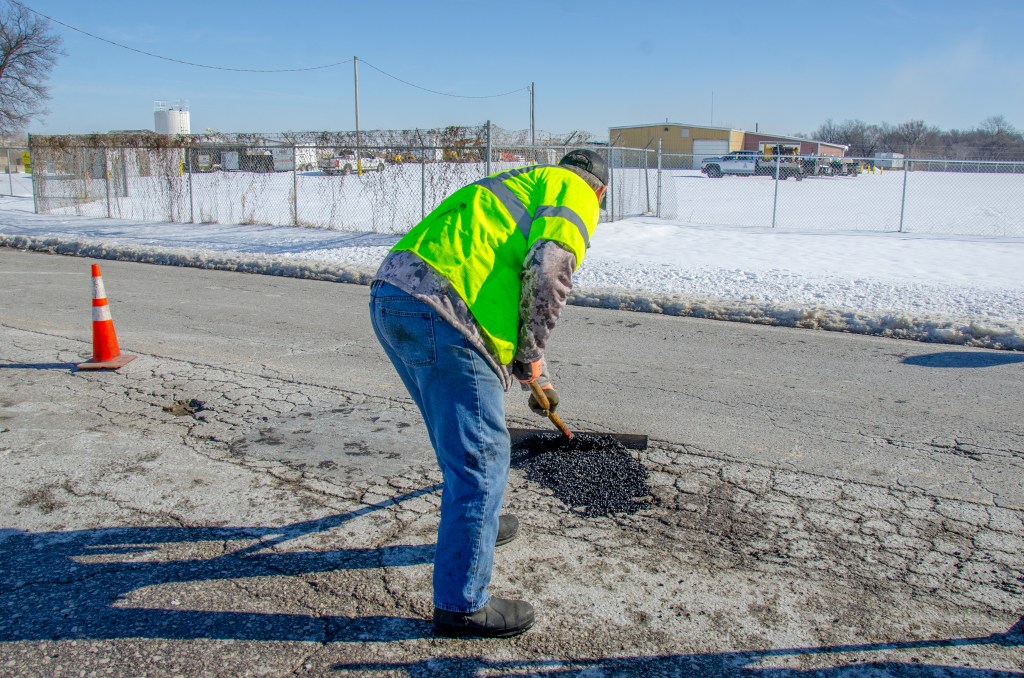
Tulsa street maintenance workers filled 103,000 potholes last year, so the 1,000 311 repair requests are just a fraction of what drivers actually encountered. Most potholes are fixed before the city even gets a report, says city spokesman Carson Colvin. Workers proactively drive out after heavy rains or an intense freeze in anticipation of new potholes.
The city’s street maintenance team has 20 people assigned to fill potholes. After a request rolls in, workers assess urgency and set deadlines for about 20 days later. On average, they get resolved 16.24 days ahead of schedule.
It’s hard to say for sure whether these requests are completed faster in one area of Tulsa than another because the sample size is small. However, across each region, it took less than an average of four days to close out a pothole repair request.
- North Tulsa: 1.85 days
- South Tulsa: 1.91 days
- West Tulsa: 2.71 days
- Midtown: 3.47 days
- East Tulsa: 3.81 days
“It doesn’t really matter whether it’s north, south, east, west or what road it’s on. I think they do a pretty good job,” Colvin said.
One thing that does differ in different parts of Tulsa is the condition of roads. Roads in older parts of town tend to experience more potholes, according to Matt Liechti, public works planning and coordination manager.
Liechti helps oversee Tulsa’s street quality, which is measured with the pavement condition index. Consultants inspect portions, not every square mile, of the city’s roads for cracks, potholes, etc. Then it gets a score out of 100.

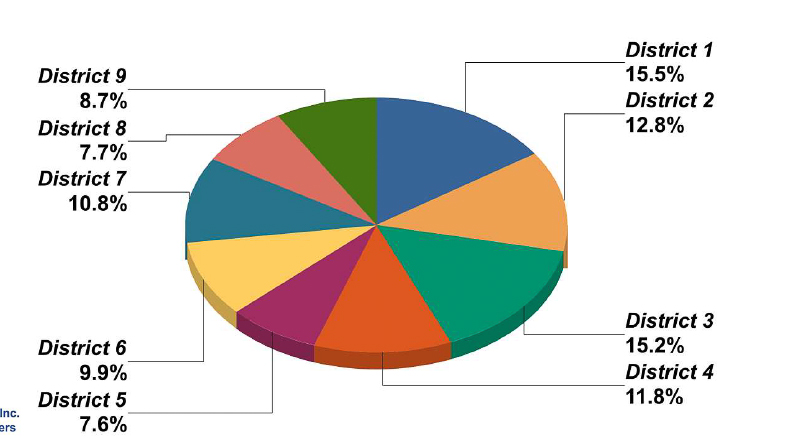
The pavement condition index varies by district in Tulsa, and Liechti says a lower score typically means more potholes. District 4 in midtown, District 3 in north Tulsa and District 6 in east Tulsa have lower scores. But they also have more high-traffic streets.
The path forward
There’s money set aside for small pothole fixes, but funding gets tricky for bigger repair projects, says District 7 City Councilor Lori Decter Wright, who represents southeast Tulsa.
“It is very difficult and frustrating for neighbors, and for us as councilors, when cul-de-sac neighborhoods have to be put at the bottom of the priority list,” Decter Wright said.
On top of that, pavement conditions index scores also dictate funding and where road projects happen. Older parts of town like north, west and midtown Tulsa have a higher need for dollars, Liechti said. He helps put together the funding plan for these capital improvements.
Tulsa’s last major road repair program was passed in 2019 with the Improve Our Tulsa 2 package. No new projects were added with Improve Our Tulsa 3 funding in 2023.
Decter Wright and District 8 City Councilor Phil Lakin, who represents south Tulsa, have had to be creative about road repairs in their neighborhoods. They were inundated with emails a few years ago about concrete failing on a strip of South Memorial Drive between 71st Street and 81st Street. Rebuilding the road would’ve cost millions. So they did a $250,000 emergency repair instead.
“We heard from very infrequent people who don’t contact as often about something that was truly, truly bothering them. And so we just took the initiative,” Lakin said. “We were just scraping money together to really create more of a long-term solution.”
Road maintenance is around five to 10 times more cost effective than any reconstruction, Lakin said. But even these smaller repairs still take a long time. It took three years for construction to begin on the Memorial project in 2024. Decter Wright said they had to wait because they could not have too many road projects at once.
So she’s turning to the county, state and tribes for grant dollars to help make more improvements like the one from a couple of years ago, especially on the neighborhood level.
“The philosophy at the City of Tulsa is to try to get the most good done with the dollars we have,” Decter Wright said. “But if you live in the part of the town that has the older streets where they’re already below the (pavement conditions index), that doesn’t feel satisfactory, right? So we’re trying to balance those things.”
News decisions at the Tulsa Flyer are made independently of our board members and financial supporters. Read more about our editorial independence policy here.