

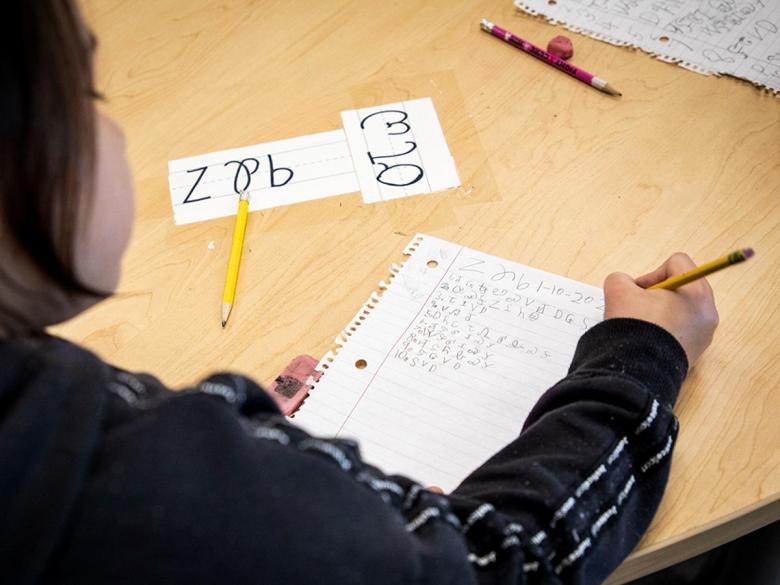
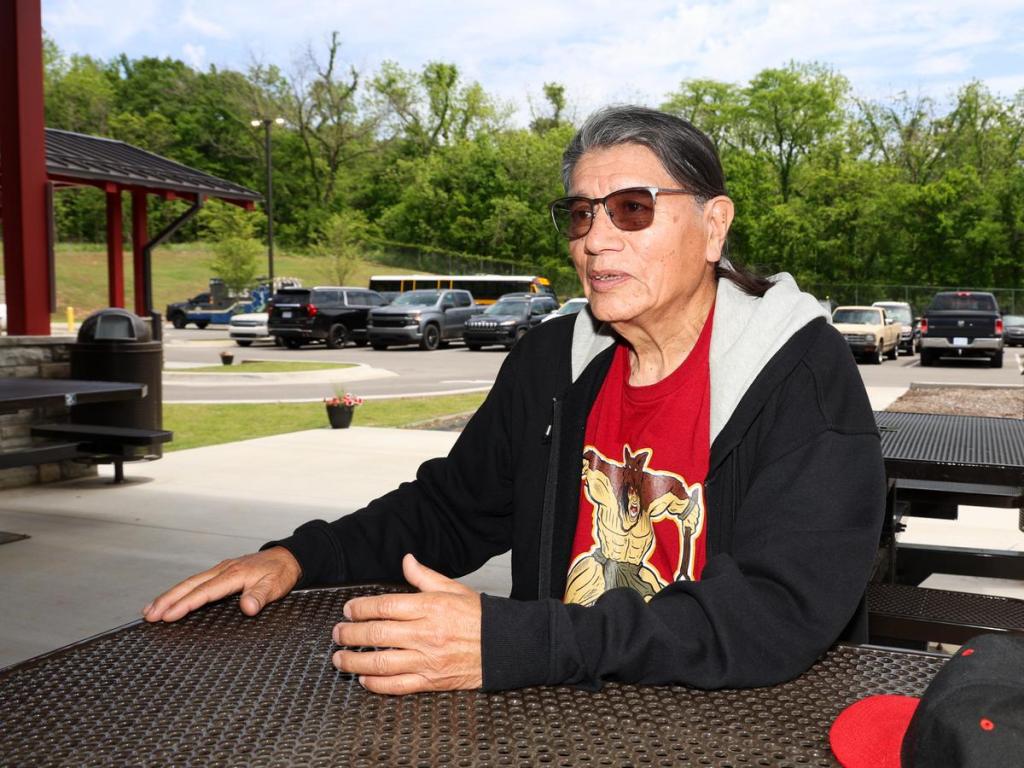
Ask Bud Andrew Squirrel how he kept his Cherokee language sharp growing up, and he’ll give you a list of folks who helped. He could call four close friends — not including grandma — and fall naturally into the Native language. When he forgot a word, he would call Woody Hair, a Cherokee speaker and cultural leader from Kenwood, Oklahoma.
Today, Squirrel is well aware his list is dwindling. His grandma passed long ago, and Hair died in August 2020. Words that used to come naturally are starting to falter from his mind.
“I’ve forgotten quite a few terms, ’cause I don’t have anybody to talk to. They have all died,” said Squirrel, sitting outside the Kenwood community center named after Hair. “I can’t pick up the phone and call them or text them. I don’t have any help. I feel like I’m on an island and don’t have anybody to speak to or ask.”
Today there are nearly 480,000 registered Cherokee citizens across the U.S. Like Squirrel, the vast majority of those fluent speakers — estimated at fewer than 1,500 — are over the age of 70.
Muscogee Nation leaders estimate there are fewer than 300 first-language speakers left, and the last Osage Nation first-language speaker, Lucille Robedeaux, died in 2005 at the age of 90.
“If we lose our language, we lose our identity. We lose a sense of our understanding and meaning of life and our worldview,” said RaeLynn Butler, Muscogee Nation’s secretary of culture and humanities.
‘Time is working against us’
In hopes of reversing those trends, Cherokee Nation has heavily invested in its immersion school and language programs since the Cherokee Nation Tribal Council approved the Durbin Feeling Language Preservation Act in 2019.
The tribal council approved an amendment to that law June 25 that replaces the tribe’s language immersion state charter board with tribal government oversight.
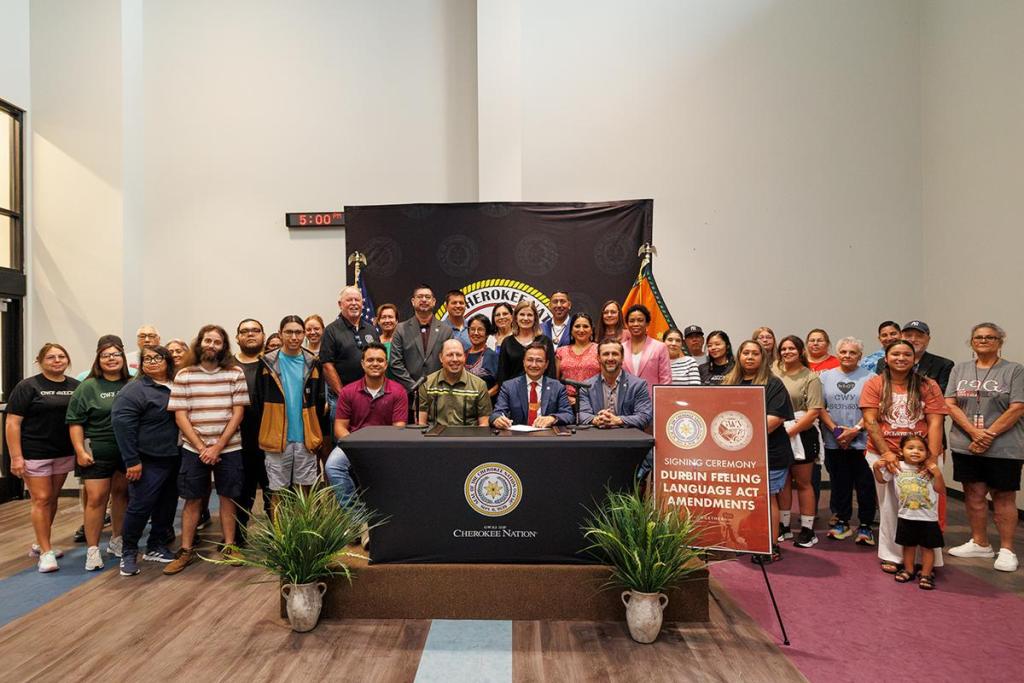
Julie Hubbard, communications director for Cherokee Nation, said the tribe has spent more than $175 million on language preservation efforts since 2019. These investments include language campuses in Tahlequah, Kenwood and Greasy and expanding the tribe’s Master Apprentice program, which trains new Cherokee language teachers.
Additionally, the $30 million Cherokee Immersion Middle School is expected to open this fall in Tahlequah.
“Time is working against us. There is nothing that can stop the passage of time or the dwindling of the first-language fluent speakers,” Cherokee Nation Principal Chief Chuck Hoskin Jr. said after announcing the amendment. “What we can do something about is what’s happening here in Kenwood and what’s happening in Tahlequah and … the community of Greasy in Adair County — we can have a generation coming up that are second-language speakers on their way to fluency.”
The tribe has also partnered with Apple to equip their students with Macs, iPads and iPhones with the 86-character Cherokee syllabary.
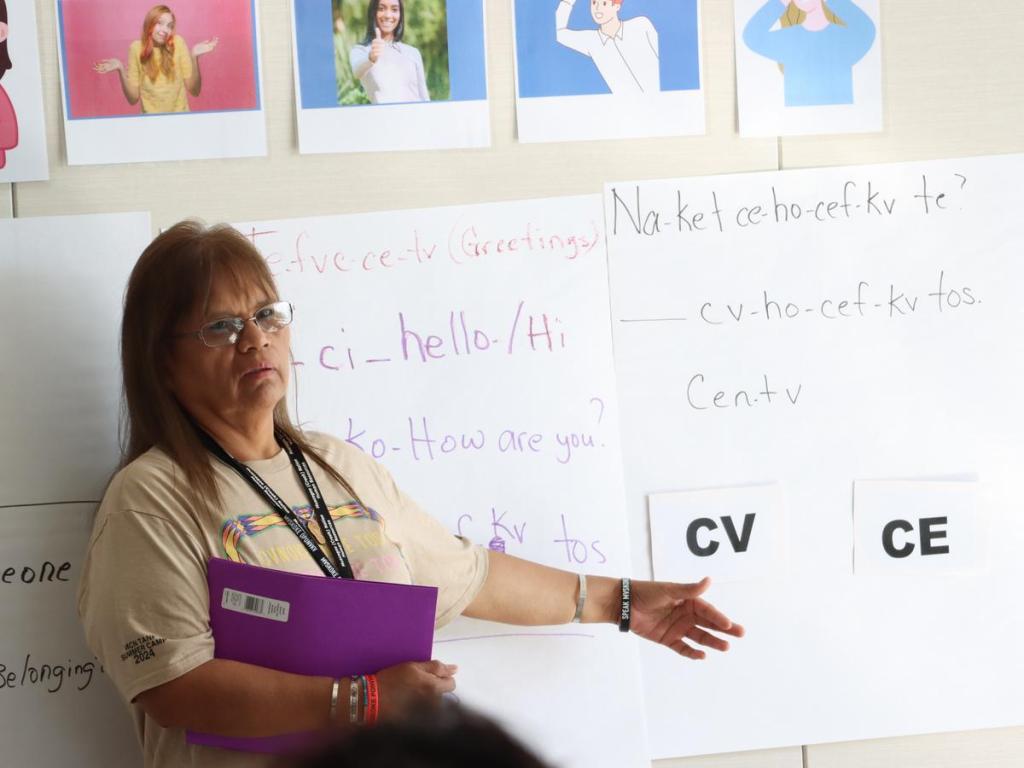
“It’s a dire need to learn the language,” said Erlinda “Daksi” Soap, a fifth grade teacher at the Cherokee Immersion School in Tahlequah. “Every sound, every word we choose to say in Cherokee instead of English — it matters.”
An ‘endangered and threatened’ language
In November, Muscogee Nation Principal Chief David Hill signed an executive order declaring a state of emergency for the Mvskoke and Euchee languages. The order secures funding for immersion schools and language programs and outlines objectives to protect the language. About $5.4 million is dedicated in the tribe’s 2026 fiscal year budget for language departments and efforts.
“This really outlines the state of the languages being listed as endangered and threatened,” Butler said of the proclamation.
During the allotment and assimilation era, the Euchee people were listed as Creek on the Dawes Rolls. Today, many Euchee people are enrolled in the Muscogee Nation as the federal government has not recognized the Euchee tribe.
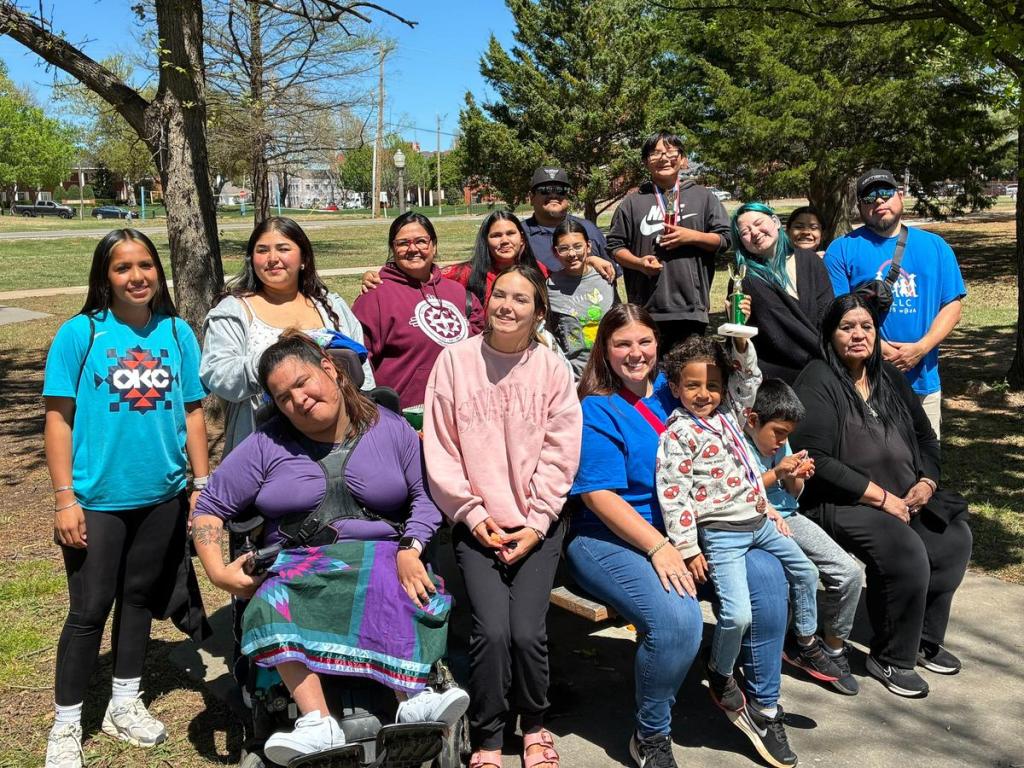
Butler described the Euchee language as a language isolate, which means it is unrelated to any other language.
“Euchee and Muscogee people have been ancient neighbors and kin,” she said. “They were removed with us on the Trail of Tears and have always been a part of our community… but it’s a very distinct tribe, especially in terms of language.”
The last remaining elder fluent in Euchee died during the COVID-19 pandemic, Butler said. Now the tribe’s Euchee Language Program is working with children in Creek County to create a new generation of speakers.
“They probably have 20 to 30 kids that are really proficient in Euchee,” she said. “So, they have a very young community of speakers now that they’ve created over the last 10 years of that program.”
Butler said a recent census conducted by Muscogee Nation’s language liaison revealed 0.01% of the tribe’s more than 100,000 enrolled citizens are first-language Mvskoke speakers, and none under the age of 48.
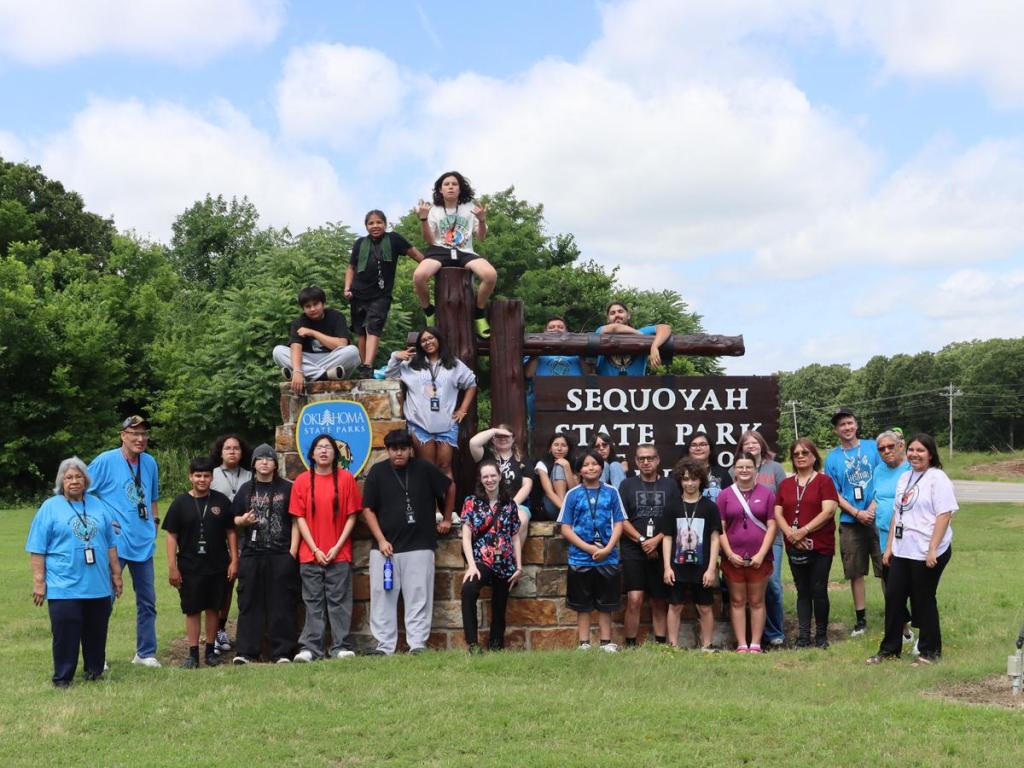
Eventually, Butler said the tribe wants to see the Mvskoke language used in everyday life.
“We want to see bills in the language, to see them introduced in the language, to do business in the language. We want to make it normal to use the language again,” she said. “We also encourage our employees, whether you’re Muscogee or non-Indian, to use the language when you answer the phone.”
Muscogee Nation began offering a mentor-apprentice program that pairs language learners with first-language speakers. Language resources are available on the Muscogee Nation website. Additionally, the College of the Muscogee Nation offers a masters-apprentice program.
‘Our young people are the ones that are really taking it up, learning it’
For decades, Osage people only heard their language from the tribe’s elders. Now, children are leading the way.
“We’ve kind of had this generational turnover,” said Braxton Redeagle, Osage Nation’s language department director. “The elders that are in those cultural authority positions were the ones that knew the language and used it… Now, our young people are the ones that are really taking it up, learning it.”
Redeagle said the Osage Nation has made a concerted effort to make their language visible across the reservation.
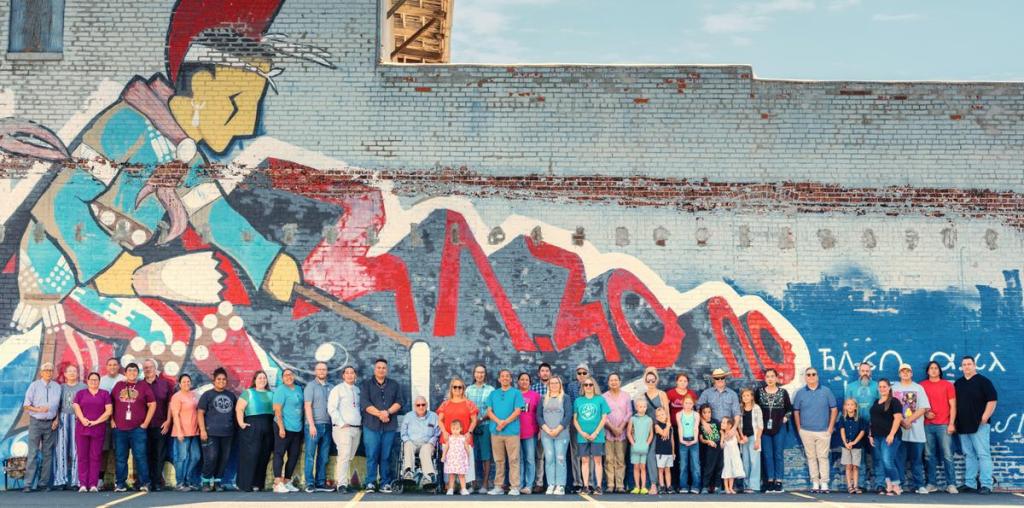
“We have written languages in all these different forms all over the place,” he said. “Now, we have a lot of people that have learned enough to where the average language understanding and usage is higher than it’s been for quite some time.”
Part of that effort is keeping the language spoken in day-to-day conversations, Redeagle said.
“One thing I would emphasize is that we are trying to emphasize language usage and language integration,” he said. “Just those two things alone can change the trajectory of the way you think about this.”
The Osage Nation Language Department offers community classes beginning in September. All classes of varying difficulty levels are free and open to community members. Registration begins in August.
News decisions at the Tulsa Flyer are made independently of our board members and financial supporters. Read more about our editorial independence policy here.
