


The Tulsa Flyer and Oklahoma Eagle have joined with two other nonprofit Oklahoma media organizations to provide greater access to open records.
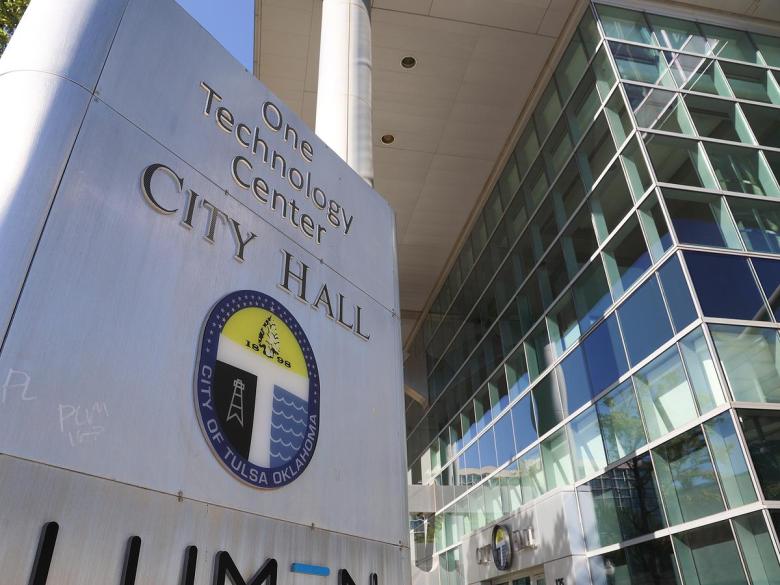
Negotiations are underway with the City of Tulsa to change an executive order’s language that charges $50 to $85 an hour for labor related to filling a public records request. The Flyer’s and Eagle’s parent organization — the nonprofit Tulsa Local News Initiative — is partnering with Oklahoma Watch and The Frontier to seek changes to those fees.
The negotiations center on what is disruptive to city government. Mayor Monroe Nichols issued an executive order last October saying that an “excessive disruption” to a city agency’s operations occurs if a records request takes more than a single hour. After that, the city starts charging a tiered rate, starting at $50 per hour, when audio or video requires redacting and up to $85 per hour when the city seeks a legal review before release.
As a result, public records that agencies want redacted can quickly become prohibitively expensive for those who requested them. For instance, the Tulsa Police Department asked for $1,263.33 to cover labor costs when the Tulsa Flyer requested bodycam footage of an arrest earlier this year.
“The laws requiring the release of police bodycam footage were designed to meet the public demand for greater transparency of police and to protect officers from false claims of excessive force,” said Leslie Briggs, a Tulsa-based Reporters Committee for the Freedom of the Press attorney representing the media outlets. “Now, faced with exorbitant fees imposed by this executive order, the public isn’t getting the benefit of the body cam statutes. The result is that public transparency and public trust are eroded.”
Nichols’ executive order is an update to a similar one issued by former Mayor G.T. Bynum in 2024. The first city open records guidelines and fee schedule were implemented by executive order in 1994 by former Mayor Susan Savage. It remained untouched until 2024.
The language in this latest version more narrowly defines when to charge for public records than what is stated in the Oklahoma Open Records Act.
State law specifies fees for obtaining physical records at 25 cents a page, 50 cents for color pages and $1 for certified copies. Public inspection of records without copies is free. The law allows for a “reasonable fee to recover costs” when a request would cause an “excessive disruption” to an agency’s essential functions.
“We are engaged in good faith negotiations with the city to reach a resolution on an executive order that has imposed excessive, improper and insurmountable fees for many media outlets,” Briggs said. ”
City Attorney Jack Blair said he did not have a comment about the ongoing talks. Through the years, Oklahoma agencies have attempted to use open records fees as a way to generate revenue or dissuade release of records. Some government bodies have attempted to charge media organizations over $100,000 to turn over records.
“Fees like that exemplify a broader cultural shift by public bodies to impose exorbitant fees on media,” Briggs said.
State law recognizes media as a part of public interest: “In no case shall a fee be charged when the release of said documents is in the public interest, including but not limited to, release to news media.”
The city’s executive order also removed language carving out a process that allowed journalists to go directly to the city’s communications department for open records. That expedited path recognized the realities of daily news stories and platforms for wide distribution of public information. All media inquiries now go to an online city records portal.
“Right now, we are currently having very productive conversations with the city about the problems with the executive order and are hopeful to reach an agreement that allows media access they need without exorbitant fees,” Briggs said.
Gary Lee, executive editor of the Tulsa Flyer and The Oklahoma Eagle, said the nonprofit organization is “pleased to be a party to this agreement.”
“It is part of our mission to forge partnerships with Oklahoma’s leading nonprofit news organizations such as The Frontier and Oklahoma Watch,” Lee said. “Whether we are collaborating on editorial coverage or uniting to face legal issues, we’re stronger when we work together.”
News decisions at the Tulsa Flyer are made independently of our board members and financial supporters. Read more about our editorial independence policy here.