


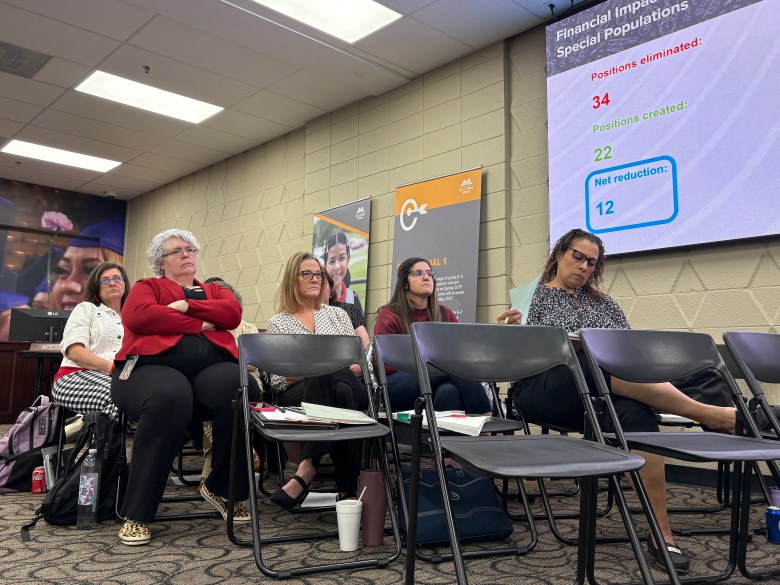
“Everyone’s got their job,” exclaimed Jamie Stika, a special education programs coordinator.
After an emotional 12-hour hearing Friday, the Tulsa Public Schools board unanimously rejected cuts to special education staffing at the district. As the district faces a multi-million dollar budget gap, its leaders now return to the drawing board for staff and cost reductions.
“There should not be reductions to funding for special education in Tulsa Public Schools,” said board member John Croisant. “But the board does request that the superintendent and her team bring a new recommendation for a restructuring of special education services — without cuts to funding.”
The proposed reduction would have netted 12 fewer positions to save around $800,000 while 30 special education employees faced job loss, a lapse in insurance and reduction of responsibilities at TPS.
Stika was one of six affected employees who pushed back in the marathon board meeting Friday. Together, they have more than a century of experience. Disbelief washed over her face when the final vote was called, whispering “we won.”
“The board acknowledging that the needs of special education students are more important than budgetary concerns is huge,” said Jennifer Diggs, a special education program coordinator who testified Friday. “We are just beyond elated — and exhausted.”
The district’s proposal would have removed nearly two dozen special education leaders from year-round management roles beginning July 1. They were guaranteed 10-month teacher contracts, a significant pay reduction. Six support staffers, one administrator and four vacant positions would have been cut entirely.
The district promised cuts would have a minimal impact on teachers, students and the services they receive, like it did in March’s layoffs — which take effect this summer.
“This is extremely difficult for everyone involved,” said Gena Koster, who helped lead the reduction proposal as assistant superintendent of special populations. “However, my experience tells me we should be able to accomplish our goals, increase our performance and outcomes for students with disabilities by streamlining the work.”
But employees disagreed, and so did the board in a 6-0 vote. Connie Dodson was absent.
“We are the ones working with our parents. We are the ones working with our team,” said Ebony Hart, a quality standards coordinator at TPS. “We’re cutting relationships off that so many of us have taken years to build.”
TPS is the lowest performing district in the state when it comes to special education, Koster noted. It is currently facing a lawsuit in federal court alleging a culture of abuse against students with disabilities.
“We have students getting injured in classrooms. We have people that we know are harming students directly or indirectly, and they’re allowed to continue,” said Hart, agreeing there are systemic problems. “But we have to worry about if we’re going to have a job next year.”
The district overhauled the department last May, citing concerns with TPS’ failures to meet state and federal special education standards. Many of the employees who spoke Friday had their titles changed or were rehired under a year ago.
“The ink is not dry yet on the last reorg for special ed,” said LeeAnne Jimenez, vice president of the Tulsa Classroom Teachers Association. “We don’t have a full school year under our belt yet to know if those changes that were made just last year have made an impact.”
The staffing analysis used to determine cuts was created by an external firm, Baker Tilly, and delivered in March. It did not seek input from teachers, support staff or families, district administrators acknowledged.
TPS still faces a budget cliff of up to $15 million, CFO Kristin Stephens said. Other departments should expect similar restructuring and reduction efforts in the coming months.
News decisions at the Tulsa Flyer are made independently of our board members and financial supporters. Read more about our editorial independence policy here.
