


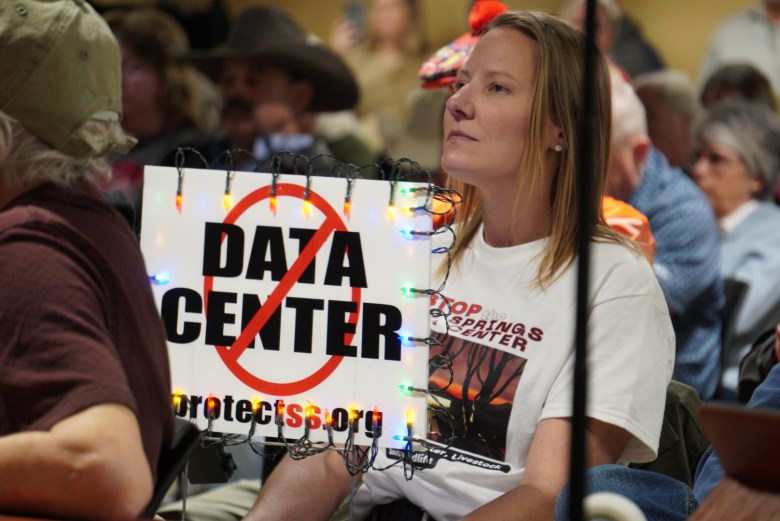
Among the thousands of bills up for debate this legislative session, Oklahoma lawmakers are eyeing more oversight and transparency in response to the influx of hyperscale data center projects across the state.
Proposals range from managing the costs of building data center infrastructure to establishing a moratorium on new projects as the state assesses the long-term impacts of the facilities.
“Once we place a data center on our land, it will be much harder to undue the damages done of which currently we may not know what those are,” said Sen. Kendal Sacchieri, R-Blanchard.
As residents in towns like Coweta and Sand Springs face the prospect of data centers in their communities, the Flyer rounded up what’s on the table during the session.

Oversight and transparency
Rep. Amanda Clinton, D-Tulsa, filed a package of bills that would increase state oversight over data centers. House Bill 3392 would require the Oklahoma Corporation Commission to conduct studies on the impacts of the facilities. Another bill, House Bill 3394, would require the commission to keep a database of data centers across the state.
Data centers are a growing industry, Clinton says, and the state needs to do a better job tracking them.
“My hope is that a simple directory will provide Oklahomans with transparent information, including where hyperscalers are located, who runs them and how much water and electricity they consume,” she said.
Clinton says the information is already being reported to various agencies and municipalities.
“And (making that information public) will help Oklahomans better understand the impact on our communities and our shared resources,” she said.
The last bill in the package, House Bill 3397, asks the commission to create different language and classification of data centers. That language is used in utility bills if companies like the Public Service Company of Oklahoma (PSO) initiates notices to raise utility rates.
The law aims to prevent other rate payers, including residents, from paying “unwarranted costs” related to building out data centers.
“HB3397 aims to quantify the electricity needs of large-load electric users, such as data centers and other industrial operations, measure their impacts and find ways to ensure these large-load users pay their fair share,” Clinton told the Flyer.
Initiating a moratorium on data centers
Sacchieri proposed legislation to temporarily push pause on new data center projects. Senate Bill 1488 would create a moratorium on the construction of data centers throughout Oklahoma until Nov. 1, 2029.
The Oklahoma Corporation Commission would be tasked with studying the long-term impacts centers have on communities. Sacchieri told the Flyer the legislation would not prevent developers from purchasing land but will assess if an incoming center benefits the community.
“My bill would allow for these developers to halt their plans short term in hopes to have an even better product in place down the road,” Sacchieri told the Flyer. “…This bill will ensure developers are truly giving the best product to Oklahomans who have to live nearby these massive compounds in some cases.”

Sacchieri says data center developers push for major tax incentives and tax breaks once projects are complete — and she is not a fan of it. She also wants more transparency on what water resources the centers need.
“These data centers can wait short term in order to safeguard the things that truly matter most,” she said. “Because once we place a data center on our land, it will be much harder to undue the damages done, of which currently we may not know what those are.”
Paying their own way
Sacchieri’s concerns align with proposed legislation from Rep. Brad Boles, R-Marlow. House Bill 2992, known as the Data Center Consumer Ratepayer Protection Act of 2026, requires data centers to pay infrastructure costs that align with their specific demands on electricity usage.
Ultimately the legislation aims to address concerns from both residents and elected officials regarding if residents will face utility rate increases as new data centers pop up in their communities.
“We don’t want all the infrastructure costs needed to provide those companies’ power to be shifted to the Oklahoma rate payers. So we want to put safeguards in place in state law to ensure that it does not happen,” Boles told the Flyer.
You can track these bills and weigh in with your elected officials. Check out this guide to participating in the legislative session, including how to find who represents you.
News decisions at the Tulsa Flyer are made independently of our board members and financial supporters. Read more about our editorial independence policy here.
