



As the debate around Creek Freedmen citizenship continues, one key tool could help people in their fight to be recognized as a descendant: paternity testing.
Tulsa entrepreneur Meghan Scott is the founder of Reliable DNA Testing Solutions. As a 24/7 mobile clinic, she travels throughout northeast Oklahoma and specializes in testing for Native Americans.
Her services have helped people like 62-year-old David Walker. He’s been working to get his birth certificate amended to show his biological father is a Freedmen descendant.
“It means everything. I mean, it’s my family heritage,” Walker said. “It’s gonna make a difference on whatever benefits come along with that. But more than that, it links me completely to my sister.”
Walker met his biological father for the first time in 2020 and established a relationship with him and his half-sister, who found him through Ancestry.com.
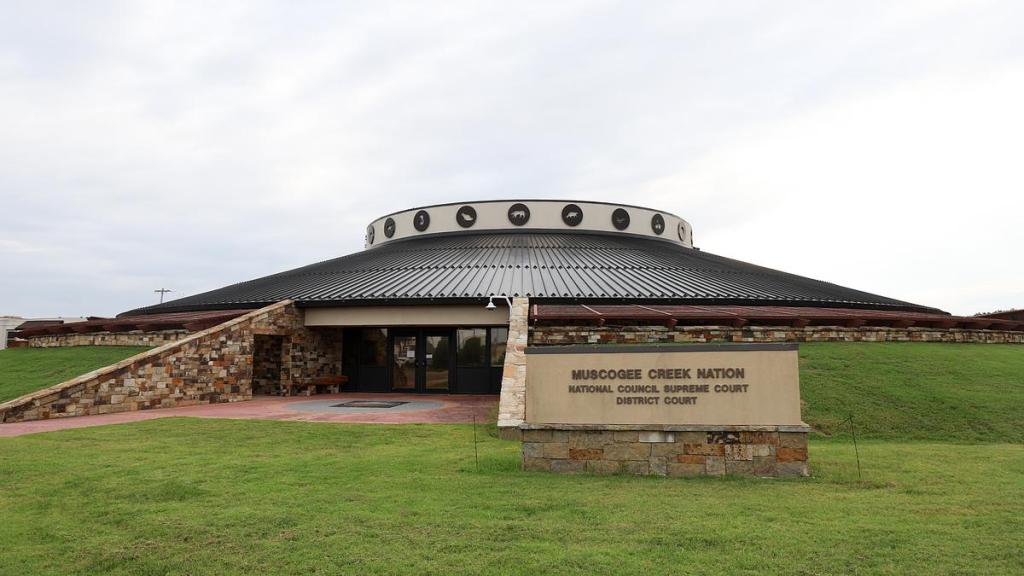
Last year, the Muscogee (Creek) Nation Supreme Court ruled the Treaty of 1866 requires the nation to recognize Freedmen as citizens.
But Walker’s dad had passed by the time of that ruling.
“He told my sister that he wanted us to receive all the tribal benefits due to us,” Walker said.
To claim tribal citizenship, descendants must prove their lineage, which requires documentation such as birth or death certificates.
Thanks to Scott’s testing, Walker is now seeking tribal citizenship with the help of a family law attorney. The Muscogee (Creek) Nation paused the issuance of citizenship cards to Freedmen descendants last August, but the tribe is beginning to change its policies in response to the court decision.
While paternity testing can play a key role in the push for citizenship, access and cost can be a large barrier. Walker said those are two main reasons he picked Scott. She drove to his residence in Blanchard and she was much cheaper — especially for a sibling lineage test.
“Several of the DNA companies that I checked with were charging anywhere up to $2,000,” Walker said. Scott charged $450 to take both tests, get them analyzed and send certified results to the nation.
Scott said that’s why she partnered with an investor to offer a grant program for people who need financial assistance.
“Some don’t realize what all the benefits are, and how big of a deal it is,” Scott said. She said Walker’s case and another client seeking tribal citizenship “showed that there was a need (to) help with these resources.”
Marquess Dennis, co-founder of the Tulsa fatherhood support group Birthright Living Legacy, said there is a fundamental need for paternity tests — not only to prove descent, but also to avoid custody battles, lawsuits and settle questions from the start.
“Secrets die with people, but DNA doesn’t,” he said. “I honestly think that they should make you do a DNA test at birth, from the mother, the father and the child. So that way, walking out of that hospital, everyone knows where we stand.”
Scott’s business provides testing for court-admissible documentation in chain-of-custody cases and tests — a simple cheek swab — for “peace of mind.” She partners with an Ohio-based lab that processes samples and returns results in four to five business days.
