

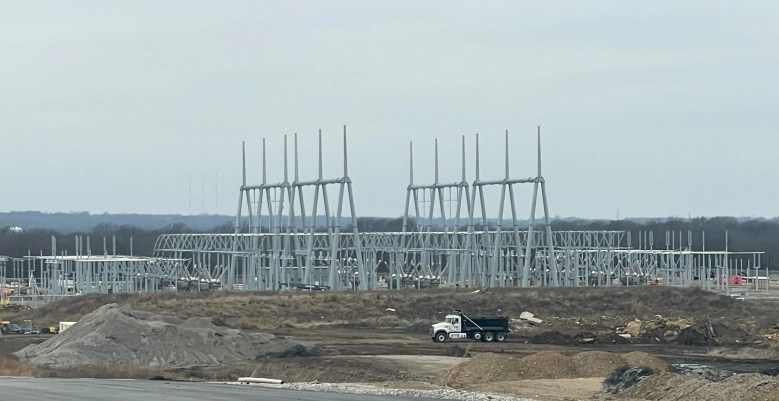
Big tech companies have plans to build more than a dozen data centers in Oklahoma to keep up with increased computing needs from artificial intelligence. Some will require enough electricity to power entire cities. Oklahoma’s two largest utility companies are investing more than a billion dollars in new sources of power to keep up with demand and plan to pass on some of the cost to residential customers.
The Frontier found at least 18 data center projects in the state that are either now under construction or awaiting government approvals. The newsroom used public announcements, land records, meeting agendas and air permit applications to compile that count.
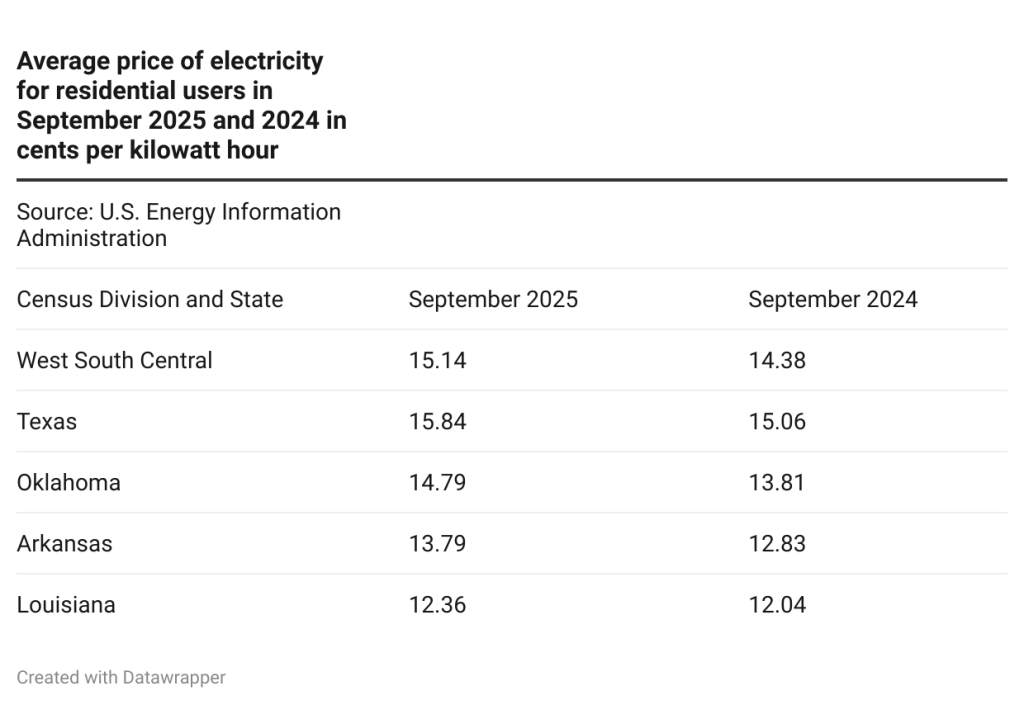
The state’s two largest utilities, Oklahoma Gas and Electric and Public Service Company of Oklahoma, have said in regulatory filings that new demand from data centers and other industries will require more power than they can now produce. The utilities are already looking to pass the cost of new transmission lines and power generation on to all customers, including residential users. Though power prices are lower compared to the nation at large, Oklahoma residential customers already pay some of the highest prices for electricity in the region, second behind Texas, according to the U.S. Energy Information Administration. The average per-kilowatt hour price for Oklahoma residents was up 7% in September from the same time the previous year.
John Laws, Gov. Kevin Stitt’s former secretary of budget and now a consultant for OG&E, told state regulators in May that big new users want assurances that OG&E will have enough power to fill their needs before they sign agreements with utilities. Laws noted that these big new users come from a variety of industries, including manufacturing, refineries, the federal government, data centers and cryptocurrency.
“The changes in recent prospective loads are unprecedented, both in the sheer size and the volume of requests,” Laws said.
A report from the Corporation Commission’s Public Utility Division in June warned that the data center boom could lead utilities to overestimate demand based on speculative proposals and unverified projections. Some data centers could close or never be built, leaving the remaining ratepayers in the state to pay for billions of dollars in new power generation.
This article was originally published by The Frontier. You can see the original story here.